
MALAYSIA KEDAH DARUL AMAN JOHOR DARUL TAKZIM
MAI LERR KEDAHHHH... 

HISTORY OF KEDAH...
Kedah is one of the oldest states in Malaysia and has wonderful history behind it. Kedah is also known as the "Rice Bowl of Malaysia", the Kedah rice plains produce more than half of the country's home grown rice supply. Furthermore, there is also interesting story behind the rice itself. It is a place unique of natural beauty surrounded by much greeny like other states of Malaysia. Kedah rely solely on industrialization and tourism development. Kedah, it's a place never to be missed when one visits Malaysia. Kedah is located on the Northwest of Peninsular Malaysia, approximately 400 kilometers from Kuala Lumpur.
Kedah (formerly Queda) is one of many early Malay Peninsula trade centres that have been found, many have yet to be identified. Early west-coast trade centres are few in number as they were overshadowed by Kedah. Her nearness to the entrances to the Straits of Malacca — and more importantly — being on latitude 6° north of the equator, the same as Ceylon to the south of India, allowed ships sailing the Bay of Bengal in a sea lane heading due east or west between the two, were in little danger of becoming lost. The early transpeninsular routeway is part of the Sea trade route of the Spice Route for Arab, Persian, Tamil Nadu and India-to-China traders, as the route through the Straits does not seem to have been in general use. Early sea traders from the west, upon reaching the coast, engaged porters to transport goods by raft, elephant and man-carry along the rivers (Kelantan River, Pattani River, Pahang River, Muda River, Bernam River, Muar River, and others) to the opposite coast. The Sungai Muda in particular favoured the development of Kedah.
After the 7th century, Srivijaya subjugated Kedah, but due to her fame, Indian sources continue to depict Kedah. Early Kedah also supplied its own tin, and jungle products such as rattan, resin, honey, beeswax, elephants, ivory, areca nuts, sepang wood and black woods, as well as profiting from tax collections.
The early history of Kedah can be traced from various sources. From the prehistoric period to the archeological site of Bujang Valley, the early Maritime trade of India, Persia, Arabs to the written works of early Chinese pilgrims and early Chinese records, the Hikayat Merong Mahawangsa (known as Kedah Annals) to Al-Tarikh Salasilah Negeri Kedah. In the early days, Kedah was known by the Tamils as Kedaram, Kidaram, Kalagam and Kataha, and Kalah or Kalaha by the Persians.
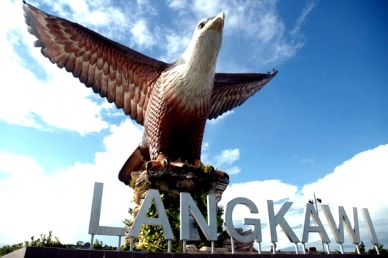
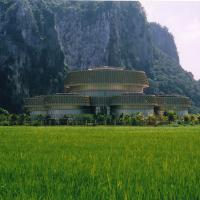
PULAU LANGKAWI MUZIUM PADI

PULAU DAYANG BUNTING


LADANG ANGGUR MENARA ALOR SETAR
INTERESTING PLACES TO VISIT...
Tourists attractions are just too many to count. There are the Pulau Langkawi Beach, the Menara Alor Setar which is the tallest building in Kedah, State Art Gallery (Balai Seni Negeri), Royal Boat House, Masjid Zahir, Nikradharam Buddhist Temple, the Mount Jerai (Gunung Jerai) and Pedu LakeOther places of attraction are the Lembah Bujang Archaeological Site, Birth House of Tun Dr Mahathir Mohamad, Paddy Museum, Royal Museum(Muzium Diraja), State Museum (Muzium Negeri), Makam Mahsuri, Tanjung Tujuh, and Bukit Hijau Recreatinal Forest
There is so much to see and do in Kedah. The top on the list that you must not miss is going to Pulau Langkawi as known as 'Jewel of Kedah' and experience the blue sea water with beautiful scenery. The whole of Langkawi can be view by getting on the cable car. Eating is a must here in Kedah. Traditional local dishes which are also favourites among visitors are "gulai nangka" (a jack fruit curry), "sayur keladi" and "pekasam". "Nasi ulam" is another local food which is equally tantalising. This is also an activity not to be missed. There are also plenty of souvenirs and local products for sale in Kedah. Do buy some for your friends at your hometown. Kedah has many places of worship. They are also worth the visit.
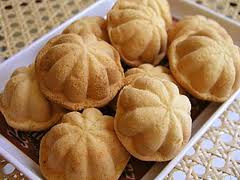
BAHULU
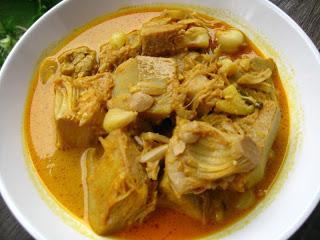
GULAI NANGKA
POPULAR FOOD...
Specially prepared authentic dishes comprising a combination of spices, herbs and market fresh ingredients will tempt any visitor to the state. Rice is the staple food of Kedahans. Traditional local dishes which are also favourites among visitors are “gulai nangka” (a jack fruit curry), “sayur keladi” and “pekasam”. “Nasi ulam” is another local food which is equally tantalising. This authentic dish is prepared by blending rice with varied fresh veggies and spices. Among the locals, nasi ulam is a must on the menu particularly during the fasting month of Ramadhan.o Pulut
or glutinous rice is an all time favourite of the northerners. It is
taken with fruits such as mango, durian and even banana. They also make
fine desert after a hefty dinner or lunch. Other pulut delicacies are “pulut sambal”,”pulut inti” and “tapai pulut”. However, it is not complete if visitors fail to try the famous “Laksa”- rice noodles taken with a preparation of thick fish gravy and cucumber, onion and shoots.
o Make a stop at Pekan Rabu in Alor Setar for traditional crafts, souvenirs and also traditional Malay sweet cakes. Most sought after cakes are “baulu” and the “dodol”- a preparation of coconut, sugar and flour.
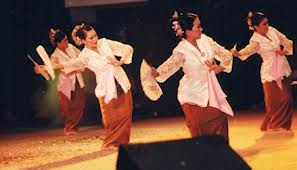
TARIAN INAI (GENDANG KELING)