| Plum Island Massachusetts USA |
 |
 |
| Saturday, May 25, 2002 |
 |
 |
 |
 |
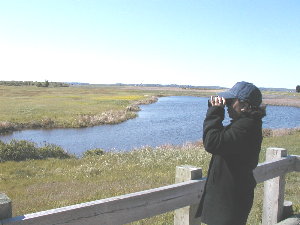 |
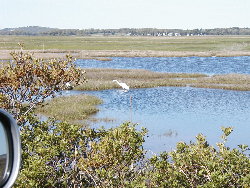
| We woke up early in the morning, took a shower, had a cup of hot coffee at "Starbucks Coffee" near our house, then leaving for Plum Island, about 1 hour drive from our house. Nice weather, though, sunshine but cool, about 50F:-). Plum Island was named for one of its native, maritime plants: beach plum, Prunus Maritima. Parker River National Wildlife Refuge Run by the U.S. Fish and Wildlife Service, contains 4,662 acres of sandy beach and dunes, bogs, freshwater impoundments, and tidal marshes. Established in 1942 to protect migratory waterfowl. Known for its wide variety of bird species, and is one of the top bird watching sites in the US. The Refuge beach is closed April 1st to mid-late August to provide undisturbed nesting habitat for the Piping Plover, a threatened shorebird. Sections of the beach not being used by nesting brids are reopened beginning July 1st. Nearly 300 bird species seasonally inhabit the Refuge along with a diversity of other wildlife. While going around, we've seen some bird species such as American Egret, Piping Plover, Cowbird, Yellow-Breasted Chat, Red- start, Little Blue Heron, etc. |
| American Egret Birds |
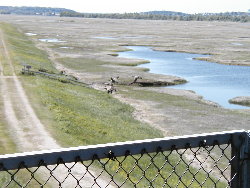
| Flying Ducks |
| Wildlife Observation Area |
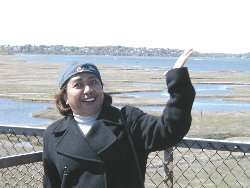
| Observation Tower |
| Observation Towers afford commanding views of the Refuge and surrounding lands and waters. |
 |
 |
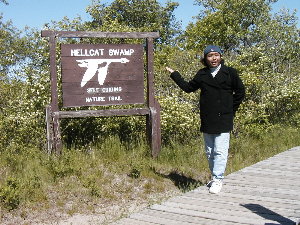 |
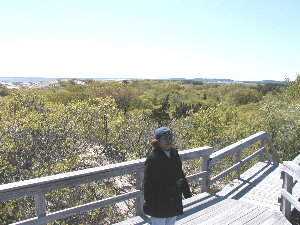
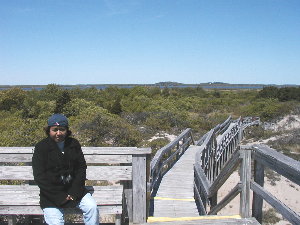
| We also followed Hellcat Interpretive Trail, which is offered dunes trail and marsh trail. Dunes Trail (1 km) Consists of ten interpretive stations, is gentle to steep in grade and involves walking up and down many steps. Within the hollows of many refuge dunes are swamps, a habitat typical of Atlantic coast barrier islands. A swamp is a wetland dominated by woody plants. Although a wetland, this swamp is not always wet. Here the water table is close to the ground surface and will rise above it with enough rainfall or snowmelt. Dunes are formed by the slow build-up of wind-blown sand around plants, rocks, or other obstacles. The storm's strong winds and powerful surf gouge out a notch at a weak section of the primary dunes. This gap acts as a channel for sand movement to the interior and given the right conditions, a dune is created. While it is in part wind that creates a dune, it is also wind that can destroy it. Without enough plants to stabilize the sand, a dune may simply blow away. |
 |
 |