
| In the dark days of 1940 as Londoners bore the brunt of Hitler's blitz,
the Royal Navy faced a critical situation in the Mediterranean. The fall
of France and the loss of her navy had seriously undermined Britain's naval
position as a whole. The entry of Italy into the war had tilted the balance in the Mediterranean
to a dangerous level.�
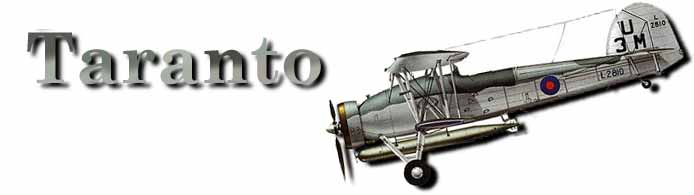
The Italian fleet was large and comprised mostly modern battleships and cruisers, the latter being very fast and well-armed. Although the Italian Navy suffered from a lack of aircraft-carriers, Italy's strategic location ensured that, unless her ships embarked on a particularly long voyage, they would always be under the cover of the Italy's air force, the Regia Aeronautica.� For Admiral Cunningham, commander of the Mediterranean Fleet based in Alexandria, and Admiral Somerville, commanding Force H out of Gibraltar, the situation looked bleak. Italy's belligerence had immediately made Malta untenable as a base for major surface units and any reinforcements leaving the safety of Gibraltar for Egypt had to either run the gauntlet of German and Italian air attacks or take the much longer route around the Cape of Good Hope and up into the Red Sea. The need to protect merchant shipping, contain the Italian fleet, defend Malta and support British army operations in Greece and Crete looked like an impossible task to the hopelessly overstretched Royal Navy.� Then, on a moonlit night in late autumn, everything changed. A handful of aircrew manning a few obsolete biplane torpedo bombers crippled the Italian fleet as it lay at anchor in it's principle base. It was an attack of true Nelsonian daring, in keeping with all the ancient offensive traditions of the Senior Service. The Royal Navy still ruled the waves and on that night they also ruled the sky over Taranto. |
