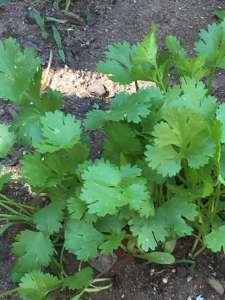
( Common Names: Cilanto; Coriander; Chinese Parsley)
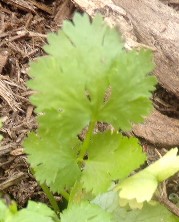
|
Coriandrum Sativum ( Common Names: Cilanto; Coriander; Chinese Parsley) |
|







| Kingdom: Plantae -plants Subkingdom: Tracheobionta -vascular plants Superdivision: Spermatophyta -seed plants Division: magnoliophyta -flowering plants Class: Magnoliopsida -dictyledons Subclass: Rosidae Order: Apiales Family: Apiaceae/Umbelliferae-carrot family Genus: Coriandrum L. -coriander Species: Coriandrum sativum L.-coriander | 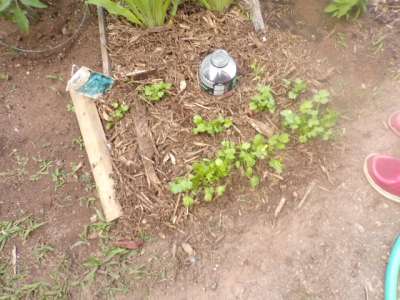 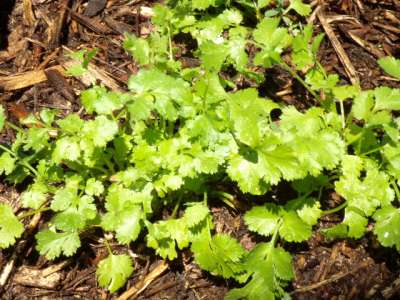 My cilantro is a new growing campaign this year (2016) for me.
The first picture at the top is of my newly growing cilantro
while the next is my cilantro June 19, 2016. I added mulch and a
water bottle to it. I've been researching it and I need to plant
a few new seeds in the other parts of this bed so I can have cilantro
as this will be going into a full grown Coriander plant soon. I
will be allowing it to bolt as it attracts ladybugs and other insect
preditors. I had a white fly problem earlier with my Rose bush
and when I was reading how to get rid of them, the lady bug was listed
as an enemy. We all make mistakes with our first time crops and
this is OK! The mulch is to try and keep the ground cool as I
don't want it to bolt too early.
Coriander is in the same family as anise, dill, cumin, fennel, and caraway. It is a hardy annual that benefits from succession planting (every 3-4) weeks to keep the cilantro growing. When Coriander is planted this way next to the rows of the older Coriander plants the Cilantro is shaded from the full sun thus keeping it cool. Because it is known to bold many people feel that it's difficult to grow Cilantro. I'm impressed thus far with this herb. Then again I'm new at growing it too. To direct sow this seed into the ground one must perpare the seed before planting. Gently crush the seed husk (2 seeds in a husk is how coriander seeds come) that holds the two seeds together. Then soak the seeds in water for 24-48 hours and then remove from the water and allow them to dry. It is highly advised to plant them right away. The seeds can be started indoors then transplanted outdoors as well. Put the seeds in soil and cover 1/4" layer of soil. Then leave them growing until they are about 2" tall. Then one can prun the coriander plant and harvest the Cilantro. Pruning regularly will delay bolting. If one wants to keep the cilantro leaves fresh they can place the leaves in the bottom of an icecube tray and cover with water and freeze. Keep the ice cubes with the Cilantro in a ziplock bag. Coriander/Cilantro is used as a:
| Hardiness:2-11 Heatzone: Plant type: annual Exposure: full sun/Part shade Height: 1.5'-2' Spread: 1'-1.5' Spacing: Water needs: Medium Maintenance: Low Soil Type: Soil PH: 6.2-6.8 Soil Drainage: well-drained Tolerance: Attracts: ladybugs and other insect predators Uses: annual/herb Care: |