
Despite the common belief of many, majokos are not a new phenomenon. Rather, the media attention and public popularity of the majoko is a new thing, although is only to be expected at certain times. In fact, the majoko (magical girls) is dated back to ancient fuedal Japan. Now, the Historians among you will rebuff this and say that historical Japan affords no memory of the fluffy little shoujos that are seen now adays. You would be right, and wrong.
Please remember dear reader, that a majokos appearance is more often than not, suited towards the day in which she is in. One does not see, for example, a majoko racing around in a string throng or set of samurai-ko armour. Is this because of our laws? Yes , true, but also because the majoko attempts to represent the purity and innocence in the eyes of the people, and to do so, must reflect what is the common day ideal of purity. Hence my point, you would never find a majoko in feudal japan, as you seen one today. However, there were several majokos dressed in the innocent and yet cheery female garments of Nihon past. A young girl quickly becoming adept in the ways of tea ceremony who seemed to have miracles follow her, and was said to have been blessed by Amaterasu herself, was as much a magical girl, as one is today.
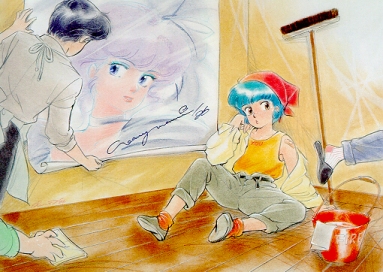
"Blessed by Amaterasu" is not too far off the mark, actually. We believe the gift of mahou comes from the goddess of the sun, or simply "the mother" as we call her. It is a gift that comes from the Mother of creation to the most pure and kind hearted of girls. Interestingly, it also comes at a time in which to be a test. For this reason, there are very few toddler majokos or Majokos in their late teens or older. It seems this "magic" revolves around a girl's transition from childhood to adulthood, situated at the time which is of the greatest changes to a young girl. Physically, mentally, and more importantly, spiritually. There are a few majokos below or above this age, but these are few and far between, and a great deal are actually girls with magic that stem from other sources, not of the "majoko" realm. (see my note later on Senshi, for example)
In essence, the magic that a majoko has derives from a young girl striving to keep her innocence and purity as her maturity attempts to rip it away from her with reality. Or to make it more simpler, Majokos get their magic from trying to stay children while their bodies, and the real world, try to force them to become adults. As silly as this struggle might seem, it is not all that humerous for a child, but even more so for a girl, who has much to deal with as she matures, no matter what part of history she may grow up in. She is falling in love, her body is making her feel odd, her mind is conflicting, she still likes to feel protected and yet wants some independence as well. She is a spirit of conflicting needs and desires, and this conflict is what creates the power. The power ofcourse only manifests in the purest of hearts, as they are the ones who struggle within themselves the greatest not to think of thoughts "unthinkable" . The greatest conflicts allows for the power to manifest, and it is to those Amaterasu's gift is given.
Majoko's share many common characteristics, one of which is their names. Majoko's usually have up to three names, but at least two. All Majoko's bear a name that most people know them by. In some cases, the majoko may not have an alter ego, so that is the name she always goes by in public(e.g. Minky Momo). Other times though, the majoko was granted the powers later on, and often does a transformation for their powers, and therefore create another persona. Examples of this are far more common, however I will not be revealing Creamy Mami or Sasami's identity to you. Sorry...^_~
The third name is one that 99.99% of humanity will never hear. It is the Mahou True Name. It is the name of the spirit that drives the majoko, the name of her soul. A name that she can hear in her heart and in her dreams, feel it belonging to her, and never know where it truly came from. Majokos, as they grow in experience, can learn to sense the mahou true name of another majoko, though it often takes time and true faith. However knowing a mahou's true name can help track her down, lend her strength, or even send her a distress call from a far when you are in need. However, due to the closeness to a mahou's heart is considered extremely rude to mention it in front of anyone who is not a majoko, and certainly not around any Dark majokos, who have a tendency to misuse True Names for Darker agendas. Still, mahou names are a way of majoko's bonding closer together, and very rarely has any normal human ever learned the true name of a majoko. Those that have, usually already bear a very special bond to the majoko in question.
With this basic idea behind Majoko explained (quite overly simplified, I can assure you), it might be good to tell you what a Majoko is actually here for.
Click Here to go back to main page...