|
|
 Life in the West Bank
A Wedding in Idna
by Jonathan Smith
September 18-20, 2002
|
Click on any picture to see an enlarged view. It may take a minute
for the pictures to load depending on the speed of your connection. |
 So what did you do last
weekend? Some of my weekends here are uneventful, but last weekend
wasn't. I experienced a traditional Palestinian wedding, shopped in
an ancient souq, and met many new Palestinian friends. Not bad for
two days! Here's the whole story...
So what did you do last
weekend? Some of my weekends here are uneventful, but last weekend
wasn't. I experienced a traditional Palestinian wedding, shopped in
an ancient souq, and met many new Palestinian friends. Not bad for
two days! Here's the whole story... 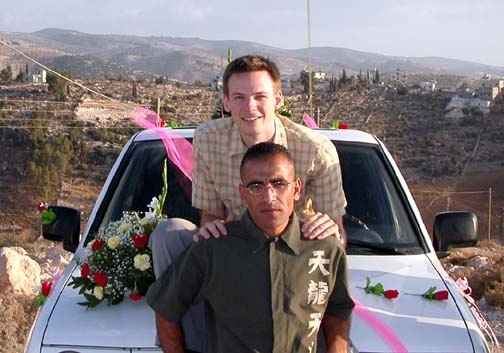 This is Fadel with me in this picture.
He works as my teaching assistant at the university, helping me keep
up with all the grading and class work for my 175 students. Plus he
does the same thing for two other teachers, so he's really busy!
This is Fadel with me in this picture.
He works as my teaching assistant at the university, helping me keep
up with all the grading and class work for my 175 students. Plus he
does the same thing for two other teachers, so he's really busy!
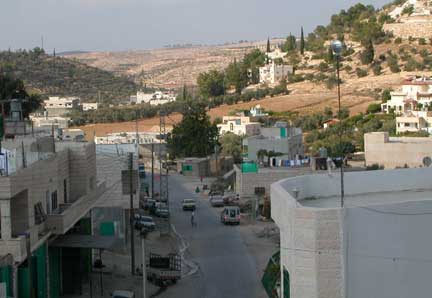 He is from Idna, a town of
about 20,000 located a few kilometers outside of Hebron in the southern West
Bank. Hebron is famous for being the final resting place for the patriarchs
(Abraham, Isaac, and Jacob) and the location of the first Israeli settlement
in the West Bank. Fadel’s sister was going to be married, so he generously
invited me to go with him and experience a traditional Palestinian
wedding. We set off on Wednesday afternoon, reaching Idna in only
five hours -- not too bad considering the road situation with checkpoints
(for more on the road adventures, check out my story on
traveling in the West Bank).
He is from Idna, a town of
about 20,000 located a few kilometers outside of Hebron in the southern West
Bank. Hebron is famous for being the final resting place for the patriarchs
(Abraham, Isaac, and Jacob) and the location of the first Israeli settlement
in the West Bank. Fadel’s sister was going to be married, so he generously
invited me to go with him and experience a traditional Palestinian
wedding. We set off on Wednesday afternoon, reaching Idna in only
five hours -- not too bad considering the road situation with checkpoints
(for more on the road adventures, check out my story on
traveling in the West Bank).
When we arrived the wedding party was already in full swing. Nowadays a Palestinian wedding takes 2 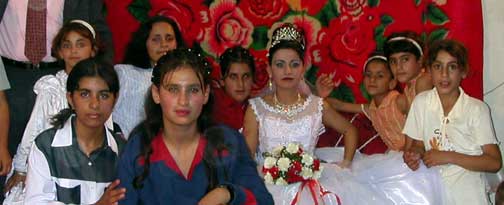 days, but in the recent past (before the Intifada) Fadel tells me
that weddings lasted for a full week. Why the change? Palestinians
don’t feel that they should spend so much time celebrating when so many
of their people are suffering. So they try to cut the celebration
short. That night when we arrived was the party for the bride.
All of her friends and relatives were there, and the women spent most of
the night playing music and dancing for the bride while she sat on a platform
on a terrace. The mean sat inside the house drinking tea and talking.
Fadel tells me that normally the men go out and dance, also, but again
“the situation” requires that they not appear to be celebrating while their
countrymen are dying. So we sat around and talked. It turns
out that Fadel has five brothers and six sisters. Just meeting all
the uncles and cousins took quite a while! But they were incredibly
hospitable and understanding of my inability to speak Arabic. And
many of them spoke English. One of Fadel’s brothers is an English
teacher, so I spent a while talking to him. We spoke about how the
elderly are respected in Palestinian culture. Something we could learn
from in the the U.S.
days, but in the recent past (before the Intifada) Fadel tells me
that weddings lasted for a full week. Why the change? Palestinians
don’t feel that they should spend so much time celebrating when so many
of their people are suffering. So they try to cut the celebration
short. That night when we arrived was the party for the bride.
All of her friends and relatives were there, and the women spent most of
the night playing music and dancing for the bride while she sat on a platform
on a terrace. The mean sat inside the house drinking tea and talking.
Fadel tells me that normally the men go out and dance, also, but again
“the situation” requires that they not appear to be celebrating while their
countrymen are dying. So we sat around and talked. It turns
out that Fadel has five brothers and six sisters. Just meeting all
the uncles and cousins took quite a while! But they were incredibly
hospitable and understanding of my inability to speak Arabic. And
many of them spoke English. One of Fadel’s brothers is an English
teacher, so I spent a while talking to him. We spoke about how the
elderly are respected in Palestinian culture. Something we could learn
from in the the U.S. That night Fadel and I slept in the apartment of Jobran, one of Fadel’s many cousins (and believe me, he 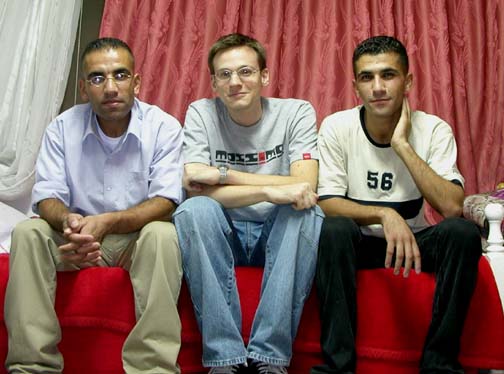 has a lot). Here is a picture of the three of us at Jobran's
apartment. He was studying at Hebron University, and he also spoke
good English. Most of Fadel’s relatives lived on the same block,
and almost all lived in the same city. The sense of community
there is hard to describe. The children seem to really enjoy being
with their parents, and they all help each other out.
has a lot). Here is a picture of the three of us at Jobran's
apartment. He was studying at Hebron University, and he also spoke
good English. Most of Fadel’s relatives lived on the same block,
and almost all lived in the same city. The sense of community
there is hard to describe. The children seem to really enjoy being
with their parents, and they all help each other out. Top of page 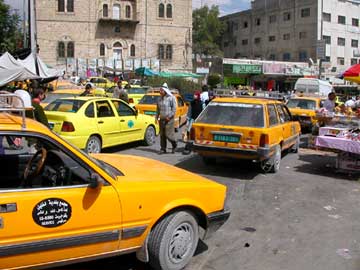 The next morning
we traveled to Hebron to see the city and do some shopping.
Hebron was not occupied
by Israeli troops at that time, so it had a really different feel from
my trip to Jenin.
The city streets
were packed with taxis and people shopping. We spent some time wandering
through the souq (open market) as people have shopped in Hebron for literally
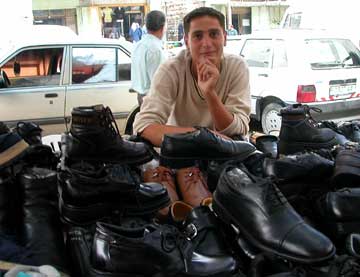
thousands of years. We bought some clothes in a shopping mall. This
guy selling shoes is named Ahmad. He spoke good English, and he really wanted
to sell me some shoes, but I just didn't need any at the time.
The next morning
we traveled to Hebron to see the city and do some shopping.
Hebron was not occupied
by Israeli troops at that time, so it had a really different feel from
my trip to Jenin.
The city streets
were packed with taxis and people shopping. We spent some time wandering
through the souq (open market) as people have shopped in Hebron for literally
thousands of years. We bought some clothes in a shopping mall. This
guy selling shoes is named Ahmad. He spoke good English, and he really wanted
to sell me some shoes, but I just didn't need any at the time. 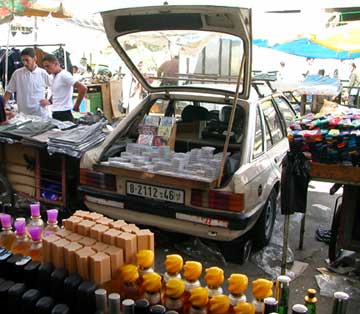
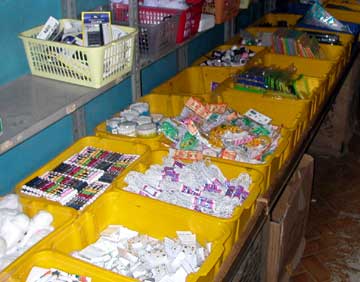 One interesting stop along our shopping
route was the one shekel store. Just like the dollar stores in the
U.S., except that everything was one shekel (about 23 cents). Not
bad!
One interesting stop along our shopping
route was the one shekel store. Just like the dollar stores in the
U.S., except that everything was one shekel (about 23 cents). Not
bad!After Fadel bought some pants, we took them to a tailor’s shop to have them hemmed. The tailor did the 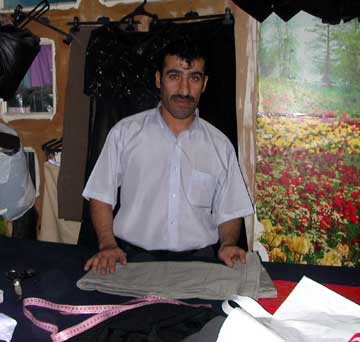 job while we waited (in 3 minutes or so). I snapped a picture
just as he finished them up. Quite impressive.
job while we waited (in 3 minutes or so). I snapped a picture
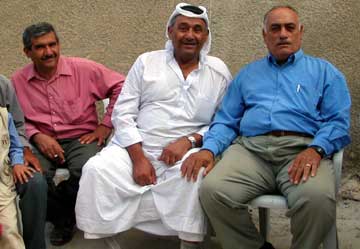
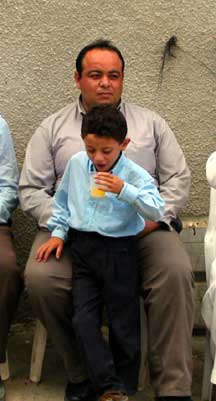
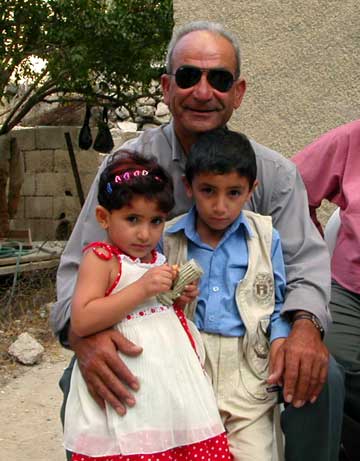
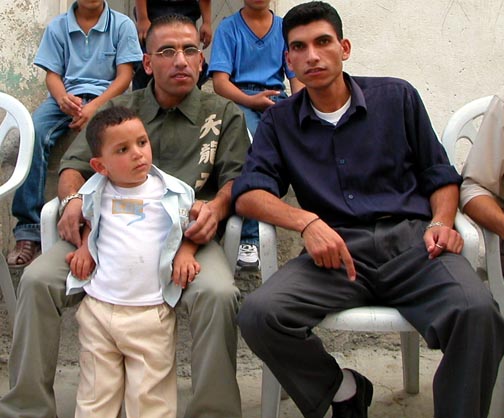
just as he finished them up. Quite impressive.Top of page After our time in Hebron we returned to Idna for the wedding ceremony. The way the ceremony works is that the groom comes with his family and relatives to the bride’s house to take the bride from her father's house to her new house and life with her husband. When the groom's relatives arrived, I sat outside with them drinking orange juice and taking pictures. You can see that the relatives came from different backgrounds, from buisnessmen to farmers and laborers. 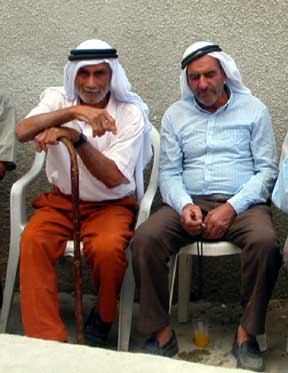
Top of page 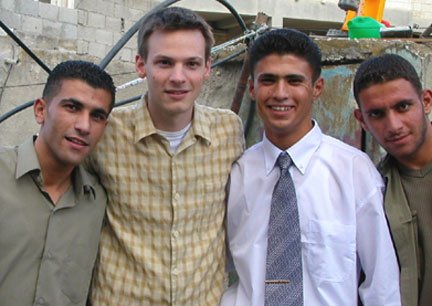 Then we went to the terrace where the
ceremony was and lined up to give gifts to the bride. And I had time to
snap a quick pic with the groom himself (he's the one with the necktie)
along with Jobran and Ibrahim, Fadel's younger brother.
Then we went to the terrace where the
ceremony was and lined up to give gifts to the bride. And I had time to
snap a quick pic with the groom himself (he's the one with the necktie)
along with Jobran and Ibrahim, Fadel's younger brother. Next we moved out to the street to watch the bride and groom as they were whisked off in a borrowed car 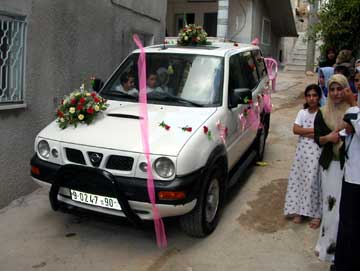 to their new house. At first I thought that the wedding was
over. Actually, it was just getting started.
to their new house. At first I thought that the wedding was
over. Actually, it was just getting started.
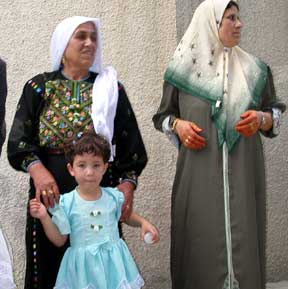
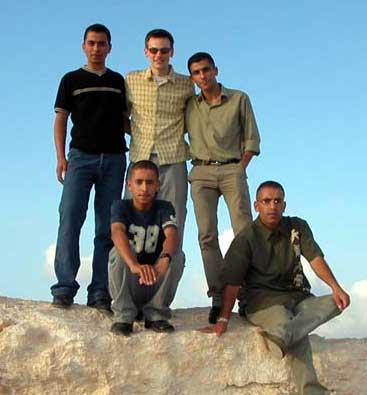
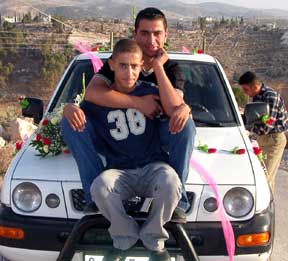
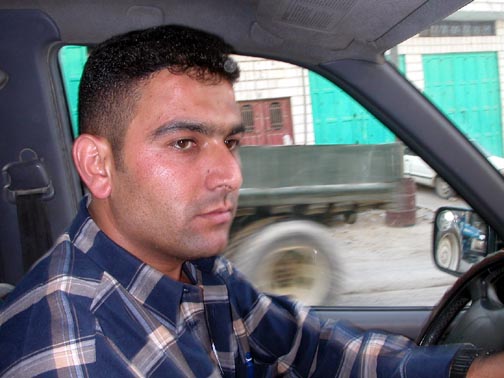 The driver of the car (Fadel’s brother
Iyad) came back and picked us up and took us to the house…but first we stopped
at a scenic route to snap some pictures of the guys (all relatives of
Fadel, of course). Everyone loved my camera and wanted to get pictures
in all kinds of funny poses.
The driver of the car (Fadel’s brother
Iyad) came back and picked us up and took us to the house…but first we stopped
at a scenic route to snap some pictures of the guys (all relatives of
Fadel, of course). Everyone loved my camera and wanted to get pictures
in all kinds of funny poses.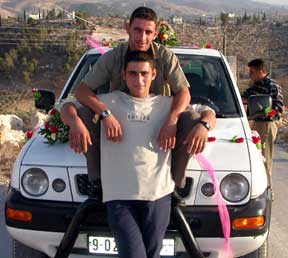
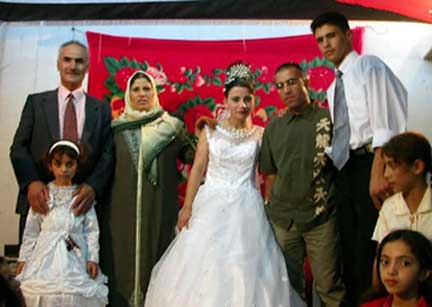
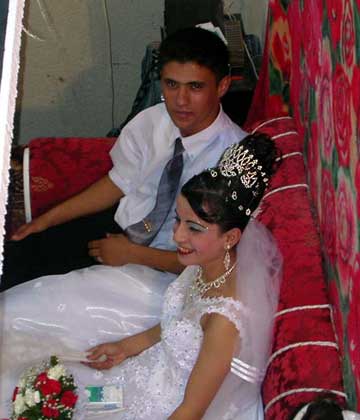
Top of page At the happy couple’s new house the party was in full swing. In this part of the ceremony the bride and groom sit together in their place of honor and the people play music and dance all around them. Unfortunately I didn't get any good pictures of the dancing, but I did get some pictures of the bride and groom and their families on the platform. 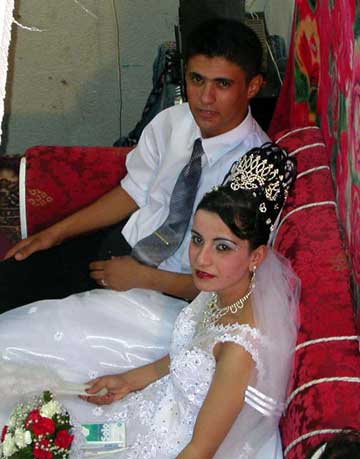
A little later we were invited into the groom’s father’s house (the man in the suit in the picture below). He was a headmaster of an elementary school in Idna, and he asked me about my teaching at the university. But pretty soon our conversation turned to politics (as it frequently does here). He spoke pa 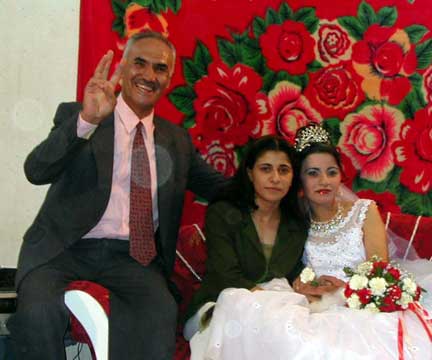 ssionately (in Arabic with
Fadel translating) about how his people were suffering. I have found
that many times because I am American people speak to me as a representative
of Americans. They feel that they are suffering and no one in the
U.S. notices or cares. This man asked me
over and over, “Why do the Americans not care about us?” “Why
do they think we are terrorists?” Then he showed me pictures of
children who had been killed in the Intifada, including a young baby.
He asked me, “Why?”
ssionately (in Arabic with
Fadel translating) about how his people were suffering. I have found
that many times because I am American people speak to me as a representative
of Americans. They feel that they are suffering and no one in the
U.S. notices or cares. This man asked me
over and over, “Why do the Americans not care about us?” “Why
do they think we are terrorists?” Then he showed me pictures of
children who had been killed in the Intifada, including a young baby.
He asked me, “Why?” I had no good answer for him, but I told him that I did care about it and I hoped that it would change soon. I felt really honored that he would speak so freely with me. Many people here are so concerned about being hospitable that they will not tell you how they really feel because they do not want to offend you. Just by being American and by listening to their struggles, it tells them that someone is listening. After telling me all of these things, this man then said, “Thank you so much for coming. You are welcome in my house anytime” while shaking my hand repeatedly. He kept saying "You are welcome" over and over in English. I think he wanted me to know that he wasn't angry at me, just my government. I can relate. What was so striking about the wedding to me was its difference from an American wedding. The focal point of the wedding is the family of the couple just as much as the couple themselves. The ceremony did 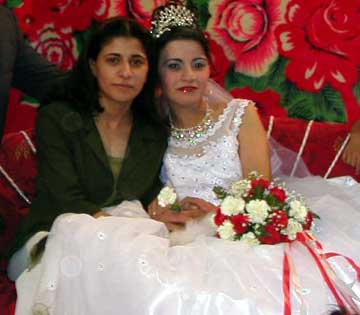 not take place in a church or mosque, but in the homes of the couple’s
parents. There was also the clear illustration of the bride leaving
her family to start a new life. When the bride was leaving her home,
she and most of the women started wailing loudly. I thought it was
kind of strange to be lamenting at a wedding, but it was explained to me
that the bride was leaving her family, so it was both a happy time and a sad
time. This wedding illustrated to me how deep the family ties are here,
and how much they are valued. There is a sense of community here that
I am not accustomed to from my background of Western culture. Of course
both ways have their positives and negatives, but I think we can learn a
bit about the value of community from Palestinians. It was definitely
a memorable experience for me.
not take place in a church or mosque, but in the homes of the couple’s
parents. There was also the clear illustration of the bride leaving
her family to start a new life. When the bride was leaving her home,
she and most of the women started wailing loudly. I thought it was
kind of strange to be lamenting at a wedding, but it was explained to me
that the bride was leaving her family, so it was both a happy time and a sad
time. This wedding illustrated to me how deep the family ties are here,
and how much they are valued. There is a sense of community here that
I am not accustomed to from my background of Western culture. Of course
both ways have their positives and negatives, but I think we can learn a
bit about the value of community from Palestinians. It was definitely
a memorable experience for me.
Top of page |