|
|
 Life in the West Bank
Checkpoints and dirt roads:
How we travel in the West Bank
by Jonathan Smith
September 20, 2002
|
depending on the speed of your connection. |
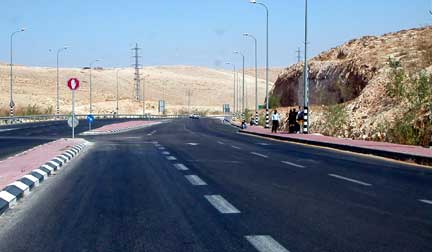 It’s a different world out here. Due to
the current political situation, traveling around the West Bank is not at
all what it used to be. Here are the “normal roads”. They connect
the major cities of the West Bank, making a trip between Jenin (the area
where I live, north of Nablus) in the north and Hebron in the south only
a couple of hours under normal conditions. As you can see in this map,
Israel and the West Bank is quite a small region.
It’s a different world out here. Due to
the current political situation, traveling around the West Bank is not at
all what it used to be. Here are the “normal roads”. They connect
the major cities of the West Bank, making a trip between Jenin (the area
where I live, north of Nablus) in the north and Hebron in the south only
a couple of hours under normal conditions. As you can see in this map,
Israel and the West Bank is quite a small region.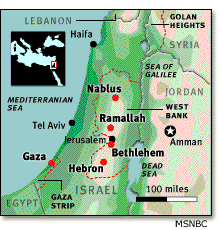
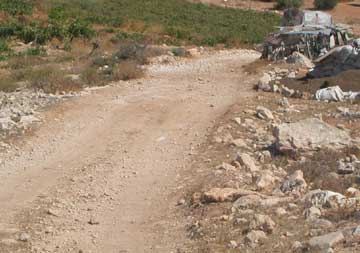 And here are the Palestinian roads. This
is how Palestinians have gotten around in the West Bank since the beginning
of the Israeli occupation. A collection of dirt and gravel roads winding
through the hills, these paths bypass the checkpoints and road closures that
attempt to keep Palestinians from traveling. Not only are Palestinians
prevented from traveling into Israel, they are generally restricted from
moving from one place to another in the West Bank. But as I discovered,
if there is a will, there is a way. With these roads, my trip from
Jenin to Hebron took five hours there and a staggering nine hours back.
I made this trip with Fadel, a teaching assistant in the English Program
where I work, to see the wedding of his sister. Our return trip was
the most eventful, and gives a good picture of what travel is like in these
days.
And here are the Palestinian roads. This
is how Palestinians have gotten around in the West Bank since the beginning
of the Israeli occupation. A collection of dirt and gravel roads winding
through the hills, these paths bypass the checkpoints and road closures that
attempt to keep Palestinians from traveling. Not only are Palestinians
prevented from traveling into Israel, they are generally restricted from
moving from one place to another in the West Bank. But as I discovered,
if there is a will, there is a way. With these roads, my trip from
Jenin to Hebron took five hours there and a staggering nine hours back.
I made this trip with Fadel, a teaching assistant in the English Program
where I work, to see the wedding of his sister. Our return trip was
the most eventful, and gives a good picture of what travel is like in these
days.We left Idna at 8 a.m., not knowing how long the trip would take and wanting to be back before dark. After 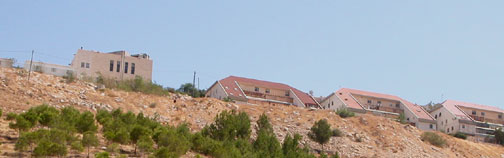 driving through some back roads, we met our first road closure between Hebron
and Bethlehem. This road
driving through some back roads, we met our first road closure between Hebron
and Bethlehem. This road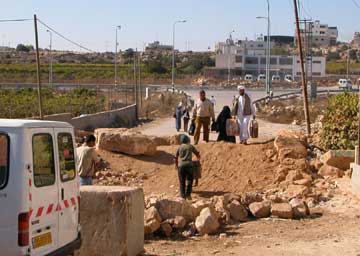 has been closed to Palestinians since the beginning of the Intifada two
years ago in order to protect a group of Israeli settlements in the area.
To the left, you can see a picture I got of a settlement in that area.
They are usually perched on top of high hills. In order for this comparatively
small number of people to have freedom of travel and security, hundreds of
thousands of Palestinians are restricted from travel in their own land.
So like Palestinians have been doing for two years in this spot, we
left our taxi, walked over the pile of dirt blocking the road, and then looked
for a taxi on the other side. While we were waiting for a taxi, I had
time to observe other people crossing over.
has been closed to Palestinians since the beginning of the Intifada two
years ago in order to protect a group of Israeli settlements in the area.
To the left, you can see a picture I got of a settlement in that area.
They are usually perched on top of high hills. In order for this comparatively
small number of people to have freedom of travel and security, hundreds of
thousands of Palestinians are restricted from travel in their own land.
So like Palestinians have been doing for two years in this spot, we
left our taxi, walked over the pile of dirt blocking the road, and then looked
for a taxi on the other side. While we were waiting for a taxi, I had
time to observe other people crossing over. 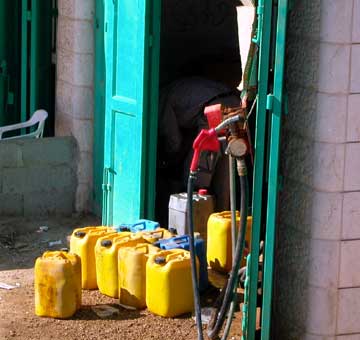 A whole economy has grown up around this place
that was just a mile marker in the past. The area is primarily agricultural,
with olive groves and grape vines lining the road. There was a makeshift
gas station for taxis and other cars to fuel up. The most interesting
new job created was for the boys who help people to carry things from one
side to the other. They had a collection of carts, hand pushed or even
driven by donkeys. What do you do when you need to deliver a shipment
of fertilizer from Hebron to Ramallah? Well, you pay these boys to
load it onto a donkey cart and drive it across, of course. In
this case, it was a long and difficult process, mainly because the donkey
could not be convinced to pull that cart over the hump. Donkeys are
stubborn like that. After trying
A whole economy has grown up around this place
that was just a mile marker in the past. The area is primarily agricultural,
with olive groves and grape vines lining the road. There was a makeshift
gas station for taxis and other cars to fuel up. The most interesting
new job created was for the boys who help people to carry things from one
side to the other. They had a collection of carts, hand pushed or even
driven by donkeys. What do you do when you need to deliver a shipment
of fertilizer from Hebron to Ramallah? Well, you pay these boys to
load it onto a donkey cart and drive it across, of course. In
this case, it was a long and difficult process, mainly because the donkey
could not be convinced to pull that cart over the hump. Donkeys are
stubborn like that. After trying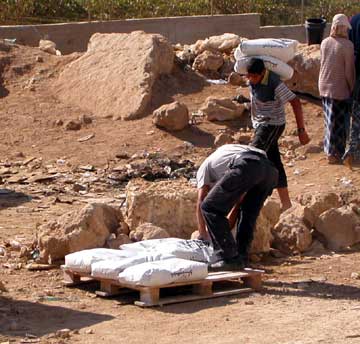 to convince the donkey to make the trip (even giving him a running start),
the boys unloaded half of the fertilizer and carried it across themselves.
to convince the donkey to make the trip (even giving him a running start),
the boys unloaded half of the fertilizer and carried it across themselves.
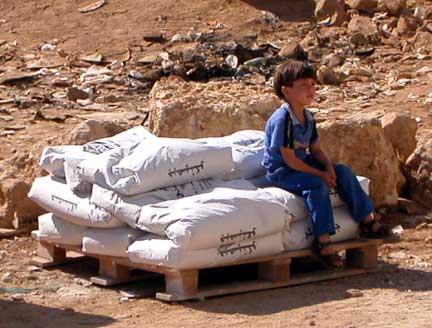 The boy in this picture is the son of the gas station owner. He decided to
get in on the action by sitting on the bags of fertilizer.
The boy in this picture is the son of the gas station owner. He decided to
get in on the action by sitting on the bags of fertilizer. After decreasing the load, the transport team finally managed to get the donkey to pull the rest of the fertilizer over the hump. I got a picture just at they topped the hill. 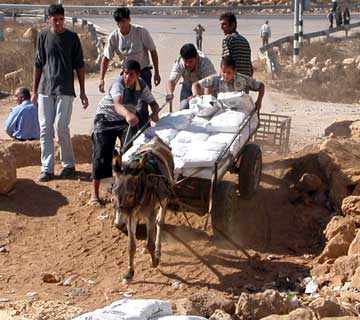
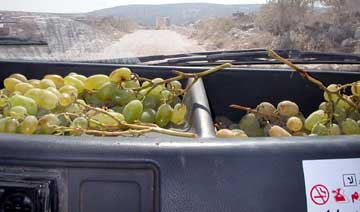 At that point our driver arrived, so I had to leave the transport drama behind.
Many of the taxis in the West Bank are vans that operate as shared taxis,
where a group of people chip in to go from one place to another, in our case
from this road closure outside Bethlehem to Ramallah.
In addition to delivering five people, the cargo included some electrical
cable that the driver needed to deliver to Ramallah.
He was determined to get all the
way there no matter what the obstacles. We did, but the trip involved
five hours of back roads and getting stuck in an olive grove.
He jumped in, plopped down a few bunches of fresh grapes on the dash, and
off we went.
At that point our driver arrived, so I had to leave the transport drama behind.
Many of the taxis in the West Bank are vans that operate as shared taxis,
where a group of people chip in to go from one place to another, in our case
from this road closure outside Bethlehem to Ramallah.
In addition to delivering five people, the cargo included some electrical
cable that the driver needed to deliver to Ramallah.
He was determined to get all the
way there no matter what the obstacles. We did, but the trip involved
five hours of back roads and getting stuck in an olive grove.
He jumped in, plopped down a few bunches of fresh grapes on the dash, and
off we went. We started out on the normal back roads, which are dirt and gravel roads winding through the hills. But then we came to a surprise road closure, on a dirt road, no less. It was not there the day before, but now it blocked our travel to Ramallah. The passengers could have left the taxi then and gotten taxis on the other 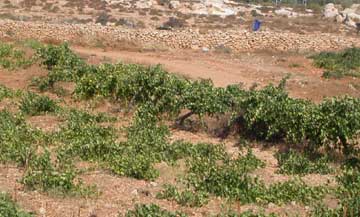 side, but our driver was determined
to get his taxi to Ramallah. So we turned around to find another way.
That way jostled us through some dirt paths that should not be called roads
and ended up in an olive grove lining the main road. So we drove between
olive trees, our van scraping olive trees on both sides, dropping branches
with fresh olives in our laps as we went. We were looking for a path
that
side, but our driver was determined
to get his taxi to Ramallah. So we turned around to find another way.
That way jostled us through some dirt paths that should not be called roads
and ended up in an olive grove lining the main road. So we drove between
olive trees, our van scraping olive trees on both sides, dropping branches
with fresh olives in our laps as we went. We were looking for a path
that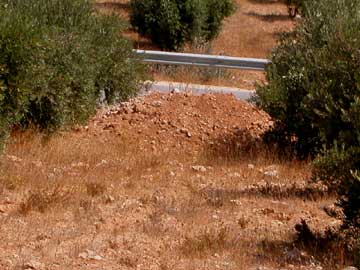 would let us out to the main road, but every possible way out seemed to
be blocked. Finally, we found a way wasn’t blocked. But then
as we were driving toward it, the back wheel of the taxi got stuck in the
lightly packed dirt. So we got out and helped to push the van out of
the hole, using rock and sticks to help the wheel get traction. The
driver backed up for another approach, and we promptly got stuck again.
So we pushed and pushed
would let us out to the main road, but every possible way out seemed to
be blocked. Finally, we found a way wasn’t blocked. But then
as we were driving toward it, the back wheel of the taxi got stuck in the
lightly packed dirt. So we got out and helped to push the van out of
the hole, using rock and sticks to help the wheel get traction. The
driver backed up for another approach, and we promptly got stuck again.
So we pushed and pushed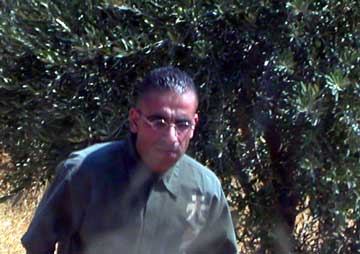 until the taxi worked its way out of the dirt. At last we were onto
a main road!
until the taxi worked its way out of the dirt. At last we were onto
a main road! 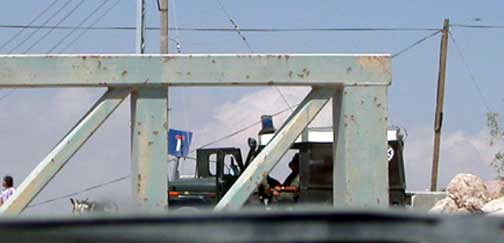 But our comfortable drive only lasted for five minutes, before another road
closure forced us back onto dirt roads. Trying to get on one of these
roads, an Israeli armored jeep blocked our way and called to us to turn around
and take the main road. We later discovered why when the road led us
to a checkpoint. Not a good picture of the checkpoint, but I didn’t
want to be too obvious. The driver went to talk to the soldiers to
try and get us through, but they weren’t letting anyone through that day.
We
But our comfortable drive only lasted for five minutes, before another road
closure forced us back onto dirt roads. Trying to get on one of these
roads, an Israeli armored jeep blocked our way and called to us to turn around
and take the main road. We later discovered why when the road led us
to a checkpoint. Not a good picture of the checkpoint, but I didn’t
want to be too obvious. The driver went to talk to the soldiers to
try and get us through, but they weren’t letting anyone through that day.
We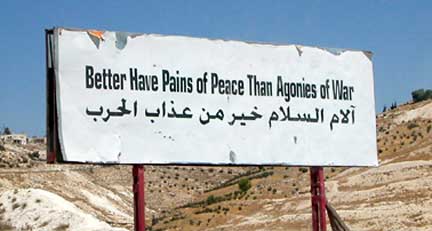 reluctantly turned back around and looked for another dirt road to get us
through. On the way I saw a welcome sight: a sign in Arabic and
English reading “Better have pains of peace than agonies of war.”
reluctantly turned back around and looked for another dirt road to get us
through. On the way I saw a welcome sight: a sign in Arabic and
English reading “Better have pains of peace than agonies of war.” 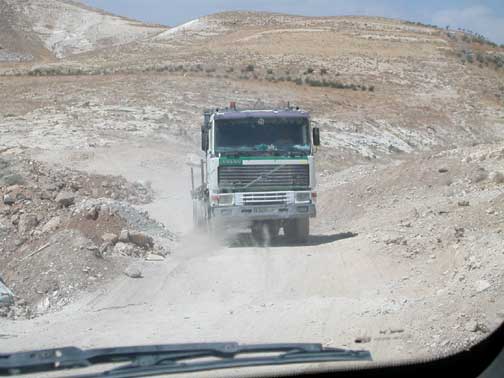 We drove back to the same road we had tried earlier and the Israeli jeep
was gone, so we took it along with 18 wheelers and other taxis trying to
get through. After five hours of bumping through dirt roads, we arrived
outside Ramallah where the taxi exchanges take place. There Fadel and
I picked up another taxi that would take us to our final destination.
On this leg of the trip, we got to travel on some paved roads for a few miles
winding through the mountains and along the border between the West Bank
and Jordan. The
We drove back to the same road we had tried earlier and the Israeli jeep
was gone, so we took it along with 18 wheelers and other taxis trying to
get through. After five hours of bumping through dirt roads, we arrived
outside Ramallah where the taxi exchanges take place. There Fadel and
I picked up another taxi that would take us to our final destination.
On this leg of the trip, we got to travel on some paved roads for a few miles
winding through the mountains and along the border between the West Bank
and Jordan. The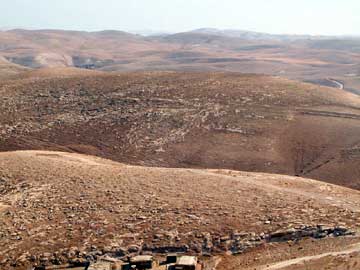 landscape was mountainous and arid.
 Before long we came to another checkpoint. What a surprise! At this checkpoint we followed the usual procedure: Palestinian vehicles line up along the side of the road and watch as cars with Israeli tags cruise by. Then when the soldiers are ready to talk to us, they ask us all to get out of the car and present our IDs. The soldiers then check out our IDs while we wait. I have been through numerous checkpoints, and I have to say the generally the soldiers are generally nice, at least to me as a foreigner. This time the soldier even filled up our water bottle to have some water to drink as we stood in the hot sun. But the answer to our travel to the checkpoint was no. The soldier said that no Palestinian was allowed to travel through that 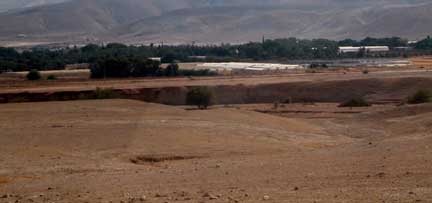 checkpoint unless he or she had an ID proving residence in that area.
Fadel is not from that region, but he lives there because of his job.
But they didn’t care about that. The soldier spoke to me in English,
“You can go through by yourself, but they cannot pass through here.”
Then he added, “If you want, you can go through the mountains with them.”
In other words, he knew that they were going to get through on the back roads,
but he couldn’t officially let them pass at this place. So I got back
in the taxi with the others, and we took the dirt road which ran almost parallel
with the main road and dumped us out just on the other side of the checkpoint.
So much for security. It makes me wonder what function the checkpoints
serve, when even the soldiers know that people are going to go around them.
After another hour of dirt roads, we arrived back at the
university
by 5 p.m.
checkpoint unless he or she had an ID proving residence in that area.
Fadel is not from that region, but he lives there because of his job.
But they didn’t care about that. The soldier spoke to me in English,
“You can go through by yourself, but they cannot pass through here.”
Then he added, “If you want, you can go through the mountains with them.”
In other words, he knew that they were going to get through on the back roads,
but he couldn’t officially let them pass at this place. So I got back
in the taxi with the others, and we took the dirt road which ran almost parallel
with the main road and dumped us out just on the other side of the checkpoint.
So much for security. It makes me wonder what function the checkpoints
serve, when even the soldiers know that people are going to go around them.
After another hour of dirt roads, we arrived back at the
university
by 5 p.m. What do these checkpoints and closures mean for Palestinians? They are largely isolated in their villages and cities. Many students at my university live in cities like Nablus and Hebron, but they only travel home once every few weeks because it is so difficult. Checkpoints means that Palestinians are not allowed to travel freely in their own homeland. As usual, they are resourceful and find ways around obstacles, continuing to attempt traveling even when there appears to be no way. Many students at our university live in villages around Jenin, and their daily commute of 10 miles that should take only a few minutes takes over an hour. Every day a new dirt road is blocked or dug out, and every day they find a new way around. They persist in trying to have a normal life even when nothing is normal. For a good collection of images of checkpoints around the West Bank, check out this page . Or you can read this excellent article about checkpoints. Top of Page |