MALAYSIA Tanah tumpahnya darahku...
Malaysia | Terengganu | Kelantan | Selangor
HISTORY

(Blue Mosque)

In the 15th century, Selangor was ruled by the Sultanate of Malacca. After the fall of Malacca to the Portuguese in 1511, the area became hotly disputed between the Portuguese, Johor, Aceh and Siam. When the Dutch displaced the Portuguese from Malacca in 1641, they brought in Muslim Bugis mercenaries from Sulawesi. They established the present hereditary sultanate in 1740. In many districts, Bugis settlers displaced the Minangkabau settlers from Sumatra, who had established themselves in Selangor some 100 years previously.
In the 19th century, the economy boomed due to the exploitation of huge tin reserves and the growing importance of rubber. This attracted a large influx of Chinese migrant labourers. Chinese secret clan societies, allied with Selangor chiefs, fought for control of the tin mines. The increasing violence created social and economic havoc. It also opened a window of opportunity for the British government, which forced the Sultan of Selangor to accept a British Resident
in 1874. Under the stability imposed by the British, Selangor again
prospered. In 1896, largely through the co-ordination of the Resident, Frank Swettenham, Selangor united with Negri Sembilan, Perak and Pahang to form the Federated Malay States, with its capital in Kuala Lumpur.
The Federated Malay States evolved into the Federation of Malaya in 1948, which became independent in 1957, and Malaysia in 1963. The city of Kuala Lumpur functioned as both the national capital of Malaysia and the state capital of Selangor. In 1974, Selangor relinquished Kuala Lumpur to the federal government. The Sultan of Selangor, Sultan Salahuddin, reportedly shed tears of sadness upon signing away Selangor's sovereignty over its beloved capital. To commemorate Selangor's sacrifice, the Sultan decreed that an archway be built on the borders of the new Federal Territory and Selangor; this archway is the Kota Darul Ehsan that now towers majestically over a section of the Federal Highway between Bangsar and Petaling Jaya. The state capital was moved to Shah Alam after the cession.
Putrajaya, a new city designed to be the new administrative capital of Malaysia, was built by the federal government in Selangor. Sultan Salahuddin was asked again to cede land to the federal government. Putrajaya became a federal territory in 2001.
CULTURES & INTERESTED PLACES

As of 2010 Census the population of Selangor is 57.9% Muslim, 24.4% Buddhist, 11.6% Hindu, 3.8% Christian, 0.5% Taoist or Chinese religion adherent, 1.4% follower of other religions, and 0.4% non-religious.
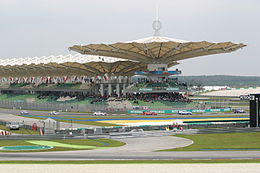
Famous tourist attractions in Selangor include the I-City in Shah Alam, a retail and commercial hub with millions of LED lights and a snowalk indoor park; the National Zoo of Malaysia (Zoo Negara) in Ampang Jaya, the largest zoo in Malaysia with more than 4,000 animals; Sepang International Circuit in Sepang, the venue for the Formula One Malaysian Grand Prix, the A1 Grand Prix and the Malaysian Motorcycle Grand Prix; the Sultan Salahuddin Abdul Aziz Shah Mosque, one of the most stunning architectures in the country, and Sunway Lagoon in Bandar Sunway, Malaysia's top theme park. Other theme parks in Selangor include The Mines Wonderland in Sri Kembangan and Wet World Water Park in Shah Alam.
Other attractions in Selangor include Batu Caves in Selayang, Shah Alam's Blue Mosque, Shah Alam Gallery, High 5 Bread Town and Selangor State Library in Shah Alam, the Sultan Abdul Aziz Royal Gallery, Alam Shah Palace, GM Klang Wholesale City and Crab Island (Pulau Ketam) off Port Klang. The most popular beaches in Selangor are located at Bagan Lalang, Sepang Gold Coast, Batu Laut Beach and Morib Beach. There are also a number of pristine nature sites such as the Firefly Sanctuary, Kuala Selangor Nature Park in Kuala Selangor; Malaysia Agriculture Park Bukit Cerakah in Shah Alam; Commonwealth Forest Park and Forest Research Institute of Malaysia (FRIM) in Selayang; Ampang Recreational Forest and Kanching Recreational Forest in Ampang Jaya.
The larger towns and cities in Selangor consist of various shopping malls that are frequented by tourists and locals, such as 1 Utama in Bandar Utama; The Curve, e@Curve (formerly known as Cineleisure Damansara), Ikano Power Centre and IKEA in Mutiara Damansara; Tropicana City Mall in Damansara Utama; Paradigm Mall in Kelana Jaya; Sunway Pyramid in Bandar Sunway; Mines Wonderland in Seri Kembangan; Subang Parade, Empire Subang and Summit USJ in Subang Jaya; IOI Mall in Puchong; ÆON Bukit Tinggi Shopping Centre and Bukit Raja Shopping Centre in Klang; Setia City Mall, Plaza Alam Sentral and SACC Mall in Shah Alam.
Selangor is also well known to be a haven to massage and spa lovers. Since 2009 there has been a spike in the increase of business operating as traditional massage and reflexology parlors. While most of the business are genuine there are some brothels masquerading as massage parlors or spa's. The Malaysian Royal Police frequently raids such establishment when they receive tip off from the public. Recently OPS NODA was launched by the Malaysian police to curb the growth of prostitution in Selangor. Despite effort by the Malaysian Police prostitution is on the rise in Selangor and continues to attract clientele as far away as Singapore.
POPULAR FOOD

(Satay)

(Rojak)
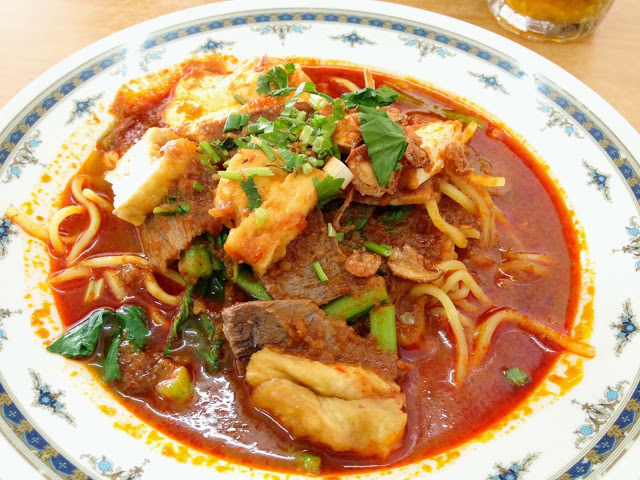
(Mee Bandung)
The traditional Malay cuisine in Selangor has received influences from Johor, Bugis, Jawa and Minangkabau.
Rojak Klang, Lontong Klang and Mee Bandung Muar are famous cuisines in Klang and Shah Alam (Note: Mee Bandung is also touted to have originated from Johor). Other famous dishes include Mee Jawa (which is similar to Mee Rebus in Johor), Satay Kajang, Nasi Ambeng, Laksa Selangor, Soto (Soto Nasi Himpit and Mee Soto), Sambal Tahun, Bakso, Ketam Darul Ehsan, Ikan Masak Asam Pedas, Ayam Masak Kicap and Sayur Masak Rebung.