|
Part
IV: Writing Manuals
|
The 3 manuals
(Thai-, Isan-, and Lao-manual) are analogue in content: |
| |
| 1 |
: |
The 9 basic vowels (English sample
words). |
| 2 |
: |
Basic
vowels - short and long. |
| 3 |
: |
All vowels in
alphabetic order. |
| 4 |
: |
The consonants (Kor
Kai). |
| 5 |
: |
The double
consonants. |
| 6 |
: |
The consonants in
large script. |
| 7 |
: |
Words about tones
and signs. |
| 8 |
: |
Determination of
tones - use of tonal-chart. |
| 9 |
: |
Words
and tones (lists of words with identical tone). |
| 10 |
: |
Tonal-chart. |
|
The
manuals can appear a little scaring at a first glimpse. But there is no need to
be worried; the new student doesn't need to learn the whole content the
very first day.
Start with the basic vowels and the consonants
in order to get familiar with these - and to get familiar with the
phonetics.
When needed, then continue to the more
difficult part: Determination of tones. |
| |
|
|
1) The 9 basic vowels - with English
sample words:

Go
to top of
page |
|
2)
Isan basic vowels
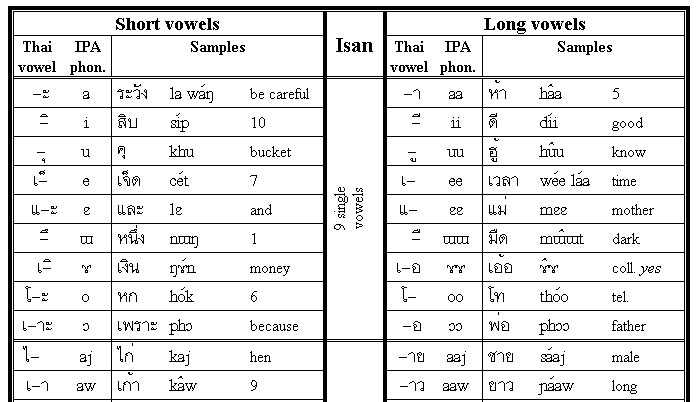
Isan basic vowels is
a part of a table on one page, describing 9 Single, 12 double and 3
triple-vowels - short and long.
Go
to top of
page |
|
4)
Thai consonants - "Kor Kai"

Kor
Kai is
a part of a table on two pages.
Go
to top of
page |
|
8)
Determination of tones
- reading a tonal
chart -
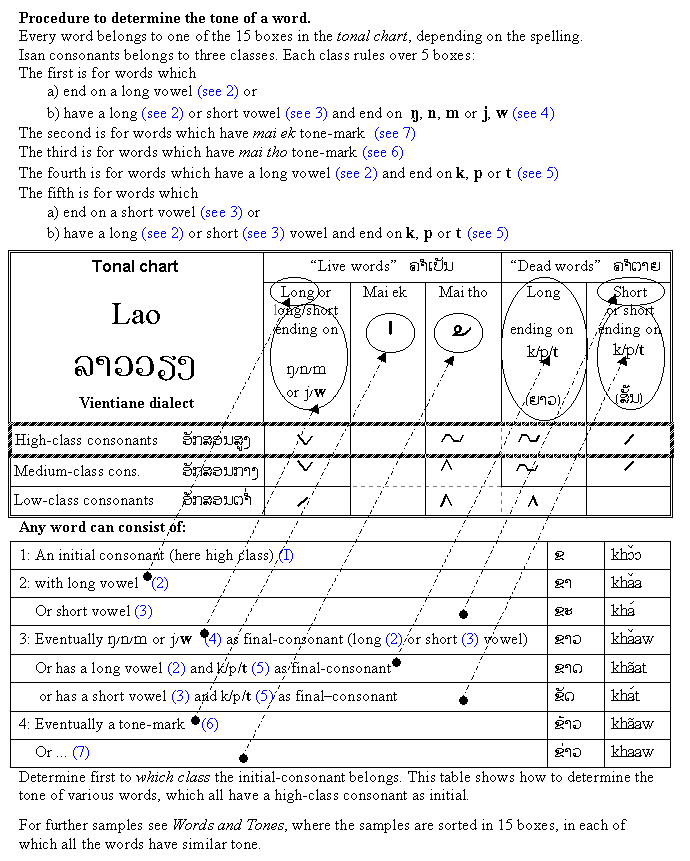
See tonal chart below ...
|
|
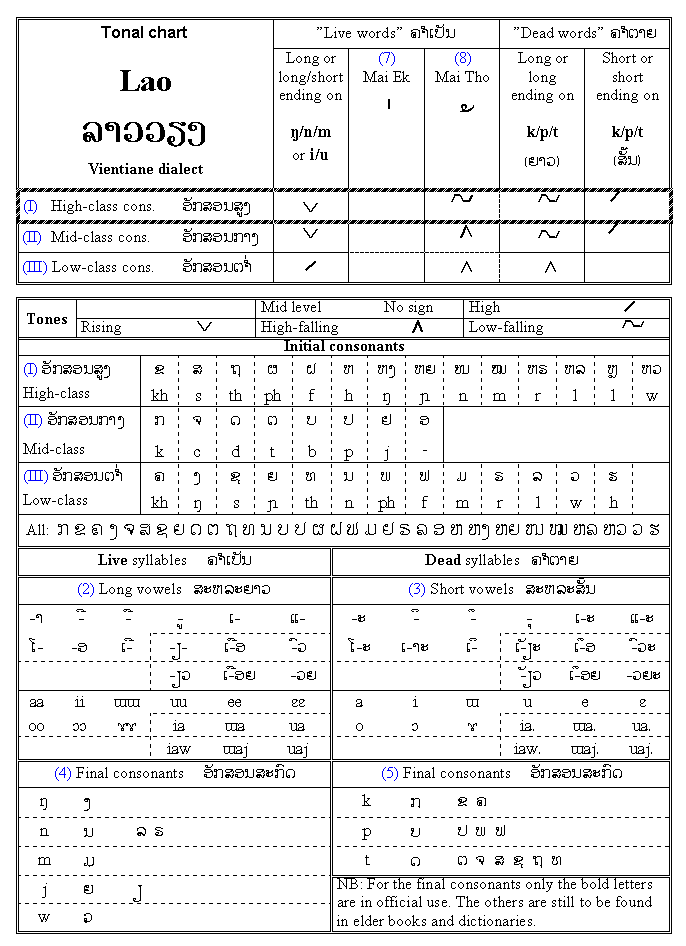
The two tables above are brought in their full extend.
Go
to top of
page |
|
9)
Words and tones in Lao
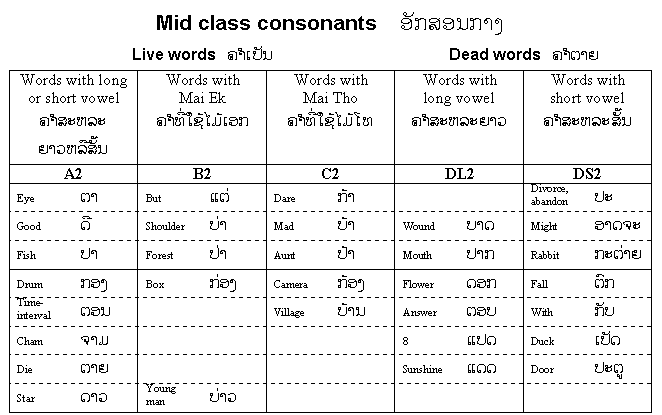
Words
and tones is
a part of a table on three pages. The columns are analogue to the 15 "boxes"
in the tonal chart above. All the words in one box/column have the same tone in
a chosen dialect.
Go
to top of page |
|
Outside
the scope of the Thai-Isan-Lao Phrasebook: |
For the advanced student:
If the student happens not to be living in
Bangkok, Vientiane or Maha Sarakham, the student can make his own
local tonal chart by letting native speakers of that area read the words
in the "word and tones" diagrams. Using pictures of or
pointing at an item is even better, because the informant then won't be
distracted by official writing systems. And the best informants are
mostly elderly illiterate people ("best" meaning people, who
still speaks the original dialect from the days before TV and
migration).
For
the more advanced:
If the student happens be living in a Tai Dam
area in Northern Vietnam or a Tai Lue area in Yunnan the same method can
be used - but as the locals won't be able to read neither Thai nor Lao
script, the student must use pictures of the items. Most of the
Proto-tai words for fish, star, forest, village, mouth, flower, duck,
etc. will be the same allover the Tai-Kadai area (see Linguistic
History). Depending on locality there might be "glides" in
some consonants: phii (ghost) will in some Tai Dam localities be fii
(!) - ph <=> f, for all words. But the tones
will follow the rules described above.
Final
notes:
The writer of this book mostly resides in a Phu
Tai area in Eastern Isan, where some of the double vowels glides into
single vowels: suan for "garden" is pronounced soon
(with a rising tone as well), and "cow": wua (in Thai),
ngua (in Lao) becomes gnoo, all three forms still
belonging to the same tonal box/category: A3.
When I have more time I will continue already
ongoing comparative studies of Phu Tai dialects on both sides of the
Mekong River: In Mukdahan province in Eastern Isan and in Sawannakhet
province in Southern Laos. Using the manuals in Thai and Lao, I start
with the vowels and continue with the consonants. Then I try to find out
which glosses (phonemes) are different from the Lao dialects, which is
the cultural environment. And at last I aim at the tonal system.
Following exactly the same procedure as I propose the beginner in Thai
or Lao to follow.
Good luck! |
|
Site-map |
Thai-Isan-Lao Phrasebook with phonetics and soundtrack |
|
Page 1 |
Index page. |
|
Page 2 |
Introduction: Front
page, introduction, content. |
|
Page 3 |
Texts: Shopping,
Learning by Oneself, etc. |
|
Page 4 |
Wordlists: Menu-card,
people, etc. |
|
Page 5 |
Grammar:
Present-Past-Future, adjectives, classifiers, etc. |
|
Page 6 |
Writing Manuals: Thai
consonants, Lao vowels, Isan clusters, etc. |
|
Page 7 |
Appendixes: Comparing
Lao and Thai consonants and vowels, etc. |
|
Page
8 |
About the author |
|
Page 9 |
Link page: Literature
and web-sites |
|