| Socialization and Stigmatization |
 |
 |
 |
| Photo References: www.thesituationist.wordpress.com www.hreoc.gov.au/.../2003/stu7-7.htm http://professor-howdy.blogspot.com/ Journal Article References: Davis, K., Davis, J., & Dowler, L. (2004). In motion, out of place: the public space(s) of Tourette Syndrome. Social Science & Medicine, 59, 103-112. Marcks, B., Berlin, K., Woods, D., & Davies, W. (2007). Impact of Tourette Syndrome: A preliminary investigation of the effects of disclosure on peer perceptions and social functioning. Journal of Psychiatry, 70(1), 59-67l. Woods, D., & Marcks, B. (2005). Controlled evaluation of an educational intervnetion used to modify peer attitudes and behavior toward persons with Tourette's Syndrome. Behavior Modification, 29(6), 900-912. |
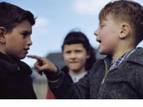
| Do children with TS have poor social skills? Research suggests that many children with TS exhibit poor socialization skills when compared to their peers that do not suffer from TS (Woods and Marcks, 2005). The lack of socialization for many individuals with TS can feed large amounts of stigmatization placed on them by their peers, teachers, school faculty, and parents of other children (Woods and Marcks, 2005). Stigmatization of students with TS is thought to play a role in the social difficulties they experience because they may feel they are not liked. Students with TS might not make friends, and may appear to others as anti-social or depressed instead of suffering from stigmatization (Woods and Marcks, 2005). Students who have TS experience both socialization and stigmatization, and these factors have a large effect on how they function within a society, a school setting or any public place (Woods and Marcks, 2005). Marcks et al. (2007) claimed that individuals with TS may have difficulties in social functioning and that they are often viewed as more withdrawn and less popular than their peers. Furthermore, they stated that 75% of children with TS are often teased by their peers because of their tics and that nearly half of the children and adolescents with TS have difficulty getting along with their teachers and other school faculty (Marcks et al., 2007). |
| What causes social difficulties in children with TS? 1.Co-morbid psychological conditions such as ADHD, OCD, Learning Disabilities, Sleep Disorders, Behavioural problems, (Marcks et al., 2007). 2.Stigmatizing attitudes from the general public directed toward individuals who have TS. 3.Individuals who are uneducated about TS, or those who are educated about TS but choose to ignore their education and continue to stigmatize those with TS. 4.The reactions peers have to the physical tics of those who people have TS. |
| Why are people with TS viewed as a problem to society? Davis et al. (2004) claimed that "in a world so focussed on the visual, on appearances, "Touretters" are often stigmatized by their behavior," (p.104) and that many individuals with TS are often seen as a problem in society due to their perceived lack of self-control that is valued and expected in our society. Davis et al. (2004) explained that for people with TS it is this "loss of control" over their body that produces the stigma which others acquire when the tics of TS sufferers surface and eject themselves in a public space. |
| How can teachers decrease stigmatization? 1.Educate themselves about TS 2.Educate children about TS 3.Understand that decreasing and lessening stigmatizations that people have will not disappear easily. 4.Accept their students for who they are and treat all their students fairly. 5.Provide a supportive environment which educates children about special needs and varying levels of ability. |