|
Mountain Climbing In Hawaii |
| Home Page |
| Get To Know Me |
| Photography |
| Hawaii Trip |
| Mountain Climbing |
| Motorcyles |
| My Motorcyle Trip |
| Humour Page |
| My Stories |
|
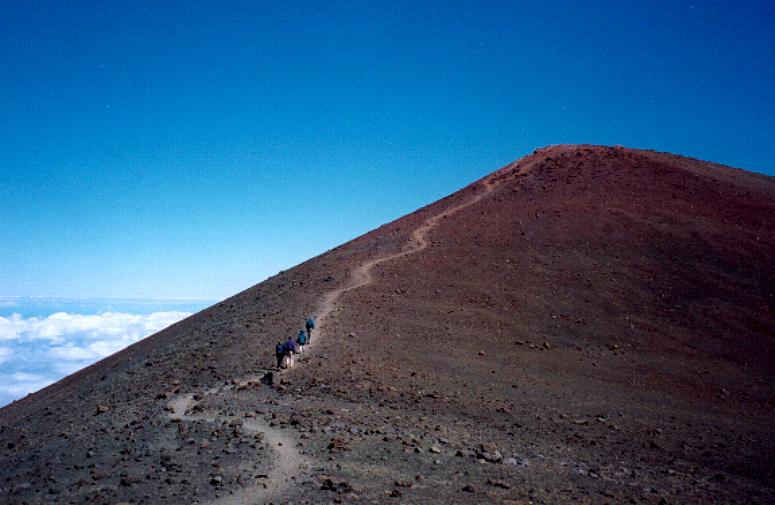
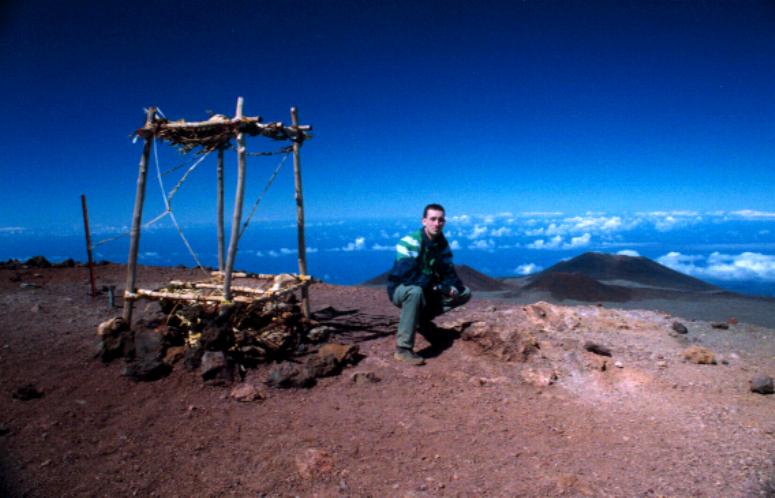
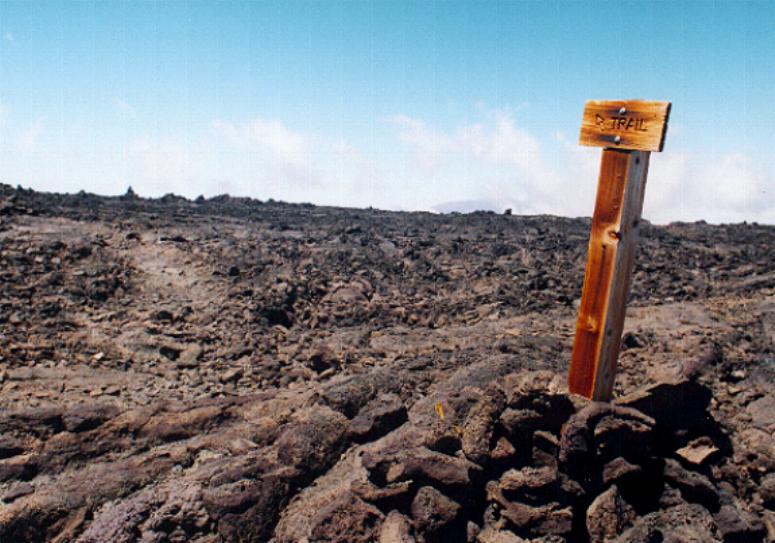
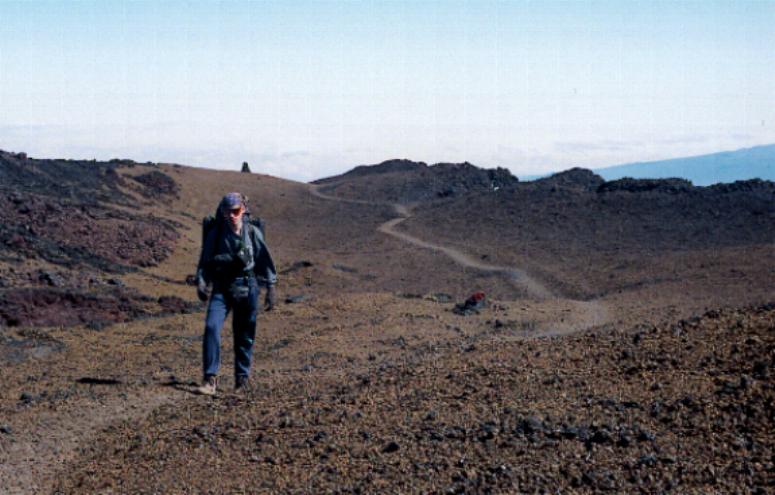
Hawaii is known for a lot of things: great beaches, surfing, lush rainforests, grass skirts, pineapples, Magnum P.I., and lots more. It truly is a tropical paradise. It is also home to some massive volcanoes - some of which are still active today. In August of 1999 I toured the Hawaiian islands on a bicycle, and then summitted two mountains in my spare time. That was one active holiday. You can see many of the cycling photos in the travel section of my website. 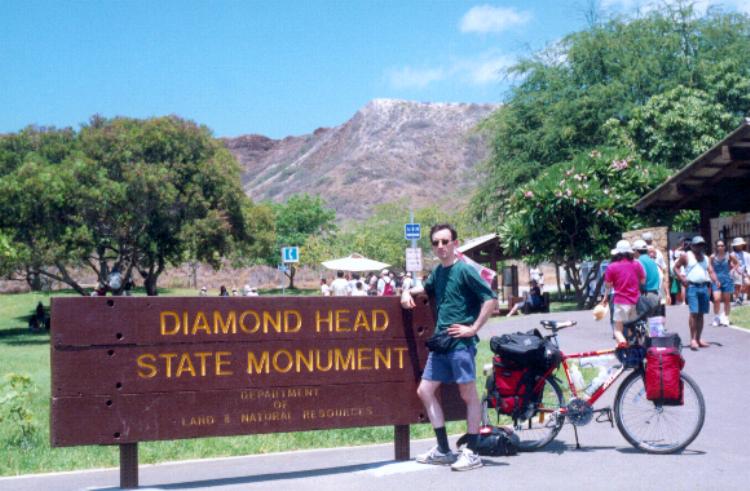 Above: Hanging out by Diamond Head crater. Click photo to enlarge. I hiked up Diamond Head crater while in Oahu, but it isn't really big enough to be called a mountain. My big mountaineering challenge was on the "big island" of Hawaii. I actually celebrated my birthday on top of the mountain. Although only 4,169 metres high (13,677 feet), Mauna Loa is the most massive mountain on Earth. It has a volume of 26,000 cubic miles, most of which is under the sea. It has two active craters which are located within the boundaries of Hawaii Volcanoes National Park. Kilauea was actively streaming lava into the ocean at the time of my visit. Mokuaweoweo, the giant summit crater, covers 3.7 square miles and is over 4,000 feet deep but has been silent for several years. 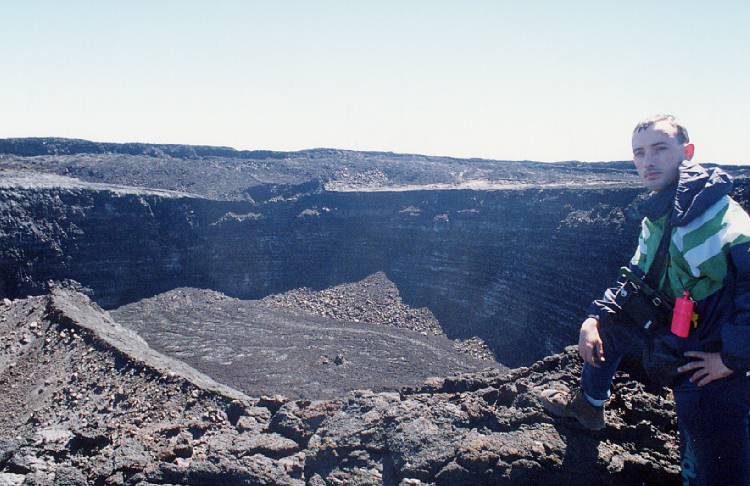 Above: Standing by the Lua Poholo Crater. Click photo to enlarge. At 4,205 metres (13,796 feet) the summit of Mauna Kea is just slightly higher than that of Mauna Loa but it has a towering reputation. Since the base of Mauna Kea is 18,000 feet below sea level, it's true height from base to summit (31,796 feet) is greater than that of Mount Everest. Just as neighbouring Mauna Loa is the world's largest mountain, Mauna Kea is the world's tallest. You can actually drive most of the way up this mountain where you will find a multi-billion dollar array of astronomical observatories. They were attracted to this spot because of several key factors. Mauna Kea is high enough above sea level to enjoy very clear skies and the summit is usually above the cloud deck so weather is rarely a factor. The population on the big island is relatively small and there's nothing but ocean around it so there is very little light pollution. Hawaii is also close enough to the equator that you can observe both the northern and southern skies. 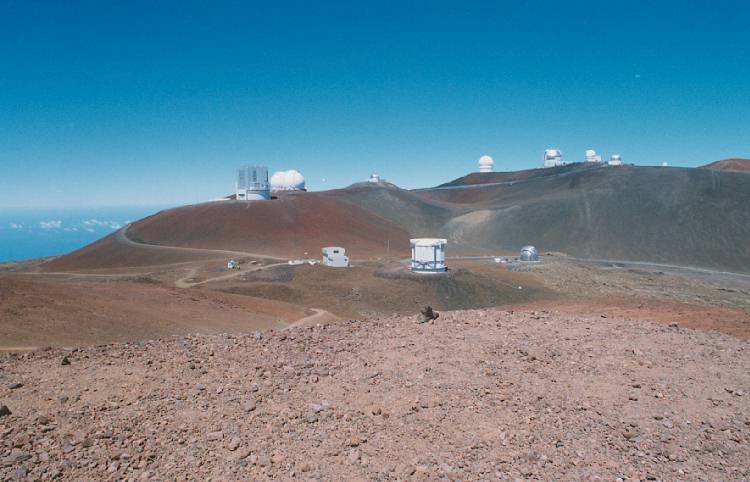 Above: Astronomical observatories perched near the summit of Mauna Kea. Click photo to enlarge. Click on any thumbnail to see a larger photo.
Climbing in Mexico - La Malinche and Citlatepetl Climbing in Ecuador - Cotopaxi and Chimborazo | |||||||