
The biggest concern revolving around increased acidity/lowered pH of the ocean is that it reduces the availability of carbonate ions, �chemical building blocks,� needed to make shells and skeletal structures composed of calcium carbonate. This slows the growth of coral reefs, plankton, algae, mollusks and many types of invertebrates � otherwise known as the bottom of the food chain. A decrease in the number of these aquatic species would have a direct effect on the survival of all other marine life.
Increased acidity and lowered pH are not the only oceanic global warming issues of concern. Rising sea levels will also take a drastic toll on our planet. Already the ocean has raised 4 to 8 inches due to thermal expansion � a result of warmer water, which takes up more space than colder water. Although 4 to 8 inches may not sound like much, it is quite significant when you consider that only a 24-inch sea level rise is required to eliminate approximately 10,000 square miles of land. In addition to causing thermal expansion, higher global temperatures will also contribute to rising sea levels by melting glaciers, ice caps and the ice sheets of Antarctica and Greenland. If Greenland were to melt completely, the result would be a 23-foot rise in sea level; a partial melting would result in a 3-foot rise. According to a study done by Nature, global temperatures would only need to increase by 3�C to begin to melt Greenland. The Intergovernmental Panel on Climate Change (IPCC) predicts that within the next century the average global sea level will rise between 4 and 35 inches. Currently, many ocean shores are eroding 1-4 feet per year, with sea levels in the Mid-Atlantic and Gulf Coasts rising 5-6 inches more than the global average.
A 3-foot rise in sea level would have catastrophic results on our nation, as well as the rest of the world. Looking at America specifically, New Orleans would be completely gone, and shorelines on the Gulf Coast and east coast in particular would recede dramatically. Other parts of the world would also experience retreating coastlines, while some low-altitude islands would be completely lost, such as the Maldives in the Indian Ocean. In addition to all of this, �rising sea level inundates wetlands and other low-lying lands, erodes beaches, intensifies flooding, and increases the salinity of rivers, bays and groundwater tables.� (epa.gov) Based on this evidence, the ocean is just one more reason we, as a global society, cannot afford the consequences of global warming.
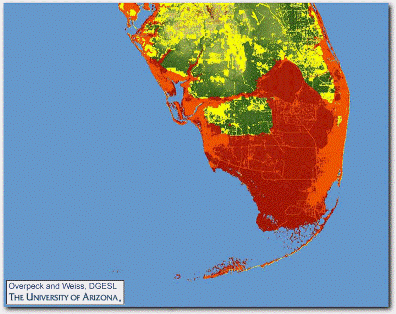
http://www.geo.arizona.edu/dgesl/research/other/climate_change_and_sea_level/rising_sea_levels.htm