 |
|
|
|
|
|
|
|
|
|
|
|
|
|
|
Nitrous Oxide |
|
|
|
 |
|
|
|
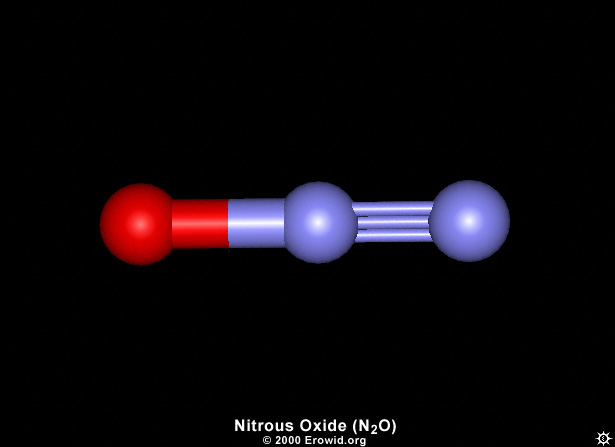
Basic Information: Nitrous oxide is composed of two nitrogen atoms and one oxygen atom. The formula is N2O. At room temperature it is a colorless, nonflammable gas, with a slightly sweet taste and scent. Nitrous oxide is also commonly known as laughing gas, used by doctors and dentists as an anaesthetic. |
|
|
|
Emissions: Reports from the EPA have shown that the combustion of fossil fuels is accountable for 18% of U.S. nitrous oxide emissions. In addition, since the beginning of the industrial age, humans have increased atmospheric nitrous oxide levels by 17%. There are many sources of human-produced nitrous oxide, which are primarily "agricultural soil management, animal manure management, sewage treatment, mobile and stationary combustion of fossil fuel, adipic acid production, and nitric acid production." (US EPA)
Nitrous oxide is also produced by a variety of natural sources. These emissions are mainly produced by the bacterial breakdown of nitrogen in the ocean and in soil. Tropical soils produce greater amounts of nitrous oxide than temperate soils. These tropical soils, along with the oceans, produce about 70% of the natural nitrous oxide emissions. |
|
|
|
Role in Global Warming: Although nitrous oxide makes up a much smaller percentage of the atmosphere than carbon dioxide, one nitrous oxide molecule has 310 times the global warming potential than one molecule of carbon dioxide. It contributes about 4-6% of global warming effects. In addition to this, it has an atmospheric lifespan of about 120 years. With all of these combined, nitrous oxide is a very important greenhouse gas. Over the last 20 years, atmospheric concentrations of nitrous oxide has increased steadily at a rate of 0.25% per year. This may not sound like much, but when its lifespan and global warming potential are taken into consideration, this is quite significant. |
|
|
|
Greenhouse Gases |
|
|
|
Chem X Home |
|
Next Page --> |
|
|
|
|