The troposphere, known as the lower atmosphere, begins at the surface of the earth and is approximately five to nine miles high. As altitude increases, the temperature decreases. This is the densest layer of the atmosphere. The troposphere is also the part of the atmosphere where all weather and clouds occur; from this, one can infer that this layer is where most of the water vapor is held.
The stratosphere is the next layer of the atmosphere, extending from the top of the troposphere to about 31 miles high from the surface of the earth. This layer is drier and less dense than the troposphere, and does not contain any clouds. The ozone, a form of oxygen, is located in the stratosphere, and absorbs solar radiation. When halogen source gases, containing chlorine or bromine, (which I have not discussed), build up in the atmosphere, they have a depleting effect on the ozone. This can contribute to the effects of global warming because there is less ozone to absorb incoming solar radiation, which results in greater incoming heat.
The mesosphere is the third atmospheric layer, which stretches from the top of the stratosphere to about 53 miles high. As altitude increases, temperatures decrease to as low as -93� C. Together with the stratosphere, the mesosphere makes up the middle atmosphere.
The fourth and last layer of the atmosphere is the thermosphere, also known as the upper atmosphere. This layer reaches about 372 miles high. As altitude increases, temperature increases. Energy from the sun can heat this layer up to 1727� C.
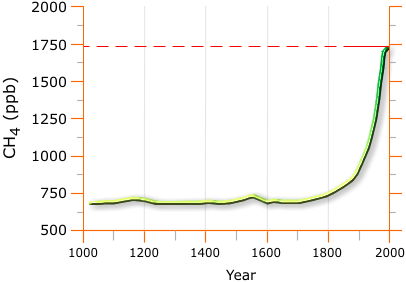
Nitrogen and oxygen are the primary components of the atmosphere, with nitrogen making up 78% and oxygen making up 21% of it. The rest of the atmosphere is composed of trace amounts of several other gases � greenhouse gases. These gases, however, are responsible for regulating the earth�s climate. Since the beginning of the Industrial Revolution, levels of greenhouse gases in the atmosphere have been rising.
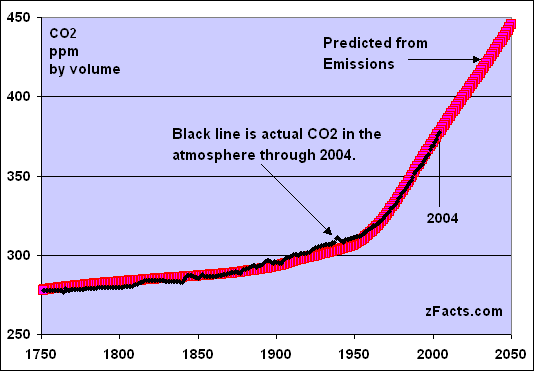
- http://zfacts.com/p/194.html