|
u dwar Taste the World u l-kummerċ ġust Id-Dinja Tiegħek
|
Is-Sibt, 2 ta' Novembru, 2002 - Il-Kavallier ta' San Ġakbu 10.00am-7.00pm
Hemm
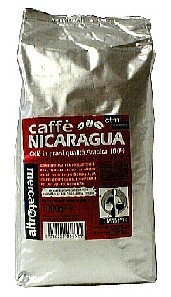
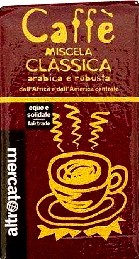
min ġej biex jipprova l-kafè ġdid mitħun.
Hemm min ġej għall-ikel organiku, u
l-għasel, il-ġamm u l-gallettini. Oħrajn ġejjin għall-mużika
live, filwaqt li xi wħud ġejjin ukoll biex isiru jafu
aktar dwar il-kummerċ ġust u kemm hu kapaċi jaqleb il-ħajja
tal-foqra ta' taħt fuq. Is-Sibt 2 ta’ Novembru se niltaqgħu lkoll ġewwa l-Kavallier ta’ San Ġakbu, il-Belt Valletta, biex niċċelebraw il-prodotti ġusti li nikkunsmaw u mmexxu l-kelma.
Dak
in-nhar se nippreżentaw l-iskema biex jingħaqdu membri ġodda
mal-Koperattiva Kummerċ Ġust li tmexxi l-ħanut L-Arka.
B'dan il-mod ikun hemm ħafna nies ġodda li jappoġġjaw
xogħol il-Koperattiva u xogħol il-produtturi fqar fil-pajjiżi
tat-Tielet Dinja.
Il-mistednin ewlenin għal din l-attività huma Harini Narayanan u Carol Wills.
Ara l-kummenti ta' Harini Narayanan dwar is-sehem tagħha f'"Taste the World" u dwar il-kummerċ ġust.
Ara l-kummenti ta' Carol Wills dwar Malta u "Taste the World" u dwar il-kummerċ ġust.
Il-Programm sħiħ tal-Jum "Duq id-Dinja - Taste the World" jidher hawnhekk: It-tħejjijiet jinsabu fl-aqwa tagħhom u se jkun hemm xi tibdiliet u żidiet fil-programm. Għaldaqstant nitolbuk iżżur din il-paġna regolarment.
Hemm
mod ieħor kif isir il-kummerċ – mod ġust – u inti
tista’ tkun parti minnu. Inti tista’ tissieħeb fil-Koperattiva
Kummerċ Ġust u fl-istess ħin tgħinna nsaħħu
u nkabbru l-inizjattivi tal-kummerċ ġust f’Malta permezz
tal-kapital li inti tinvesti fil-koperattiva. Jekk ‘il quddiem, għal
xi raġuni, ikollok bżonnhom tista’ teħodhom lura. Bil-flus tiegħek, li fl-aħħar mill-aħħar jibqgħu tiegħek, u bil-konvinzjoni li l-kummerċ ġust verament kapaċi jtejjeb ħafna l-ħajja tal-foqra, tista’ tieħu sehem f’inizjattiva li minn mindu bdiet kibret b’rata mgħaġġla u għad trid tikber iżjed filwaqt li ssaħħaħ l-appoġġ konkret tagħha lin-nies iż-żgħar tad-dinja. Għal formola tas-sħubija jew għal aktar informazzjoni tista':
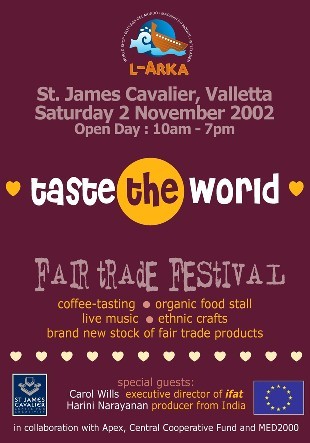
Adrian Grima u Karsten Xuereb Poster ta' Taste the World u logos ta' L-Arka u l-KKĠ ta' Adrian Mamo 26.9.02 |
|||
Saturday, 2 November, 2002 - St. James Cavalier - 10.00am - 7.00pm
Some people are coming for the free delicious coffee. Some are coming for the food, the honey, the jam and biscuits. Others are coming for the live music.
Many
want to know more about fair trade and how it is allowing
thousands of disadvantaged producers in the South of the world to work
their way out of poverty and injustice. All day Saturday, 2 November at St. James Cavalier in Valletta will be the ideal occasion to celebrate fair trade and its unique products and to strengthen Koperattiva Kummerċ Ġust, the only Maltese fair trade organization by launching an innovative membership scheme.
The volunteers of Koperattiva Kummerċ Ġust, the first social cooperative set up in Malta in 1996, run the world shop L-Arka, the only fair trade shop in Malta.
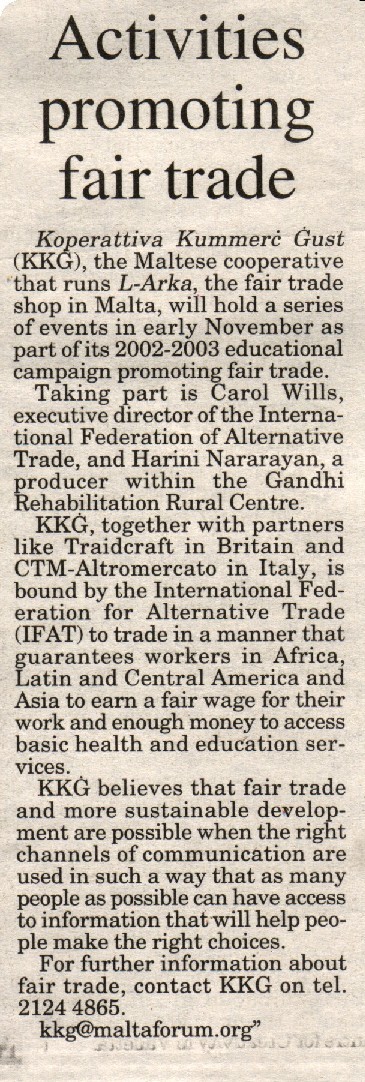
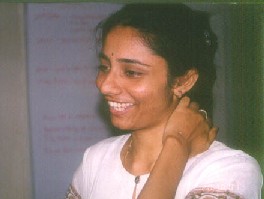
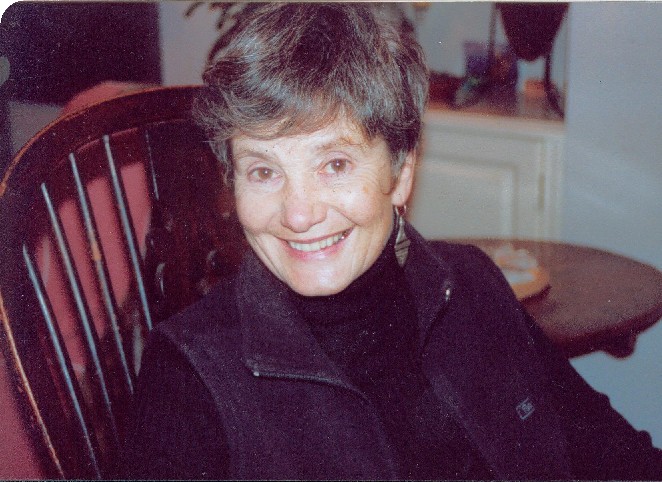
The main guests of the Taste the World festival are Harini Narayanan from the Gandhi Rural Rehabilitation Centre and Carol Wills, executive director of the International Federation for Alternative Trade.
The Full Programme of the Taste the World festival is now available. However, please note that there will definitely be a number of important additions to the programme in the coming days and weeks. Please return to this site regularly.
"By undertaking [to Malta] this trip I hope to share the immense experience and insight acquired by my organization in the area of Fair Trade. I hope to share good will and deepen my understanding of the concept of fair trade and exchange customs and practices of both India and Malta."
IFAT represents over 160 Fair Trade organisations in 50 countries. It aims to improve the livelihoods of disadvantaged people in developing countries and to change the unfair structures of international trade. It achieves this by linking and promoting the organisations that practice Fair Trade. "I am a true believer in the power of Fair Trade!" says Carol Wills. "The Fair Trade Movement judged in terms of its turnover (compared with conventional trade) remains small, but our ideas are BIG and have had enormous influence. I am convinced that it has been the noise made by Fair Trade Organisations that has caused businesses to review their trading practices and become more socially and environmentally responsible." ON a more personal note, "I am thrilled to be returning to Malta," wrote Carol Wills recently to the local fair trade cooperative that is organizing "Taste the World".
One of the aims of the Taste the World festival is to make more people aware of the fascinating world of fair trade and its ability to change the lives of disadvantaged workers in the poor countries of the world. Fair trade gives people the real possibility of working their way out of poverty.
Being a member of Koperattiva Kummerċ Ġust will allow you to invest your money in an initiative that is already bringing many social benefits to people in Third World countries who earn a fair wage for their fairly traded goods.
As
a member you will be joining a growing number of Maltese citizens
who are helping workers in poor and unfavourable conditions make a
respectable living and improve the educational, sanitary and social
structure they live in. Your investment will allow us to meet our next
targets, which include:
In order to attain these targets and maintain the constant educational programmes promoting the benefits of fair trade Koperattiva Kummerċ Ġust has invested in the work of its first two part-timers. We believe in fair trade and we believe in what we do. So can you.
Adrian Grima u Karsten Xuereb Taste the World Poster and logos of L-Arka and KKĠ by Adrian Mamo 26.9.02 |
||||
Published in Babelmed, 1 November, 2002
Taste the World
Adrian Grima
One of the fascinating elements that characterize “fair trade” is its holistic approach. Wherever you are in the world, buying a fairly traded product contributes directly to the community that produces it because it addresses the vital issues of fair wages, work conditions, human rights, the environment, health care, education and cultural diversity.
Defining Fair Trade
For the British organization Traidcraft, fighting poverty through trade meanspaying people in the "third world" fair prices, giving them credit when they need it, and working together for a better future.
“Millions of families in developing countries don't get a fair share of the wealth created by their own skill and effort and the resources of their land. This is largely because of the way international trade is controlled by the rich countries. It's a system which is both unjust and a major cause of continuing world poverty.”
Organizations like Traidcraft and CTM-Altromercato are working to change this injustice, by creating opportunities for the poor in the "third world" to work their way to a better quality of life. They also offer people in the North the opportunity to to join a movement for change that's working for the fairer conduct of international trade.
According to Traidcraft, for producers in the "third world" trading fairly means a number of things:
“These are just a few reasons why fair trade is such a challenging, revolutionary and important idea, and why we must encourage people to join the fight for justice in international trade.”
A Festival of Culture and Trade
The “Taste the World” fair trade festival organized by the Maltese fair trade cooperative Koperattiva Kummerċ Ġust which was held at the St. James Cavalier Centre for Creativity, Malta’s foremost arts centre, focused, among other things, on the cultural richness promoted by fair trade. This first-ever fair trade festival presented handcrafts and food items from three continents during a full day of activities dominated by the strong scent of ground coffee, local and world music, colour and human interaction, painting and the craft making. Rather than a fair, it was a celebration of social awareness and cultural diversity.
“Taste the World” attracted hundreds of people eager to taste excellent fair traded coffee, to listen to live music, and to attend various workshops and seminars on the fascinating world of fair trade for children and the general public. The main guests were Harini Narayanan, representing disabled producers from a Southern Indian village; Carol Wills, executive director of the International Federation for Alternative Trade; and a host of fair-traded products from three continents brought to Malta by the not-for-profit Maltese fair trade cooperative that runs the shop L-Arka in St. Paul’s Street, Valletta.
As an organisation, KKĠ itself has a strong international dimension. Ever since it was set up in 1996, it has forged a strong relationship not only with disadvantaged producers in poor countries but also with foreign fair trade organisations. Nathalie Grima, president of KKĠ, and Karsten Xuereb were recently in Assisi in Italy to participate in the regional meeting of the International Federation for Alternative Trade and in a information meeting for fair traders organized by CTM-Altromercato, one of Europe’s leading fair trade organisations. And another volunteer from KKĠ, James Farrugia, recently attended an international seminar on the coffee trade and fair-traded coffee, held in Catania.
Carol Wills and Harini Narayanan
Carol Wills has been Executive Director of the International Federation for Alternative Trade since January 1998. IFAT is a North-South networking body extending to 52 countries in Asia, Africa, Latin America, Europe, the Pacific Rim and North America, working to improve the livelihoods and well-being of poor people through trade. KKĠ has been a member of IFAT since 1999. As the person in charge of leading and managing IFAT, Carol Wills has become one of the leading figures in the ever-growing world of fair trade. She is responsible, amongst other things, for the planning and organisation of international conferences, regional meetings and training workshops all over the world.
"I am a true believer in the power of Fair Trade! The Fair Trade Movement judged in terms of its turnover (compared with conventional trade) remains small, but our ideas are BIG and have had enormous influence. I am convinced that it has been the noise made by Fair Trade Organisations that has caused businesses to review their trading practices and become more socially and environmentally responsible.
Fair Trade principles are not very complicated; they are all about people everywhere being treated fairly and equally for what they do, about people everywhere - women as well as men - earning a decent living from their labour, working in safe and healthy conditions and having a say in the way their workshop, factory, enterprise or plantation is run.
The horrible fact is that millions of workers are not treated well and live in intolerable conditions. I find the growing gap between rich and poor people in the world morally unacceptable. Eventually, however, it simply won't make sense any more to have a smaller and smaller number of very rich people living on top of a huge heap of people who are desperately poor. This situation has within it the seeds of its own self-destruction as eventually there will be nowhere to which markets can expand. Most people will be too poor to buy. So it's in everyone's self-interest to ensure that people everywhere are paid fairly for what they do and can live in dignity in our shared world."
Harini Narayanan works with the Gandhi Rural Rehabilitation Centre in Alampundi, India, an organization that sells its fair-traded products in shops like L-Arka spread all over Europe. The GRRC began in 1983 as a weaving workshop and a training center for weavers; over the years its activities diversified in response to the needs and requests of the villagers. GRRC’s vision is to identify people with various forms of disability in the rural areas and rehabilitate them by providing them with treatment, education, training, and employment support.
"Meaningful interactions with the weavers, tailors and embroiders of my organization in India have revealed much more than I could hope to learn by reading articles and journals. I have come to understand the benefits that fair trade has extended to the producer group. The underlying values and beliefs of this alternative trade practice have brought the producers and buyers to an equal platform where there is no hierarchy. Fair Trade and fair price have made a difference in the lives of many in the village where our organization is located."
“Coffee and your Power to Choose”
One of the highlights of the “Taste the World” fair trade festival was an interactive workshop on “Coffee and your Power to Choose” led by architect James Farrugia. Between 13-15 September, he participated in an seminar on fairly traded coffee by CTM-Altromercato, one of Europe’s leading fair trade organisation.
Second only to petroleum, coffee is the raw material which generates most international trade and the livelihood of some twenty million families worldwide depend on it. In recent years, mainly due to the collapse of the ICO agreement and certain policies of the International monetary fund and loan conditions of the World Bank which seek to induce developing countries to invest in the production of commodities like coffee for exportation, a large oversupply of coffee has been observed in the coffee market. This has led to a drop in the market price of coffee beans which is by now the lowest recorded in the last 30 years. This price does not cover the costs of production for the producer. The price of coffee in supermarkets and restaurants has meanwhile kept increasing.
In this context, the choice of coffee made by the consumer has a profound impact on the millions of people around the world who depend on coffee production for their livelihood. Maltese coffee drinkers,” says James Farrugia, “have two choices. They can either buy coffee produced under a traditional trade structure and support a system that concentrates wealth into a few hands. Or they can drink fairly traded coffee, and support democratic control, fair wages, and sustainable development, without sacrificing quality.”
The Taste the World fair trade festival came to a close with a exciting mini-concert by The Katambù Sound Factory. Led by Maltese multi-percussion player Renzo Spiteri, this group is not just a percussion ensemble. It is a concept that brings together different forms of artistic expression, such as music, design and physical action.
The Katambù Sound Factory's repertoire includes original compositions by Renzo Spiteri on materials that are more commonly found in industrial plants such as oil tanks, car rims, metal sheets, scaffolding piping and so on. The organisation and orchestration of soundscapes produced from the materials result in one of the most exciting and original performances in its genre.
The band’s performance at the fair trade festival gave all those present a final taste of how rich culture can be and augurs well for the future both of the band and of the fair trade movement in Malta.
The “Taste the World” festival was held with the support of the Cooperatives’ Board, Apex (the organisation of Maltese cooperatives), Bay Street Hotel, the Med2000 project funded by the European Union, the St. James Cavalier Centre for Creativity, and Inspirations Coffee Shop at St. James Cavalier.
For information on how to support fair trade and KKĠ either phone L-Arka fair trade shop on 21 244865, or visit the website at www.maltaforum.org, or send an email to [email protected].
Some Links:
Traidcraft (UK): http://www.traidcraft.co.uk/ Koperattiva Kummerċ Ġust (Malta): http://www.maltaforum.org CTM-Altromercato (Italy): http://www.altromercato.it IFAT (International Federation for Alternative Trade): http://www.ifat.org |
||||
|
||||
 Barra
minn hekk, matul dan il-jum, se tkun tista':
Barra
minn hekk, matul dan il-jum, se tkun tista':
 During
the Taste the World Festival there will also be:
During
the Taste the World Festival there will also be: