Carol Wills and Fair Trade
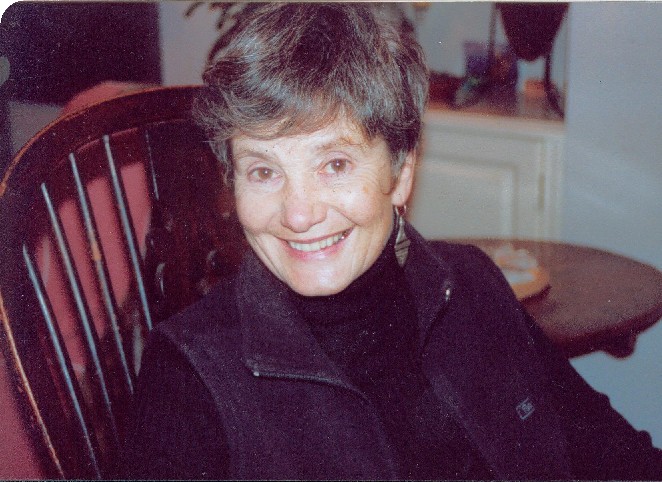 "I have been involved in Fair (or "alternative" trade) since the
mid-70s. I worked for a few years as a research assistant and then public
relations officer for FRIDA (The Fund for Research and Investment for the
Development of Africa). Most of FRIDA' s work at that time was focused on
Lesotho in Southern Africa where we worked closely with women who were
crocheting, weaving and knitting mohair. We opened several shops (in
London, in Paris and in Madrid) and began trading more widely with
countries in East and West Africa as well as with Lesotho. We opened a
wholesale division so that other businesses could buy products the
"alternative" way, knowing that a decent price had been paid to
the producer. While I was doing this, I also edited a newspaper on
handcrafts for Oxfam GB, Traidcraft GB and FRIDA plus the producer
organisations from whom they bought products. When I took a break from
full-time work for a few months, to have my second child, I ran my own
weekly market stall selling handcrafts from Africa in my home town.
"I have been involved in Fair (or "alternative" trade) since the
mid-70s. I worked for a few years as a research assistant and then public
relations officer for FRIDA (The Fund for Research and Investment for the
Development of Africa). Most of FRIDA' s work at that time was focused on
Lesotho in Southern Africa where we worked closely with women who were
crocheting, weaving and knitting mohair. We opened several shops (in
London, in Paris and in Madrid) and began trading more widely with
countries in East and West Africa as well as with Lesotho. We opened a
wholesale division so that other businesses could buy products the
"alternative" way, knowing that a decent price had been paid to
the producer. While I was doing this, I also edited a newspaper on
handcrafts for Oxfam GB, Traidcraft GB and FRIDA plus the producer
organisations from whom they bought products. When I took a break from
full-time work for a few months, to have my second child, I ran my own
weekly market stall selling handcrafts from Africa in my home town.
Then I went to live in Malawi in Central Africa for three years (from 1980
- 1983). Most of my work there was for the European Union; I worked in the
Delegation as education and training officer. But I maintained my interest
in small enterprise development and the role of handcrafts in providing an
income for people, especially women, who have few employment
opportunities. At the end of my time in Malawi, I carried out a
consultancy assignment for Oxfam GB looking at the export marketing
potential of Malawian handcrafts. On my return to the UK I went to visit
Oxfam and, to my surprise, they offered me a job in South East Asia. So
off I went with my family to live in Indonesia for three years (from 1983
- 1986), travelling frequently to other countries in the region (but
especially Thailand and the Philippines). When I returned, Oxfam offered
me a UK based job in their "Bridge" programme, travelling
frequently to many parts of the world to talk to producers about their
needs, to see what kind of assistance Oxfam might offer, and buying
products for sale through the 850 Oxfam shops.
I was at the founding meeting of IFAT in 1989 and was one of the people
who argued strongly that this should be a truly international organisation
including producers as equal members. Six years later I was elected onto
the Executive Committee and three years after that I agreed to take over
the running of the Secretariat - which is where I have been ever since.
(So I am just completing my fifth year with IFAT).
So, as I expect you have guessed by now, I am a true believer in the power
of Fair Trade! The Fair Trade Movement judged in terms of its turnover
(compared with conventional trade) remains small, but our ideas are BIG
and have had enormous influence. I am convinced that it has been the noise
made by Fair Trade Organisations that has caused businesses to review
their trading practices and become more socially and environmentally
responsible. Fair Trade principles are not very complicated; they are all
about people everywhere being treated fairly and equally for what they do,
about people everywhere - women as well as men - earning a decent living
from their labour, working in safe and healthy conditions and having a say
in the way their workshop, factory, enterprise or plantation is run. The
horrible fact is, though, that millions of workers are not treated well
and live in intolerable conditions. I find the growing gap between rich
and poor people in the world morally unacceptable. Eventually, however, it
simply won't make sense any more to have a smaller and smaller number of
very rich people living on top of a huge heap of people who are
desperately poor. This situation has within it the seeds of its own
self-destruction as eventually there will be nowhere to which markets can
expand. Most people will be too poor to buy. So it's in everyone's
self-interest to ensure that people everywhere are paid fairly for what
they do and can live in dignity in our shared world."
Carol
Wills
30.9.02
