

|

|
|

|
|

|
|
In the 1700's Europe was swallowed up in war as Great Britain, England and France fought each other for the West Indies, Canada and colonial trade. Because of the duration of the war, it became known on the continent as the Seven Years' War. In the colonies, however, it was known as the French and Indian War. During these seven years, the British and French shipped soldiers to the colonies to fight for continental domination, and ultimately global domination. With the help of colonists, the British were the victors.
Rather than give the colonists more land, the British were forced to levy taxes. Britain, at the end of the war, had the greatest war debt it had ever seen. In order to meet this burden, Parliament voted to levy taxes on all its colonies. These taxes, in comparison to the amount actual Britons had to pay, was relativly small. Parliament, in turn, was pressured by angry Londoners to shift the tax burden on the colonies. Afterall, didn't the British sacrifice their lives for the colonies and not themselves? These taxes were meant to be spent relieving the war debt and on the soldiers protecting the colonies against potential Indian attacks. Prime Minister George Grenville began to enforce the stifling Navigation Laws and he also pressed the first tax revenue in the colonies for the crown. This was the Sugar Act of 1764, which increased the taxes on foreign sugar. Parliament passed the Quartering Act of 1765 which made colonists house and feed British redcoats. This was followed by the Stamp Act of 1765, which made legal documents use stamps. The Stamp Act was used as an excuse for the colonists to lash out against the British for trying to take power away from the colonists. More angrier than ever, the colonists began to riot. Not only did Parliament levy one tax after another, but they were denied the right to Parlimentry representation, the right of every English citizen. After petitioning Parliament and the Crown for the right to representation, the colonists began to withdraw further from the motherland. Why send representatives so far from home? Why not have their own elected colonial legislatures levy taxes instead? In response, Parliament passed the Declaratory Act of 1766, which gave Parliament the unconditional power to pass laws and tax the colonies. |
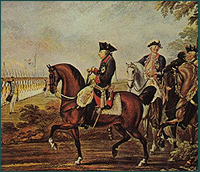 However, the British didn't just rely on the colonists for victory. Instead, it was the Native Americans who really won the war for the British over the French. And in return for their assistance, Great Britain agreed to curb white settlement and encrouchment upon the natives' land. The result of this alliance was the Proclamation of 1763, which prohibited settlements west of the Appalachian Mountains. The colonists were furious when they were denied the land and they felt betrayed by the British - they who had fought so hard for their motherland was denied what they believed to be rightfully theirs.











