
|

|
|

|
|

|
|
Conflict between Britain and the Americans rose to a peak with the radical actions of the Sons and Daughters of Liberty. These local chapters, and eventually intrastate organizations, began to rebuff Parliamentry acts by tar-and-feathering local customs' officers. Officials who sold stamps according to the Stamp Act were attacked and paraded through streets throughout the colonies.
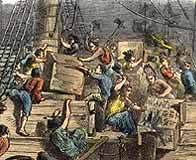
Another incident occurred when a British customs ship the Gaspee ran aground. The Gaspee was believed to be a major carrier of British tea. Eventually, a group of colonists dressed as Native Americans overtook the ship and dumped all the tea into the sea. In Boston, a similar incident took place in retaliation to taxation-without-represenation - it became known as the Boston Tea Party.
When news reached Parliament, the British government passed the Coercive Acts (“Intolerable Acts” to the colonists.) The Coercive Acts:
1. Closed the Boston harbor until the damages were paid And finally the most hated of them all was the infamous Quebec Act. This act took away lands that colonists claimed along the Ohio River and the French Canadians could set up their own government with Roman Catholicism as the official religion. This particularly angered the American colonists not only because they were fervent Protestants, but because more land was being denied to them. |
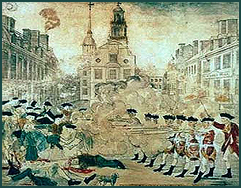 In response, Parliment and the King ordered the more soldiers be stationed at local offices to protect customs officials. In Boston, where Samuel and John Adams founded and led the Sons and Daughters, tensions and anger toward this action was greater than in other colonies. Finally, on March 5, 1770, some Bostonians harassed the customs house guards. After the mob pushed the soldiers against the walls of the buildings, the soldiers fired into the crowd, mistaking a command from their commanding-officer. In the end, five colonists were killed, one of them a black sailor. This, the Boston Massacre is commonly believed to be the beginning of the American Revolution.