|
Home
Birding
NCTX Hotspots
RBA
Maps
Photos
Cool Birds
Checklists
Books
Links
AZ Trip Report
Dallas
Audubon
Ft.Worth
Audubon
Prairie
& Timbers Audubon
Tall
Grass Prairie Audubon
TOS
TBRC
TPWD
North
Central Texas Birds

 Since
1/9/02 - 6/24/00 Since
1/9/02 - 6/24/00
Old Birding Texas website had 4014
visitors from 9/26/98 to 6/29/00
Send questions and comments to [email protected]
Golden-cheeked Warbler photo by Greg
Lasley
| |
Birding in
Texas Texas is home to
620 species of birds, more than any other state in the
U.S. This is because Texas has extremely varied habitats including 8000
ft. mountains, prairies, bottomland hardwoods, pine forests, coastal prairie,
beach, and subtropical palm forests. Because Mexico borders the state to
the south, Texas regularly hosts unique species from Central America. The Texas
Ornithological Society (TOS) splits Texas into 8 regions according to their
unique birdlife and habitats. An excellent resource for this subject is Wauer
& Elwonger's book, Birding
Texas.
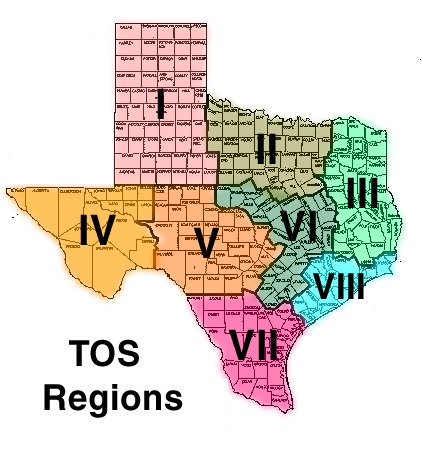
Region I - Panhandle
The Texas Panhandle consists of high plains, shortgrass prairie, and red
rocky canyons. Some of the more interesting birds include Lesser Prairie Chicken, Mountain Plover,
Mississippi Kite, Long-billed Curlew, Canyon Towhee, Rufous-crowned Sparrow, Rough-legged and Ferruginous Hawk,
Northern Shrike, American Tree Sparrow, and 3 species of longspurs.
Region II - North Central
North Central Texas is a large area of Blackland Prairie (tallgrass) and Post
Oak Savannah. Many eastern and western species reach their range limits here. Interesting
birds include Red-shouldered, Red-tailed, and Broad-winged Hawks, Barred Owl, Red-bellied Woodpecker, Great Crested and
Ash-throated Flycatcher, Eastern and Western Kingbirds, Painted and Indigo Buntings, Carolina and Bewick's Wrens,
White-eyed, Red-eyed, and Warbling Vireos, Northern Parula, Prothonotary Warbler,
Summer Tanager, Lark, Harris's, and Grasshopper Sparrows, and Smith's Longspur.
Region III - Pineywoods
East Texas is well known for its extensive pine forests, known as the
"pineywoods." This region hosts many southeastern US specialties and more
nesting warblers than any other region. Some interesting birds include Fish Crow, Swallow-tailed Kite, Brown-headed
Nuthatch, Red-cockaded Woodpecker, Bachman's Sparrow, Swainson's Warbler, and Acadian
Flycatcher.
Region IV - Trans-Pecos
This region is known as the Trans Pecos because it is all the land west of the
Pecos River. Habitats include Chihuahuan Desert and several mountain ranges (Chisos, Davis,
Guadalupe, etc.). One well known area is Big Bend National Park, along a bend in the
Rio Grande River. The Chisos Mountains in Big Bend National Park hold the only population of Colima Warblers in the U.S. A few interesting species include Common
Black-, Zone-tailed, Gray, and Harris's Hawks, Golden Eagle, Peregrine and Prairie
Falcons, Chihuahuan Raven, Mexican Jay, Montezuma Quail, Lucifer Hummingbird, Gray
Vireo, Hutton's Vireo, Virginia's, Lucy's, and Grace's Warblers, Painted Redstart (scarce),
and Varied Bunting.
Region V - Edwards Plateau
This region is commonly known as the Hill Country because of the beautiful rocky, grassy,
rolling hills dotted with ashe junipers, scrubby oak, and colorful wildflowers. The prominent
geographical feature is the Edwards Plateau, bordered on the edge by the Balcones
Escarpment. The Hill Country is famous for being home to two endangered birds, the
Black-capped Vireo and Golden-cheeked Warbler. Other cool birds include Painted
Bunting, Yellow-breasted Chat, Ladder-backed and Golden-fronted Woodpeckers, Green
Kingfisher, Greater Roadrunner, Western Scrub-Jay, Rufous-crowned Sparrow, and Lesser
Goldfinch.
Region VI - Central Prairie
The Central Plains in eastern central Texas are flat country with habitats
varying from blackland prairie, bottomland hardwood forests, and post oak savannah. This region is
quite similar to Region II. Some interesting birds are Crested Caracara, Black-bellied
Whistling-Duck, White-tailed Kite, and several nesting warblers.
Region VII - South Texas Brushlands
This region includes many unique areas like the brush country, coastal bend, and the
famous Lower Rio Grande Valley. The "valley" is famous for attracting lots of odd
Mexican species, and birders from around the world flock here, especially during winter
months. The coastal bend along the Gulf of Mexico is home to the top Audubon Christmas Bird Count circle in the country, Mad Island Marsh. Several count circles
regularly tally well over 200 species on count day. Unique birds include Green Jay, Great
Kiskadee, Tropical Parula, Altamira, Hooded, and Audubon's Orioles, Olive Sparrow,
Botteri's Sparrow, Aplomado Falcon, and many others.
Region VIII - Coastal Prairie
The coastal prairie is a very diverse area. Excellent birding locations include
High Island, Bolivar Peninsula, Brazos Bend State Park, Anahuac National Wildlife Refuge, Attwater
Prairie-Chicken National Wildlife Refuge, and many others. The small town of High Island
is an oak motte "island" surrounded by coastal prairie. This habitat attracts an astounding
variety of migrating songbirds by providing the nearest food and shelter after their
non-stop flight across the Gulf of Mexico. Along the beaches one can find nesting terns,
Roseate Spoonbills, White-faced, White, and Glossy (uncommon) Ibis, gulls, plovers,
sandpipers, Brown Pelicans, Double-crested and Neotropic Cormorants, Northern Gannets, Magnificent Frigatebirds (summer), herons,
egrets, and many others. Marsh habitats like Anahuac NWR hold Least Bitterns, all the rail species, Mottled Duck, Purple
Gallinule, and American Alligators. White-tailed Kite and White-tailed Hawk can be found
in the coastal prairie. The endangered Attwater's Prairie-Chicken, a subspecies of
Greater Prairie-Chicken, survives only at Attwater Prairie Chicken National Wildlife
Refuge and possibly elsewhere where there is remaining coastal prairie habitat. Nelson's
Sharp-tailed Sparrow (winter) and Seaside Sparrow (year-round) can be found in spartina
grass along the coast.
Top |
