| Name:Ken Chen
Class: 9A Teacher: Mr Chapman Task: Natural Hazards ICT WebPage |
Severe storms have taught humans what devastating destruction nature can inflict. We learn from these results and have come up with many great creations and strategies to help minimize the destruction as well as cope with the results that storms may bring. Government agencies have been set up (such as the Bureau of Meteorology) to alert the Australian communities with warnings and updates on dangerous storms and weather activities. These services use sophisticated equipments specially made to measure, monitor, and analyse weather movements. People have set up satellites, radars, ground observation control centres, and lightning detection units to help forecast an approaching storm or dangerous weather.
After learning how lightning strikes work and what they are capable of, humans have adopted many ways to help minimize the destruction and risks. For example, after learning that lightning will strike higher grounds before lower grounds, lightning rods have been set up on the tops of tall buildings and structures to help divert the strikes safely back to the Earth. This was a very smart invention which has been used to respond to the effects of severe storms since the 1700s.
To cope with strong winds and waves, wind breaks and wave barriers have been built to guide the strong forces away from populated places and structures. The wind breaks use aerodynamics to move the wind flow schemes, while wave barriers are set up along coasts to help slow down or stop large waves from hitting the inner shores.
Knowledge is important, a significant response made in society is trying to understand how the storms work and invent ways to cope with the forces of nature. Billions of dollars are spent world wide each year in projects designed to lead up to minimizing the destructions caused by storms. (Such as inventing new equipments to forecast storms, or setting up new resources in various areas etc) Scientists and meteorologists play an important role in this response.
To reduce the risks of flash floods, modern city sewers and drainage ways are designed to handle and divert excessive water flows to other areas. Your average gutters and drains along the road curbs are linked to complex underground sewage networks which greatly reduce the risks of flash floods occurring. This is just another act done in society to cope with the forces of nature.
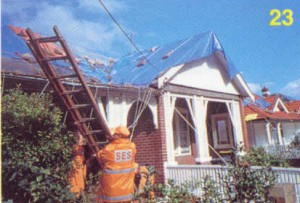
State Emergency Services (SES) and government services (eg fire services) have been trained to deal with emergency situations after a storm has struck. This is also an important act as it would ensure quick and proper reactions after the storm hits. SES crews and other emergency services have adopted codes and scenarios which correspond to the different types of storm and destruction inflicted. Training and running these services is a vital part in the responses of society.
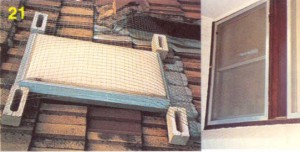
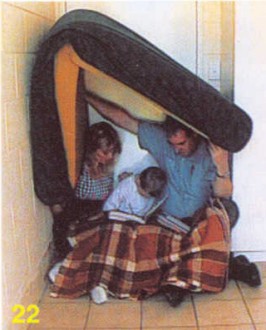
All these responsive measures stated above all require some sort of skill or advanced technology, but what can average people like us do to minimize the destructive risks of severe storms? The answer is quite simple, and can be done easily at home. These are just a couple of simple things that can be done in response to an approaching storm.
As you can see, these are very easy to do things which could determine whether your house becomes slightly damaged, or completely torn down after a storm. But whatever we do, no matter how advanced technology progresses, Mother Nature will always over power human strengths�Nature will always have the final say. Click on the links below to find out more on:
[email protected]
|