This is a counter proposal to the present Kansas City plan to raise taxes and spend over $700,000,000 for a 17 mile light rail system close to the Paseo corridor.
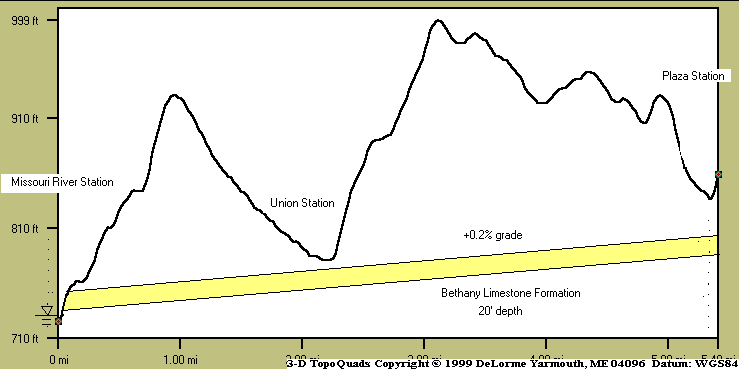
Kansas City has an underlying sound 20' thick Bethany Falls limestone formation which rises from just beneath Union Station, and slopes upward at a .2 % grade going both south and east. This sound rock formation can be used to build a low cost rapid transit system, centered on downtown's Union Station. Using this sound rock formation, the high cost of tunnel lining, utility relocation, snow removal, weather related maintenance, and R/W procurement can be circumvented. Because the rail line can sometimes be centered under existing streets, even R/W easements will not be necessary in all cases. The southwest corridor, running along I-35, could be tied in to this system by using the existing above ground rail line.
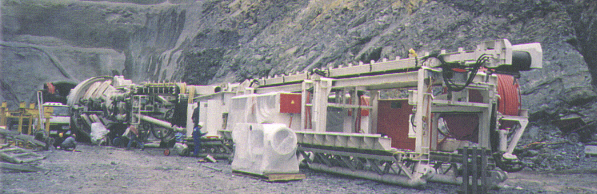
The tunneling can be done with 15' diameter boring machines, which recent advertisements show ,can presently be bought used, for around 1 1/2 million dollars for each machine. A minimum of two machines would be required to achieve an acceptable rate of construction.
The preliminary geology reports were completed and documented by Missouri Department of Natural Resource engineers, John Whitfield and James Williams, in a report titled "Underground transportation routes and quarry practices in the Kansas City, Missouri-Kansas area", in Annual Highway Geology Symposium, 21st, Lawrence, Kansas, 1970, Proceedings: State Highway Commission of Kansas and State Geological Survey, p. 107-124.
The somewhat expensive station cost can be shared with private entities such as J.C. Nichols on the Plaza, in the same manner as they did with upgrading of the bridges built through that area. In the River Market , the station cost can be financed through the Transportation Commisions enacting of a short term sales tax increment for that area. Hallmark might also be in the position to help defray cost in the Union Station station construction. For later stages, possibly requiring bridging accross the Little Blue River, the Missouri Highway Commission can help pay those cost in order to help this project which would be lessening the traffic congestion through the Grandview Triangle.
The leasing of high speed cable conduit within the transportation conduits can help defray the cost of lighting and signals. A collaborative effort between the Water Department, which has tunneling experience under the Missouri River, can help defray some cost while providing the Water Department with a cheap manner in which to upgrade their water system at little cost. The twin 24" conduits/tunnel are to be used initially to remove the rock face muck by means of a water slurry with water pumped from the Missouri River. They are to be later used as water mains, storm drains, and conduit for high speed data transmission lines.
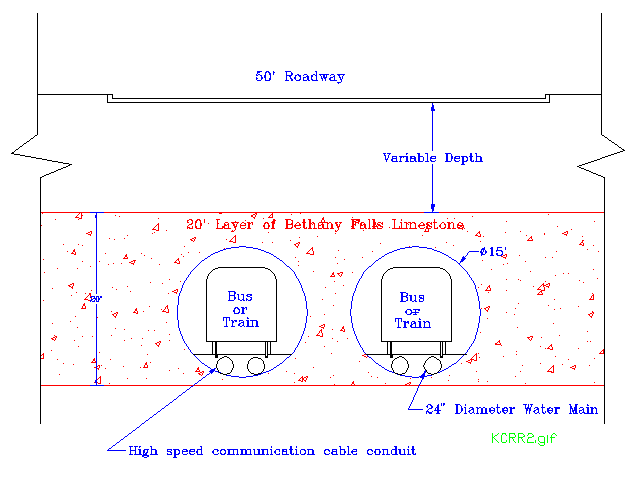
Cross Section of Transportation Tubes running under Main Street
Profile of Route from the Missouri River to the Plaza
The downtown route will comprise both an underground portion and an above ground portion. The combination rail-bus, just as railroad service vehicles, will be able to leave the rail portion and progress on the above ground streets. The cars will be high efficient hybrid electrics designed with individual power units which will be able to hook up with other cars to form a train with the requirement of only one conductor. In off peak hours, the unneeded cars will be unhooked to reduce energy consumption.
Routes 1, 2, & 3

For Comments send messages to [email protected]
Additional Information: