|
|
| Sanandaj |
| |
| |
|
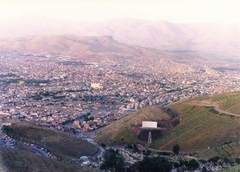
Sanandaj is the center of
Kurdistan Province of Iran and is 512 Kilometer at the south west
of Tehran. The attitude of the city is 1480m. Sena or Sena_Degh or
Sanandaj is a new city which at the Safavieh period, Shah Safi
ordered and the city was built by Soleyman Khan-e-Ardalan in
1046AH. Thus a strong castle by the village of Sena was built at
the beginning and was known as Sena-Degh. Then on The Eastern side
base of a new city was founded which later on was named Sanandaj
but in local language people still call Sena for Sanandaj.
This city until the end of the Nasser-e-din Shah's Kingdom was the
center of Kurdistan.
The atmosphere and
elements of the structure of the city had been made up of three
atmospheres: governmental, residential, and economical. The first
texture of city had roots in the old method of construction in
Iran-specially the Islamic age-end in design inspiring by Isfahan
architectural method. Sanandaj, because of being in the center of
the region, has many markets, houses, buildings, and mosques and
basically has been an important economical center in Kurdistan.
The market of the city enrolled all the productive and economical
activities and has been in change of providing services for the
cities and villages in the area.
Not very long ago the social relation has not changed so rapid
because of quick communication, Sanandaj has had important
exported items and in comparison to the other places in the
province had more merchants and wealthy families. The remaining of
the houses and buildings confess this. |
|
|
|
|
Historical
buildings and works
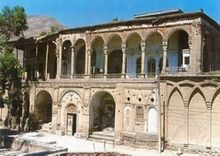
The
architectural works of this city which have been left as memorial
from Safavieh era to Qajar period, the following can be mentioned:
the covered Bazar, Jame' Mosque, Khosro Abad building, Vakil and
Moshir and Asef buildings, museum, Qeshlag bridge, and other
public bathrooms and buildings. Altogether, in addition to the
beauty of appearance and similarity to the architectural of
central Iran, they have got the local architectural experiences
and using local material and building methods. They also have
characteristics and finally specific nature which includes the
main skeleton and building, the facade, and inside decorations
which their plaster work and old big windows and doors with small
colorful glasses are very unique and wonderful.
|
|
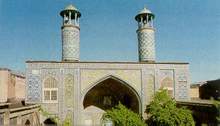
Jame’
Mosque
Built in the second half of the 19th century, this
mosque is of high importance architecturally. It has colored
tiles, stone columns and a domed roof. The two minarets and the
inscription on the walls of the sanctuary are of high artistic
importance. The great sanctuary around which there are 12 cells is
roofed by 35 domes, which are supported by 24 columns. |
|
|
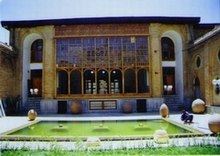
Museum
This museum, the building of which belongs
to the Safavieh period (1501-1736), is high among the city’s
tourist attractions. The dome with mirror-encrusted stalactites
and the sash of the hypostyle hall are magnificently impressive. |
|
|
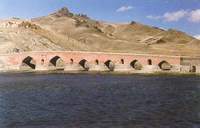
Qeshlaq Bridge
It is a bridge, very similar to the famous Si-o-se Pol bridge
in Isfahan, built across the Gaveh Rood River, 6 kms east of
Sanandaj. There are two inscriptions bearing the date in which the
bridge has been repaired.
|
|
|
|
|
|
|
|