|
|
| Kurdistan |
|
|
|
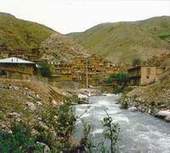
The Province of Kurdistan with lofty mountains, numerous
river and springs, lush vegetation has splendid natural beauty and
endless fascination for many visitors. Covering and area of 24998
sq. kms, it is bounded on the north by the
western Azerbaijan, on the south by Kermanshah, on the east by
Hamadan and Zanjan and on the west by Iraq. |
|
Climate
Because
of winds from the Mediterranean Sean and the Atlantic Ocean, the
amount of annual precipitation is comparatively high in this
province. In general, the mountainous areas and plateaus have cold
winter and mild summer. |
|
Mountains
The Zagros range, stretching
from the border with Armenia in the northwest to the Persian Gulf,
runs through Kurdistan. The highest mountain is Mt. Shahoo, in
Marivan in the south of the province. The other considerably high
mountains are Chehel Cheshmeh, Badr, Darvazeh and Panjeh Ali.
There are also many mountains scattered all over the province,
including Siyah Mansoor, Shahneshin, Arbaba, Owraman, Piran and
Abidar. |
|
Rivers
Due
to several snow-clad mountains, there are many rivers in
Kurdistan, providing water for agriculture. The most important
river is the Gezel Owzan, which originates in the Chehel Cheshmeh
mountains, flowing to the Caspian Sea. The other important rivers
are as follows: The Zarrineh Rood, Karkhe, Simineh Rood, Gaveh
Rood, Zab-e-Koochek, Cham Saghez and Sirvan. The Sirvan is the
longest river in the province. |
|
|
Mineral
Springs
One of the most important mineral springs is Cheshmeh-e-Baba
Gorgor, 18 kms northwest of Qorveh. The water of the spring forms
a spectacular round pool. Having medicinal qualities, this spring
attract a large number of people from different parts of the
country every year. The hot spring of Cheshmeh-e-Govaz, 50 kms
northwest of Kamyaran, being useful for skin diseases and
rheumatism, attract many visitors, specially in summer. The spring
of Cheshmeh-e-Ab-e-Talkh in Bijar is also useful for rheumatism. |
|
Plant
Life
The province’s plant life is rich in variety. The mountains
are covered with broad-leafed deciduous trees, such as oak, plum,
pistachio, pear, walnut and maple. The northern and northwestern
forests are more luxuriant than the forests in the other parts. |
|
Agriculture
The economy of the province, specially its eastern areas, is based
on agriculture and animal husbandry. In highlands crops are mainly
produced by dry farming. In different parts of the province
diverse crops are cultivated. These include cereals (wheat, barley
and corn), fruits (apples, cherries, peaches, pears and apricots)
and sugar beets, tobacco and sunflowers. Animal husbandry and
apiculture are the main economic activities of Kurdistan’s nomadic
people. |
|
|
Wildlife
Due to Kurdistan’s natural features, wildlife is rich in
variety, including bears, wild boars, foxes, hyenas, jackals,
weasels and sables. Birds, such as ducks, geese, partridges,
sparrow hawks, eagles, herons and grouses live in most parts of
the province. To protect animals, three wildlife sanctuaries have
been established, which are as follows: Bijar, 15 kms northwest of
Bijar; Zarrineh-e Obato, 16 kms north of Divandarreh and Chahardo,
15 kms east of Qorveh. |
|
The
People, Language and Religion
Kurdistan is the home of the Kurds who are (as most of the Iranian
Peoples) descendants of the Aryane tribes. Kurdish, a language
which has seen scant modification over the centuries, is spoken in
various dialects throughout the province. The vast majority of the
Kurds are Muslims, of the Sunnite branch. Nomadic way of life is
also found all over the province. The most significant tribes are
as follows: Sheykh Esma’ili, Dorraji, Soorsoori, Lak, Soomari,
Golbaghi and Qualqali. |
|
Political Subdivisions
Kurdistan includes eight cities. Sanandaj is the provincial
capital and the following are its other cities: Baneh, Bijar,
Saghez, Divandarreh, Qorveh, Marivan and Kamyaran. |
|
Customs
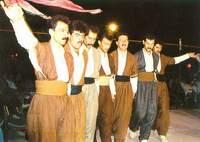
The Kurds, particularly those living in villages, have the
greatest respect for their own traditions, whose clothing is a
good example of this. They usually wear woolen clothes, the forms
of which are dependent on the regional circumstances. The weddings
and burials are taken with special ceremonies. The hospitality and
bravery of the Kurds have nationwide fame. |
|
|
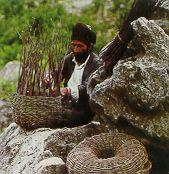
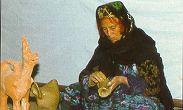
Handicrafts
Carpet weaving is of high significance in Kurdistan. The carpets
woven in Sanandaj and Bijar have elaborate patterns and charming
designs. The other handicrafts produced in this province are
follows: Jajims (fine carpets made of wool or cotton), Gelims (rug
made of goat’s hair), Givehs (light cotton summer shoes), regional
jewelry. Each of these handicrafts is delicate and beautiful,
suitable to be kept as a souvenir. |
|
|
|
|
|
|
|
|
|