 |
|
|
|
|
|
|
|
|
|
|
|
|
|
|
|
|
|
|
|
|
|
|
|
|
|
|
|
|
|
|
|
|
|
|
|
|
|
|
|
|
|
|
|
|
|
|
|
|
|
|
|
|
|
|
|
|
|
|
|
|
|
|
|
|
|
|
|
|
|
|
|
|
|
|
|
|
|
|
|
|
|
|
|
|
|
|
|
|
|
|
|
|
|
|
|
|
|
|
|
|
|
|
|
Educational Field Trip #2 |
|
|
|
 |
|
|
|
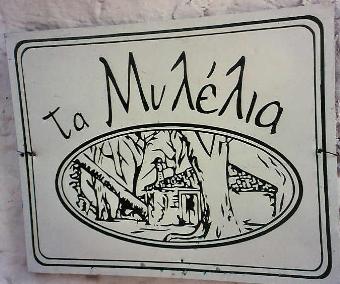
Our second school field trip started off at Mylelia, a farm that uses only traditional methods. |
|
|
|
 |
|
|
 |
|
|
|
|
|
|
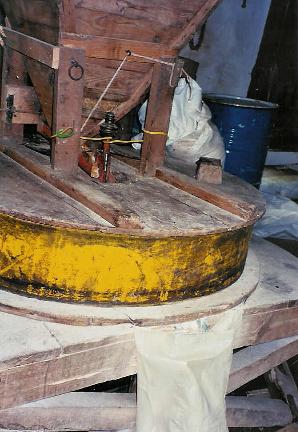
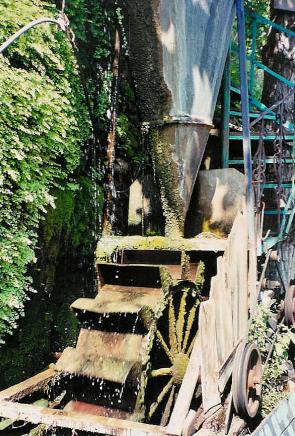
Traditional methods, of course, includes using a river to power the mill. The wheel moves the grinder of wheat, which eventually makes breads and pastas. Some pasta was colored blueish-purple, using the ink of octopus. We looked, but didn't buy. |
|
|
|
 |
|
|
|
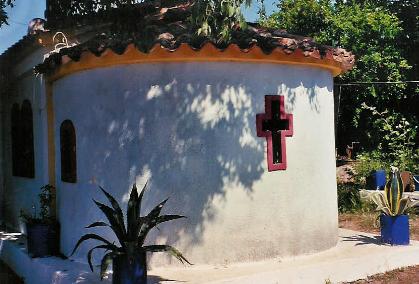
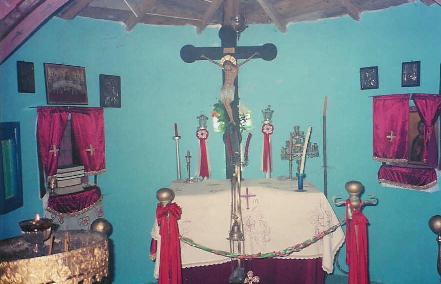
As I said before, the Greeks build churches EVERYWHERE. This was probably the cutest church we saw. |
|
|
|
 |
|
|
|
Inside the church- incense and icons. |
|
|
|
 |
|
|
|
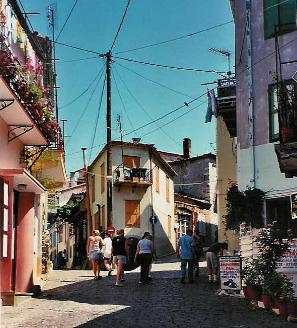
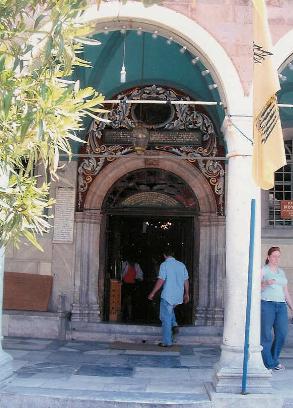
We left Mylelia and traveled to Agiassos. This little town is built around a HUGE church. This church holds an icon of Mary that the Greek Orthodox Christians believe was made by St. Luke, the gospel writer. Every August 15th this city and church is the destination of a gigantic pilgrimage made by thousands of Orthodox Christians. |
|
|
|
 |
|
|
|
 |
|
|
|
|
The church was surrounded by a courtyard and some buildings. We had to cover our shoulders and wear skirts inside the church; luckily they had pieces of fabric we could tie on so our outfits would be suitable. |
|
|
|
|
|
|
 |
|
|
|
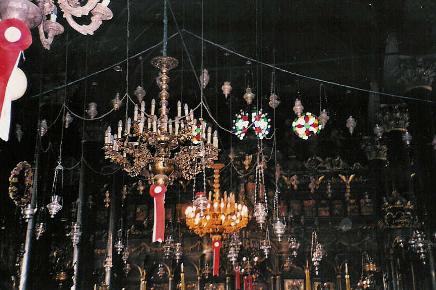
Inside the church, looking up. All those hanging things are individual incense holders. The chandeliers used to be candles, but have changed to electric lights. The black ceiling is the result of hundreds of years of soot from said incense and candles. |
|
|
|
 |
|
|
|
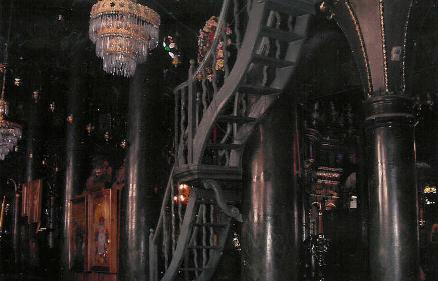
Another shot from inside the church. |
|
|
|
 |
|
|
|
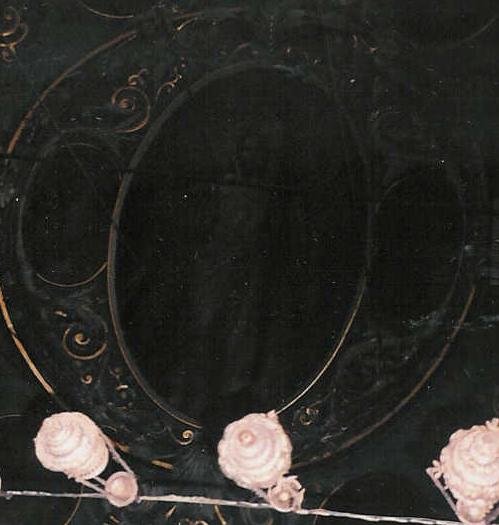
This is the center ceiling panel. Its a painting of Jesus- stretch your eyes and see if you can see him! |
|
|
|
 |
|
|
|
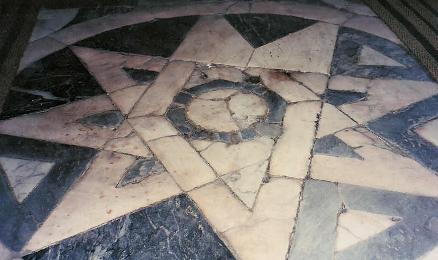
The floor inside the church. Marble. So old, it was slippery. |
|
|
|
 |
|
|
|
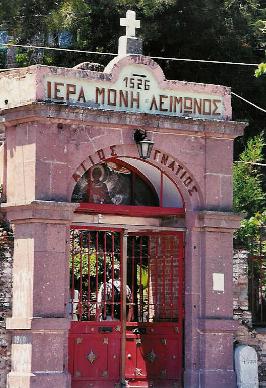
Next stop: Leimonos Monastery. Monks still live here, and we saw some of them wandering around. |
|
|
|
 |
|
|
|
Leimonos Monastery has a huge amount of land, which is used to house a zoo, cells for the monks, a monastery that women couldn't enter, and 40 churches. One church was built for each saint from the island of Lesvos. Crazy. |
|
|
|
 |
|
|
|
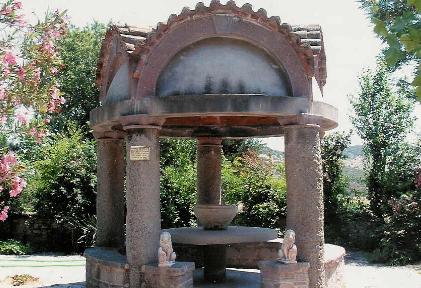
We think there was supposed to be holy water in this bowl, but it was dry. I asked Sophia if the only thing that makes it "holy" is being blessed. I was right, and she wondered if I was Catholic. I'm not. As the day progressed, and we talked more, she decided to call me "encyclopedia" because I know so much. Hmm. |
|
|
|
 |
|
|
|
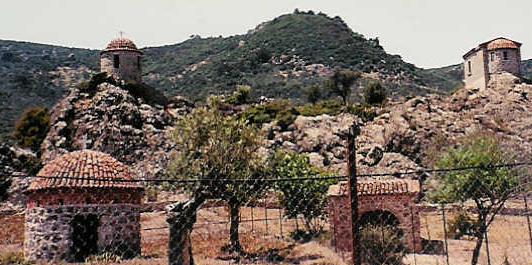
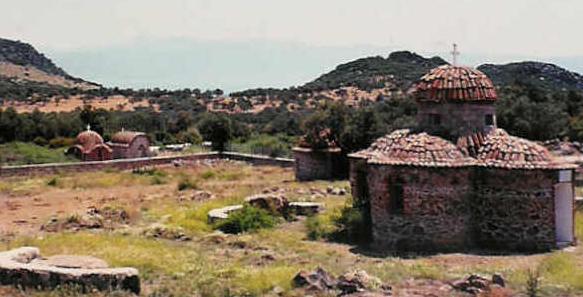
Four of forty churches. I told you, Greeks build them EVERYWHERE. |
|
|
|
 |
|
|
|
Three more churches. We couldn't help but wonder if the Saint that got this big church was a better Saint than the ones who got the smaller churches in the picture above... ponder. |
|
|
|
 |
|
|
|
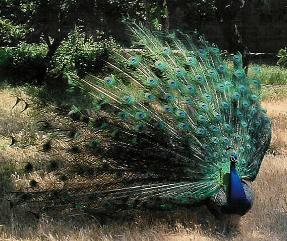
I told you it was a zoo. Here's a peacock. There were also chicken, geese, ducks, llamas and camels. |
|
|
|
 |
|
|
|
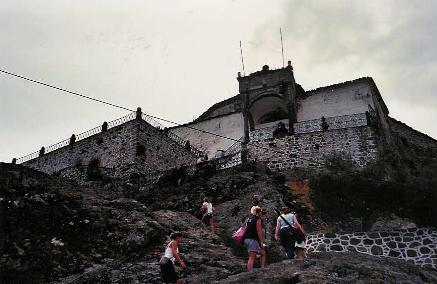
The next place we visited was Petra, on the North coast of Lesvos. This city is famous for a church (again) build on top of a rock. Legend has it a man lost his icon of Mary, and one night saw a light shining on top of this rock. He climbed the rock, found his icon, then built a church in honor of Mary. |
|
|
|
 |
|
|
|
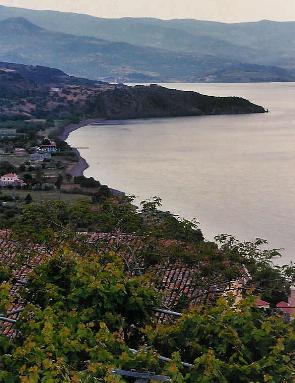
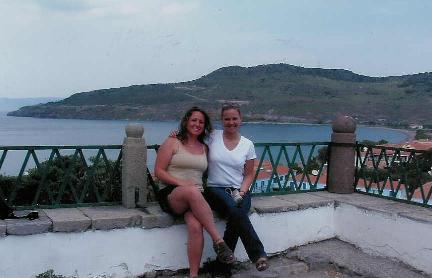
It was one heckuva climb to get up to the church, but it was well worth the view. |
|
|
|
 |
|
|
|
 |
|
|
|
|
|
The view from the top of the rock was amazing. Coincidentally, "Petra" is Greek for "rock". Any guesses on the naming of the town? And for you Biblical scholars, Simon was named by Jesus, who called him his rock-- you got it! Peter! Yay Greek is fun. |
|
|
|
|
|
 |
|
|
|
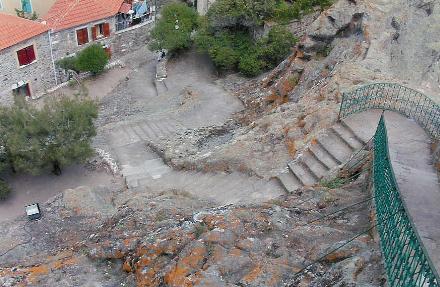
This was what we walked up to get to the top of the church. Crazy. Poor first guy to climb it before the steps. |
|
|
|
 |
|
|
|
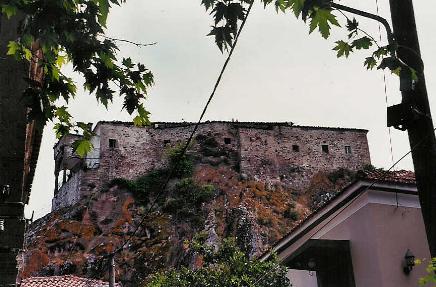
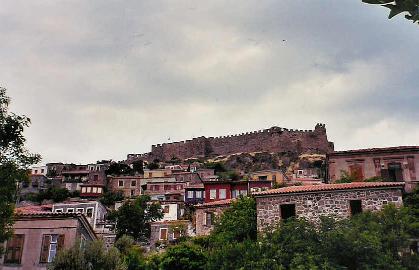
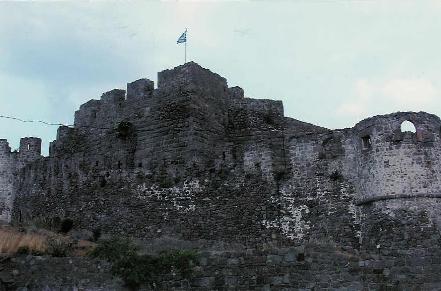
We drove along the coast to Molyvos, the premier tourist destination on Lesvos. This city is also called Mythimna, and is predominately visited for its castle, pictured here. We were dropped off at the castle, then walked down to meet our professors before having dinner. |
|
|
|
 |
|
|
|
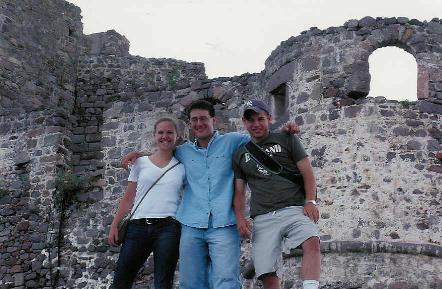
A closer view of the castle. |
|
|
|
 |
|
|
|
We wandered around the castle a bit, and couldn't figure out how to get in. So Dana, Jason and I scaled the wall and broke in. Once we reached the top of the wall, we saw some people on the other side of an iron gate, apparently waiting to get in. Oops. We wandered around a bit on top of the walls, then got down and walked to town, where we bought some olive oil soap and had some coffee. |
|
|
|
 |
|
|
|
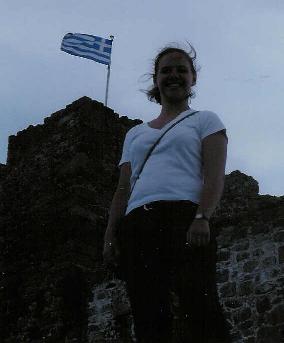
Me, on a castle, with the Greek flag behind my head. Super-cool. |
|
|
|
 |
|
|
|
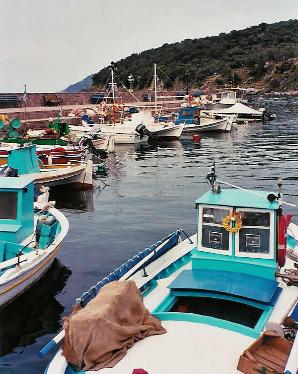
Dinner was at Skala Sikamineas, a cute little port. This picture of the harbor should be a postcard. I entered it in the Study Abroad Photo Contest, and some lame other stuff won. Boo. |
|
|
|
 |
|
|
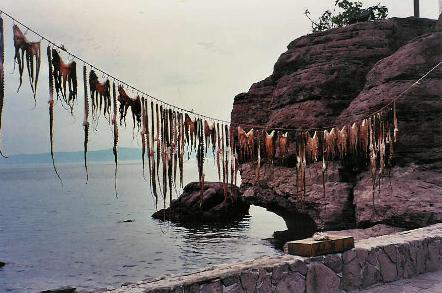
These are octopus, caught by hand by divers that day. They beat them on rocks to make them tender, then stretch them and hang them on a line. We had some with our dinner, it was wonderful and fresh. YUM. |
|
|
|
 |
|
|
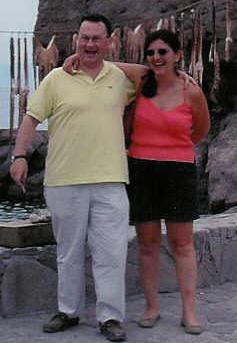
Brendan and Sophia, our professors. In case you weren't sure, they are married, hence why they have children. Brendan Mullan is Irish, Sophia Koufopoulou is Greek, they met in Cambridge, England, and are professors at Michigan State. Crazy. They are two of the most interesting people I have ever met, and the best professors I've ever had. They're currently in Greece, living in Lesvos, while Sophia finishes her dissertation for her doctorate, which is done on research she conducted in Lesvos and in Ayvalik, Turkey, across the sea. When we went to Turkey, we visited the city she did research on. More on that later! |
|
|
|
|
|
|
 |
|
|
|
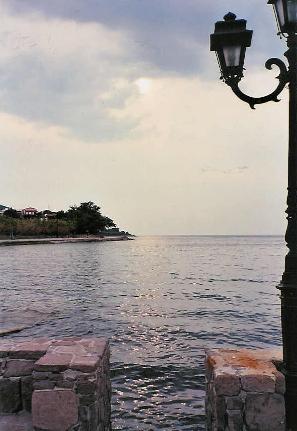
Another view from Skala Sikamineas. For the record, having "Skala" in front of a name means "beach". There are cities further up the mountain, away from the beach. People in the cities migrate to the beach for the summer to do their fishing and things, then move back up to the regular city for the winter. This is minimizing as populations rise, tourism becomes more popular, and life becomes modernized. I want to live in Greece. |
|
|
|
<--Back Home Next--> |
|