Classroom Management
Building a community of learners:
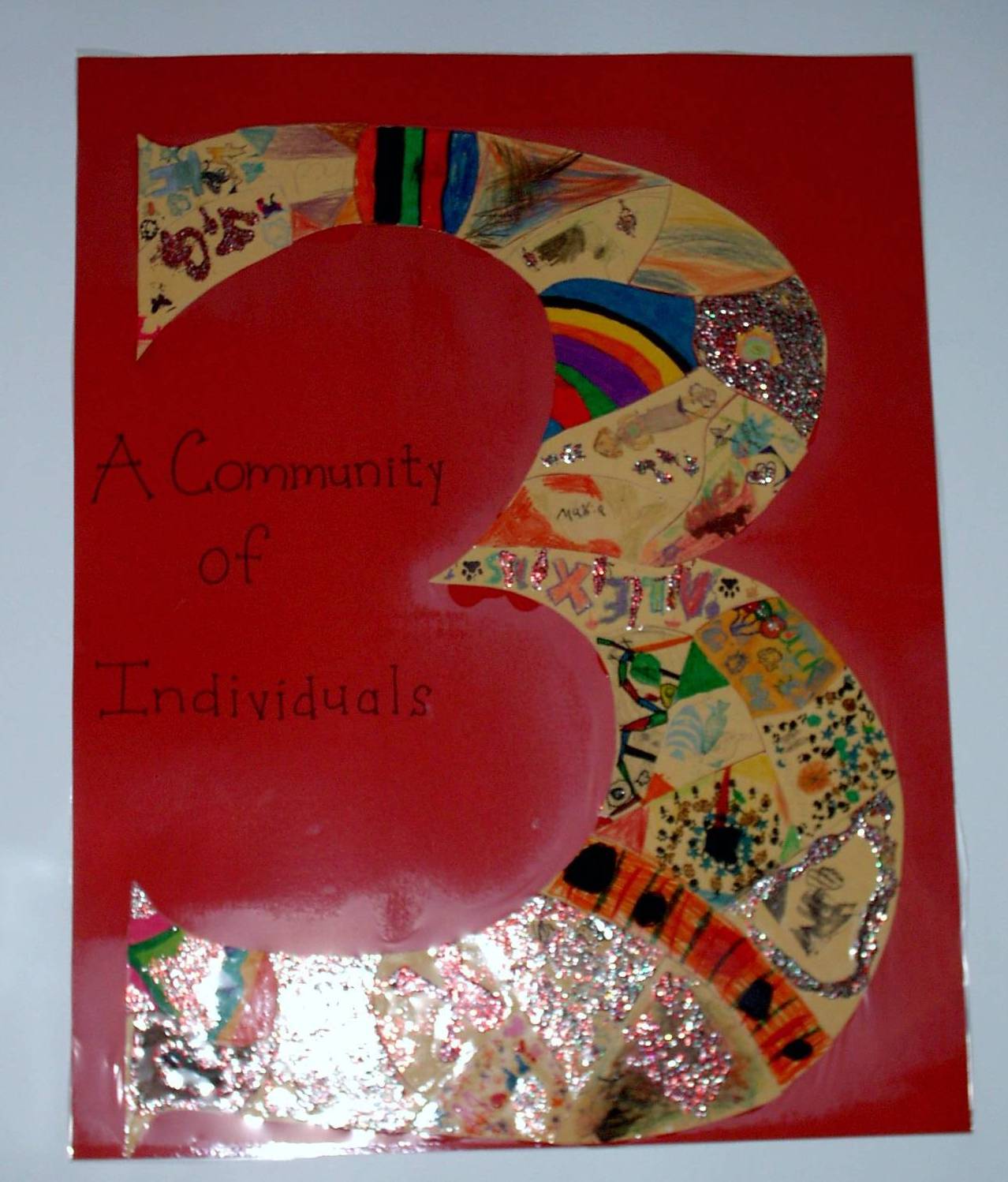
In our classroom this year, we worked hard at the beginning of the year to establish a safe, respectful place for all students to work. The lesson we started with was a creative fun activity. We cut a large 3 (for 3rd grade) out of poster board. The three was cut into smaller jigsaw type pieces. The students were each given a piece of the big three, though they were not aware initially what the pieces made when put together. They were given many different supplies to decorate their piece of the puzzle anyway they wanted. We sat as a class and put the pieces together to create the big three. The discussion after was all about how together we aren't nearly as effective as we are together. This is a lesson that shows how working together makes the classroom a better place to be.
Parent Involvement:
Communication with parents is crucial to an effective year. I want to allow an open channel of communication between the parents and myself. I hope to call parents for "Walter's" good behavior and class work. If I find I need some assistance or feel the parents should be aware of current circumstances, I will definitely contact them. By establishing rapport on a good note, negative situations might lend to a less confrontational meeting.
Special Needs:
Meeting the exceptional needs of students is an important aspect to consider. There appears to be many levels of needs among children. As a teacher, I must be prepared to handle them all. When assessing the needs of these students, I would consult with other teachers who have had contact with this student before if possible. This would include administrators, special education services, and other staff. It appears that each district has policies and procedures to follow and adhere to when dealing with labels and specialists. It is my job, as a classroom teacher, to be aware of all possible resources available for my students. I am not afraid to ask for help assistance when needed.
Supplementing instruction would be done on an individual basis. It may involve extra one on one with that student, or giving him/her a peer tutor to help him/her along in class. Adjusting the assignment that is given to meet the abilities will also be necessary. Alterations can easily be done by cutting down or simplifying the assignment.
I think by trying to meet the exceptional needs of these students a grand understanding will occur. The child will have opportunities to be with her/her classmates with exposure to new and different experiences. Tolerance and understanding the needs of others can be a wonderful life lesson.