
Biology
and the Golden Ratio


Conclusion: The Bee Hive
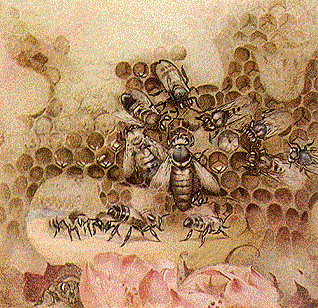
 ��� The geneology of the bee is
a pattern.� This pattern is the result of parthogenesis, the development of an
unfertilized egg into an adult animal without fusion with sperm.� The queen bee mates
only once.� She can then produce either unfertilized eggs or fertilized eggs. �
The unfertilized eggs become male drones, while the fertilized eggs become female workers
or queens.�� In other words, a female bee has two parents, and a male bee has
only one parent; a female.� Female bees reproduce by parthenogenesis during the
spring and summer.� In the fall, the eggs produce both males and females. �
These insects mate, and the females produce fertilized eggs that hatch in the spring.
��� The geneology of the bee is
a pattern.� This pattern is the result of parthogenesis, the development of an
unfertilized egg into an adult animal without fusion with sperm.� The queen bee mates
only once.� She can then produce either unfertilized eggs or fertilized eggs. �
The unfertilized eggs become male drones, while the fertilized eggs become female workers
or queens.�� In other words, a female bee has two parents, and a male bee has
only one parent; a female.� Female bees reproduce by parthenogenesis during the
spring and summer.� In the fall, the eggs produce both males and females. �
These insects mate, and the females produce fertilized eggs that hatch in the spring.
 Family Tree of Drone Bee
 He had
1 parent, a female.
He had
1 parent, a female.
He has
2 grand-parents, since his mother had two parents, a male and a female.
He has
3 great-grand-parents: his grand-mother had�two parents but his grand-father had only
one.
The total of all the males and the total of all the females that make each generation
forms an overlapping Fibonacci series repeated twice; One for males and one for
females�
� �
great- ���������� great, great
��� gt,gt,gt
�������������������������������������������������
� grand- ����������grand-
���������� grand
����������� grand
Number of������������ parents:
�������� parents:
�������� parents:
�������� parents:
�������� parents:
of a MALE bee:�������� 1
������������������
2
�����������������
3
������������������
5
������������������
8
of a FEMALE bee:���� 2
������������������
3
����������������
5
�������������������
8
�����������������
13
�
Why does Phi appear in nature?
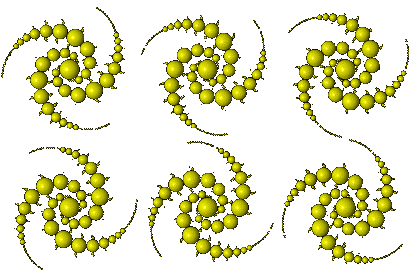
 The arrangements of leaves is the same as for seeds and petals.� All
are placed at 0.618034.. leaves, seeds, or petals, per turn.� In terms of degrees
this is 0.618034 of 360� which is 222.492...�. However, we tend to see the smaller angle
which is (1-0.618034)x360 = 0.381966x360 = 137.50776..�. When you look at properties of
Phi, you will see that 1-phi = phi2 = Phi-2
The arrangements of leaves is the same as for seeds and petals.� All
are placed at 0.618034.. leaves, seeds, or petals, per turn.� In terms of degrees
this is 0.618034 of 360� which is 222.492...�. However, we tend to see the smaller angle
which is (1-0.618034)x360 = 0.381966x360 = 137.50776..�. When you look at properties of
Phi, you will see that 1-phi = phi2 = Phi-2
 If there are 1.618... leaves per turn it gives flowers or petals the best
possible exposure to insects to attract them for pollination or exposure to sunlight.� The whole of the plant
seems to produce its leaves, flowerhead petals and then seeds based upon the golden
number.
If there are 1.618... leaves per turn it gives flowers or petals the best
possible exposure to insects to attract them for pollination or exposure to sunlight.� The whole of the plant
seems to produce its leaves, flowerhead petals and then seeds based upon the golden
number.
�
�
 Return to the Golden Ratio Page
�
�
�