Birds Photographed in the UK in 1992
(August - October)
Jonathan Wasse
London, UK
|
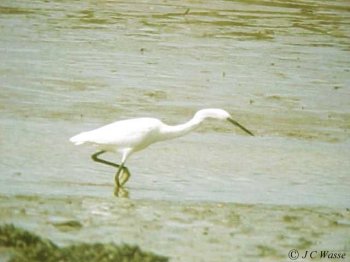
Little Egret Egretta
garzetta
Hayle
Estuary RSPB, Cornwall, August 1992.
At the end of the 21st
century this species is a
common sight on the south coast estuaries
of
the UK, and is breeding at a few localities. |
|
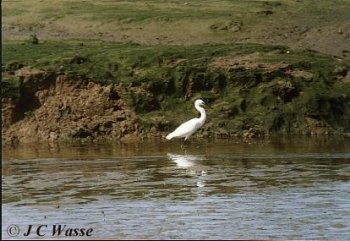
Before 1998, this bird was an uncommon vagrant
to the UK. The first signs of an influx to the UK
occurred in the
late 1980's with numerous sightings
of this species particularly at
the Hayle Estuary
in Cornwall. |
|
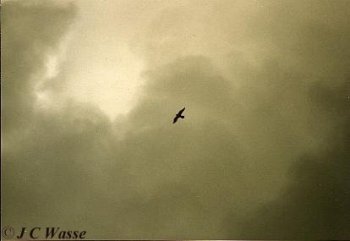
Peregrine Falcon Falco
perigrinus
Hayle Estuary RSPB, Cornwall, August 1992.
This master of the skies is seen most days on the
Hayle Estuary, and
accounted for a Knot Calidris
canutus on this visit. |
|
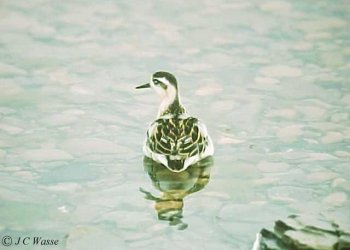
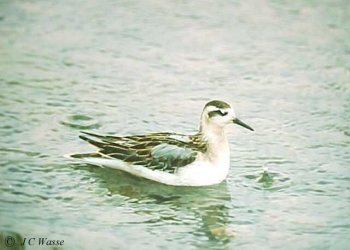
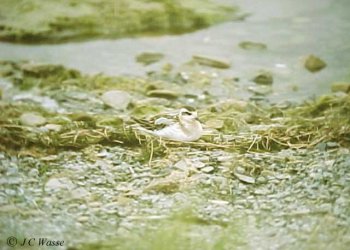
Grey Phalarope
Phalaropus fulicaria
Angler's
Country Park, West Yorkshire, Sept. 1992.
A juvenille
bird that showed well as it stopped off on
its migration south from
the Arctic. |
|
A good little performer. The bird frequently
fed close
to the shore. |
|
The bird was comfortable resting on the
shoreline,
despite the attention of birders and dog-walkers
at this
site. |
|
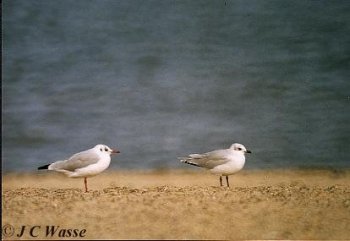
Mediterranean Gull
Great
Yarmouth, Norfolk, October 1992.
A nice comparison between
this 2nd winter bird (right)
and an adult winter Black-headed Gull
L. ridibundus
(left). |
|
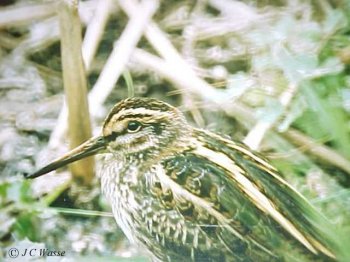
Jack Snipe
Lymnocryptes minimus
Cley,
Norfolk, October 1992.
One of two migrants resting outside one of
the
many hides on the Cley marshes. It was constantly
"bobbing" up
and down. |
|
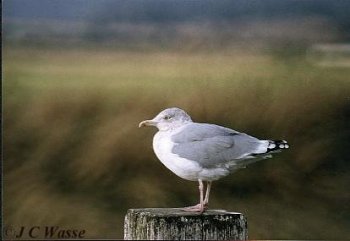
Herring Gull Larus
argentatus
argentatus
Great Yarmouth, October 1992.
This
Scandinavian race is a common sight in the
eastern regions of the UK
in winter. |
|
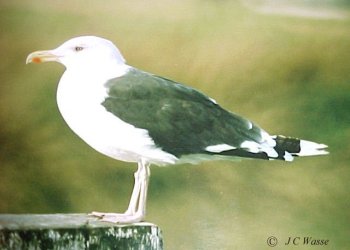
Great black-backed Gull
Larus
marinus
Great Yarmouth, Norfolk, October 1992.
Next
one to perch on this post, was the big black one! |
|
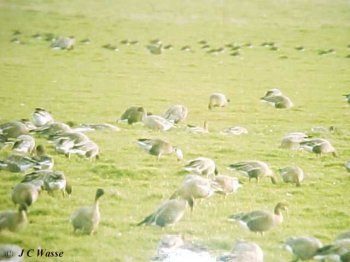
Snow Goose Anser
caerulescens
Southport, Lancashire, October 1992.
A typical
locality for sightings of this species in the
UK in the early winter
months. They usually arrive
with the thousands of Pink-footed Geese
A. brachy-
rhynchus that frequent these Lancastrian coastal
marshes and neighbouring farmland. Usually sightings
are of white morph
birds and not blue morphs, which
is shown here. |