 |
|
|
|
|
|
|
|
|
|
|
|
|
|
|
|
|
|
|
|
|
|
|
|
|
|
|
|
|
Science |
|
|
|
Hands-on lessons inspire children to wonder, ask questions, and follow their interests. Student develop critical thinking skills and problem solving skills. |
|
|
|
 |
|
|
|
The Learning Cycle: Experience, Reflect, Experiment, Exhibit, and Connect
The learning cycle is not only used in science, rather in througout all subjects, I have just choosen to express how I use it on this page. |
|
|
|
 |
|
|
|
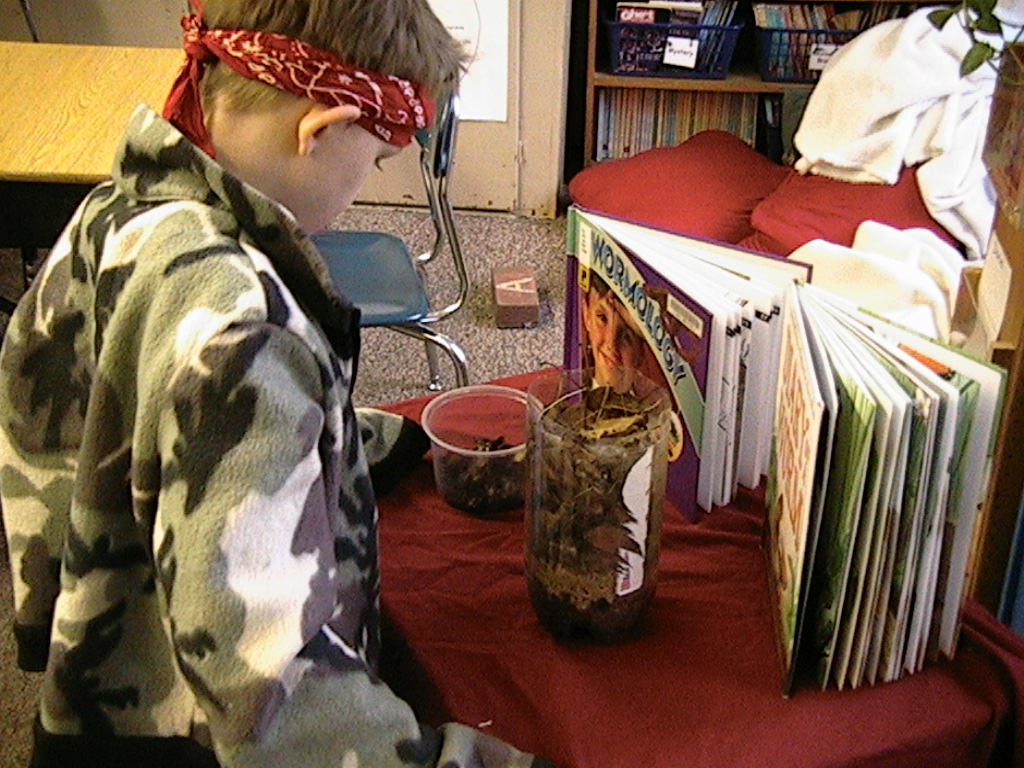
The "Wonderful Worm" mini-thematic unit was kicked off by an interest table which student were drawn to. Thus, peaking thier curiosity and preparing them for learning. Students could touch anything on the table. |
|
|
|
|
|
 |
|
|
A worm interest table was set up to prime students for our worm study. |
|
|
|
|
|
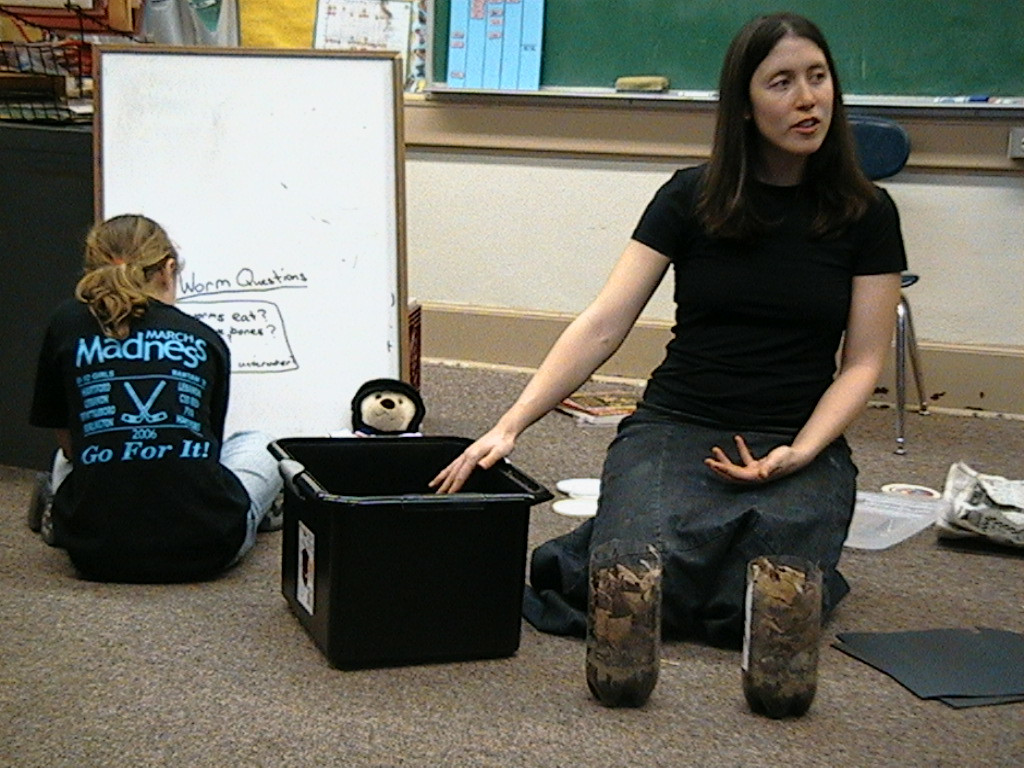
The unit started by figuring out what students knew and then the students asked questions and wondered about worms. |
|
|
|
|
|
|
The first day of the study, we generate a list of questions students have about worms. |
|
|
 |
|
|
|
|
|
|
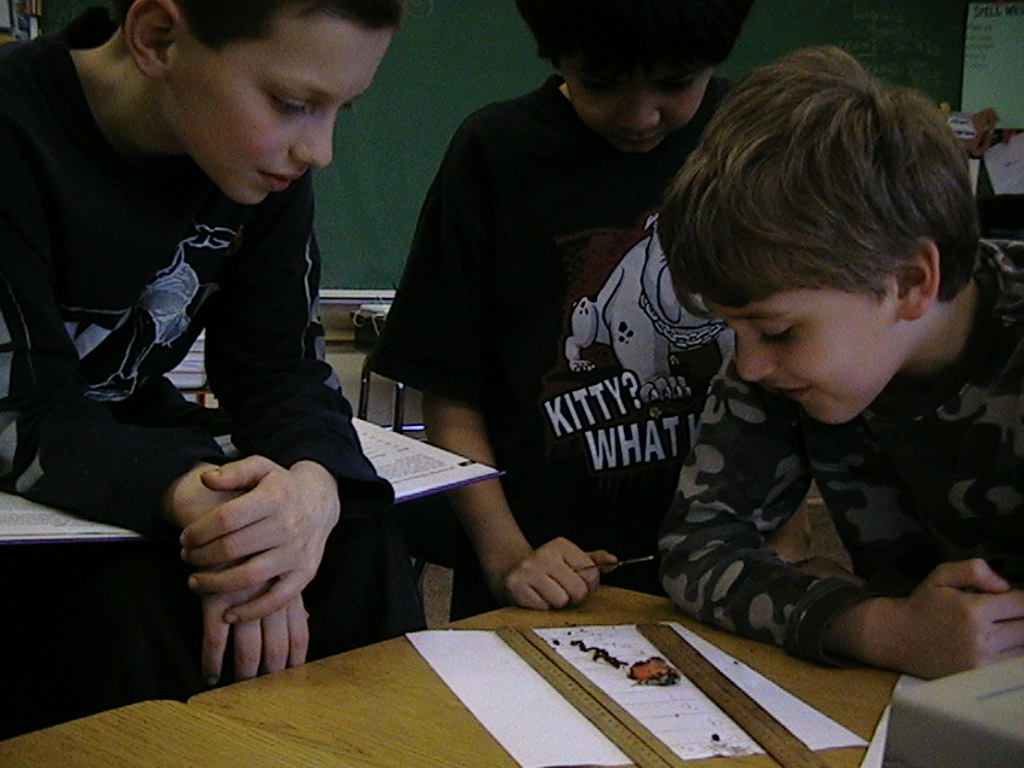
Students worked together to answer their own questions such as: How fast can worms more?
What food do worms like best?
How do worms eat?
Can worms see?.
The students designed and conducted experiements or research projects to answer their questions. Then each group reported thier finding to the class. |
|
|
|
|
|
Next Page
Previous Page
Justine's Front Page |
|
|
|
|
Students designed and implimented their worm experiments to answer their own questions. |
|
|
|
|