| THE HISTORY OF BALLET |
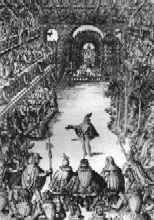
| Pre- 19th century. The nobility of Renaissance Italy (1300-1600) used to entertain important visitors with pageants, poetry, music, mime and dance. This was the beginning of ballet. Entertainment of this form was introduced to the French court when Henry II of France married an italian (Catherine de Medici). Expensive costumes and elaborate stage effects showed the guests (aristocracy) their power and prestige. In 1581 Catherine and her ladies performed the Ballet Comique de la Reine for her sister's marriage. It told the story of an enchantress who turned men into animals, through singing and acting as well as dancing, stage effects included a fountain flowing scented water and hundreds of candles. From then on ballets popularity increased in the French court, peaking almost a hundred years later during Louis XIV reign. Eventually in the mid-1600s the court no longer danced, and professionals replaced them. This was when the king (Louis XIV) stopped dancing, his courtiers followed and Louis XIV established Academie Royale de Dance in 1661. The grand ballet proceeding the performance was still strictly danced by the king and his courtiers. At first there were only male professional dancers, then at the end of the 17th century there were female dancers. The most famous of these were Marie Camorgo for shortening her skirt and wearing flat shoes so she could jump (the first steps towards the ballet shoes worn today), and Marie Salle for wearing Greek robes and loosening her hair. |
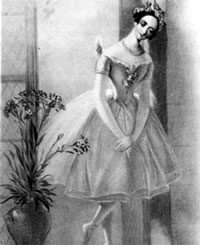
| The 19th Century. The early part of the 19th century is known as the Romantic movement, which saw the creation of ballets like La Sylphide (1832) and Giselle (1841). La Sylphide tells the story of a forest sprite who falls in love with a mortal. This was when toe dancing was intrduced by Marie Taglioni to give the impression of lightness. It possessed the elements of the Romantic movement, emotion, imagination and the supernatural, rather than heroes and heroines of classical ballets. Giselle was also created during the Romantic movement, it was for this ballet that the Romantic tutu was worn. During the classical period (the 2nd part of the 19th century) the popularity of ballet declined in Western Europe, the only ballet to be created in Paris was Coppelia (1870). It was dominated by women and principal roles were danced by women. Russia was one of the only areas of the world to see an increase in popularity of ballet. This was because a Frenchman, Marius Petipa, the chief choreographer of the Imperial Russian Ballet, responsible for the classical period, created 50 ballets which included Swan Lake (1877), Sleeping Beauty (1890), The Nutcracker (1892). |
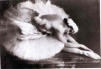
| The 20th Century. As the world entered the 20th century Petipa's style was unpopular and old-fashioned. Choreographers like Fokine responsible for Scheherazade (1910), The Firebird (1910), Petruska (1911), Daphnis and Chloe (1912), and The Dying Swan for Anna Pavlova, repelled against Petipa's style and revitalised ballet all around the world. They wanted greater expressiveness and to combine all elements of production (choreography, music, scenery, and costume). During the 1920s and 1930s modern dance began to be developed which was motivated by music rather than plots, for example Apollo (1928) and Agon (1957) created by Balanchine. By the mid 1950s Russian companies like Bolshoi and Kirov had began to tour, many other companies followed, performing both Classical and Romantic ballets so traditional ballets are still as popular as modern ballets. |
 |
 |
 |
 |
 |
| Comique de la Reine |
| Comique de la Reine |
| Marie Taglioni |
|
| Anna Pavlova |
| Modern: All About Modern / Modern Productions |
| Jazz: All About Jazz |