Proof:
Warnings
Green House Effect
Effects:
Heat
Ice
Sea Level
Climate
Nature
Animals
Bibliography:
Works Cited
|
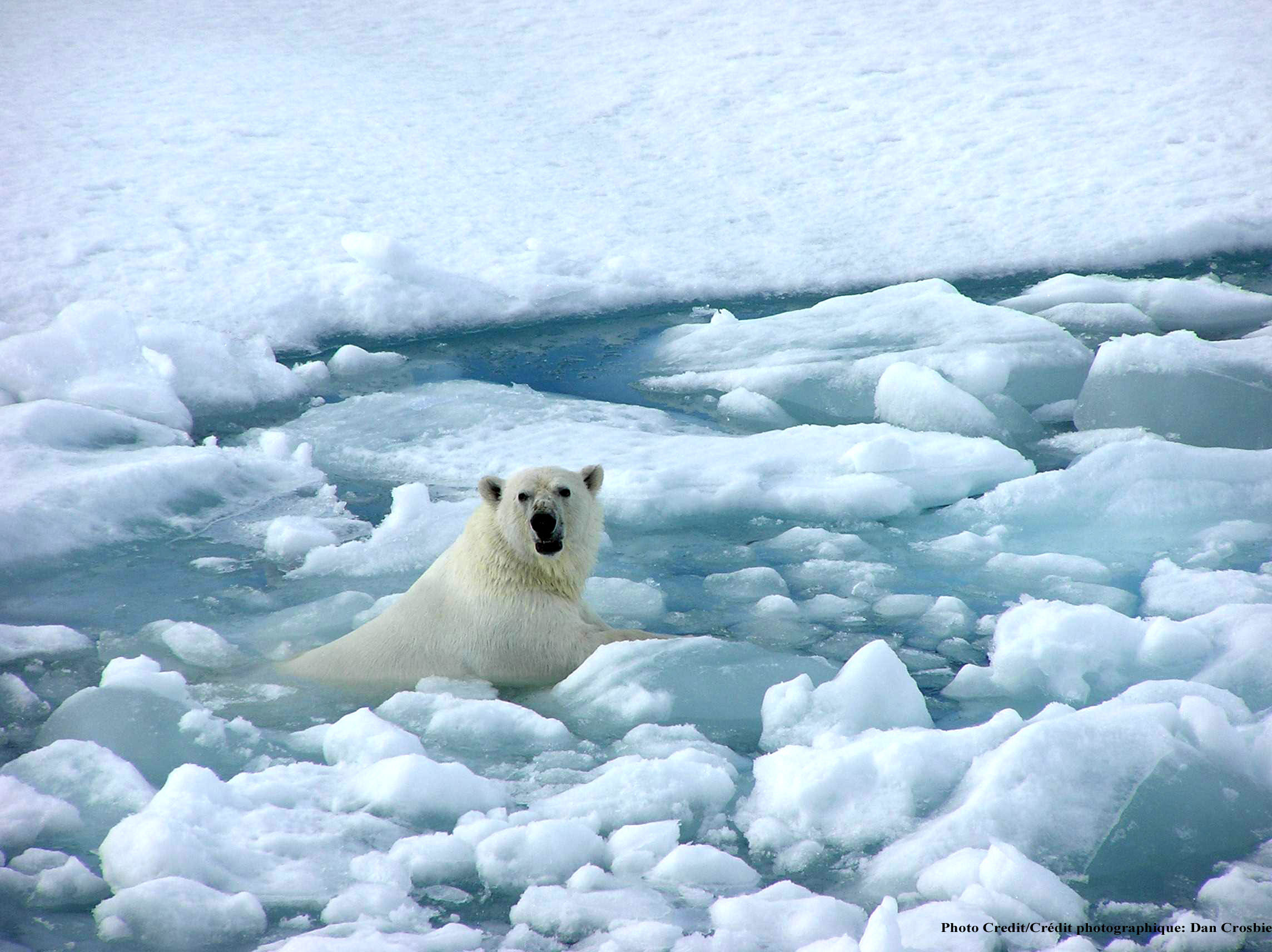
Global warming will negatively affect most animals in a variety of ways. More precipitation will lead to more run off and pollution running off into the habitats of whales and dolphins. The warming of the Northwest Passage due to warming could also disturb habitats with more ship traffic. As 40% of sea ice is expected to disappear by the end of the century, it will also take away the algae below it and damage the food web. Adelie Penguins and blue whales that feed on krill, which feed on algae, will all decline in a cycle. Polar bears, walruses and seals will also decline because they need sea ice for hunting and other vital activities. Crabs in the Pacific may also be at risk with the rise in temperatures. Caribou will decline simply because they will waste energy during migration as it snows and freezing rains more due to more precipitation in the air. In addition alligators that aren’t tolerant to saltwater, will try to go inland towards people and be killed off. Birds are even at greater risk since many species are on the decline and many are vulnerable to global warming’s effects destroying almost all their habitats and food sources, like with the Capercaillie and the spoon-billed sandpiper. The Sooty Shearwater in the west coast has decreased by 90% in the past 18 years due to increase sea temperatures that have destroyed its primary food (Threat). The Scottish seabirds also catastrophically failed to bread due to the death of plankton in the warming North Sea (Kunzig 26). The population of ducks in North and Central U.S. is expected to decline by half by 2060 down 2.5 million. Also hundreds of thousands of Short-tailed Shearwaters died because a bloom of plankton changed the color of the water in the Bering Strait, masking the bird’s food supply. Finally migration routes being disturbed by salt water will also cause birds to decline (Threat).
|
