Kevorkian's Patients, Trials, and Conviction
Janet Adkins
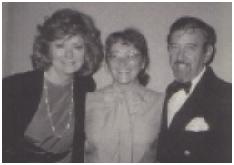
Janet Adkins (center) with husband Ron and friend Carroll Rehmke
(Photo taken from: Kevorkian, Jack. Prescription: Medicide. New York: Prometheus Books, 1991. Pg 226.)
"Janet Adkins was a remarkable, accomplished, active woman - wife, mother, grandmother, revered friend, teacher, musician, mountain climber, and outdoorsperson - who, for some time, had noticed subtle and gradually progressive impairment of her memory. The shock of hearing the diagnosis of Alzheimer's disease four months earlier was magnified by the abrupt and somewhat callous way her doctor announced it. The intelligent woman knew what the diagnosis portended, and at that instant decided she would not live to experience the horror of such a death."1
In November of 1989, Dr. Jack Kevorkian received a telephone call from Ron Adkins from Portland, Oregon. Ron Adkins was calling on behalf of his wife, Janet, who was suffering from Alzheimer's disease. Janet Adkins, who was 54 years old, had learned of Dr. Kevorkian from a Newsweek article earlier that month, and she wanted to end her suffering from the disease. After an experimental treatment at the University of Washington in Seattle failed to help her deteriorating condition, Kevorkian decided to accept her as the first candidate for the Thanatron.
"Even though from a physical standpoint Janet was not imminently terminal, there seemed little doubt that mentally she was - and, after all, it is one's mental status that determines the essence of one's existence...Because Janet's condition was deteriorating and there was nothing else that might help arrest it, I decided to accept her as the first candidate - a qualified, justifiable candidate if not "ideal" - and well aware of the vulnerability to criticism of picayune and overly emotional critics."2
In a conversation over the telephone, Ron and Janet Adkins set June 4 as the date for the medicide. When every hospital, clinic, hotel, and friend rejected the use of their property to perform the suicide, Kevorkian decided to use his 1968 camper as the location for the medicide. On June 2, 1990, Kevorkian and his two sisters, Margo and Flora, met with Ron and Janet Adkins as well as Carroll Rehmke, a close friend of Janet's. After Janet Adkins signed documents agreeing to the procedure, Ron and Carroll signed other forms stating that Janet was mentally competant. During the afternoon of June 4th, 1990, Janet Adkins met Dr. Kevorkian in his van parked in Oakland County, Michigan. Kevorkian started Adkins on an IV, set up the Thanatron and an ECG, then gave Janet the signal that she could begin whenever she was ready.
"The moment had come. With a nod from Janet I turned on the ECG and said, "Now." Janet hit the Mercitron's switch with the outer edge of her palm. In about ten seconds her eyelids began to flicker and droop. She looked up at me and said, "Thank you, thank you." I replied at once as her eyelids closed, "Have a nice trip."Agonal complexes in the ECG tracing indicated death due to complete cessation of blood circulation in six minutes.
It was 2:30 P.M. Suddenly - for the first time that cold, dank day - warm sunshine bathed the park"3
Soon after this assisted suicide, Dr. Kevorkian was charged with murder by the state of Michigan. Kevorkian, however, had expected this to happen and welcomed the charges as an opportunity to bring the assisted-suicide issue into the public eye. This moment in the spotlight was short-lived, however, since the murder charge was dropped on December 19th when a state judge ruled that with no law specifically banning assisted-suicide, no case can be brought against Kevorkian since what he did was not technically illegal.
Marjorie Wantz and Sherry Miller
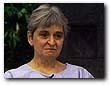
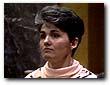
Sherry Miller was a 43 year-old woman who suffered from multiple sclerosis, a disease which steadily causes muscles to weaken as the patient loses muscle control. Although she was physically weak, Miller's was mentally healthy and had full awareness of what was happening to her.4 Soon after the diagnosis, Miller contacted Dr. Kevorkian, as well as tell her story on television.
Kevorkian: What is the implication of your decision?
Miller: There's no turning back.
Kevorkian: What will happen?
Miller: All I have to say is no.
Kevorkian: What is it you want? Put it in plain English.
Miller: I want to die.5
Marjorie Wantz, 58, suffered from constant, severe pain after ten surgeries to remove benign tumors. Although in excruciating pain, Wantz was not terminally ill, and she also suffered from depression. Wantz had attempted suicide on three occasions, but failed each time. A psychiatrist had at one time tried to have her admitted for extensive therapy, and believed that she was insane.6 Wantz sought help from Kevorkian to end her pain for good.
Kevorkian: Are you afraid at all? Do you have any fears?
Marjorie: No. Just that I've been thinking about it. You know how long it's been. It's gotten much worse. I wish we could do it-- like she said-- I wish we could have done it a year ago, two years ago.
Kevorkian: Do you have any fear at all about what--
Marjorie: I'm a little nervous. I have no fear of it; I'm a little nervous. Because I've been waiting so long. You know, waiting for the medicine. And then it wasn't coming. And then maybe we couldn't do it. The waiting. A week seems like you're waiting a month. Three days seems like three months when you're hurting and going crazy.7
Both Marjorie Wantz and Sherry Miller, with Dr. Kevorkian's assistance, committed suicide mere hours after their videotaped interview with Kevorkian on October 23, 1991. Wantz used an updated version of the Thanatron, which injected her with a lethal dose of a drug which stopped her heart. Miller, since her veins were too weak to support a needle for an IV drip, inhaled carbon monoxide.
Several months later, Kevorkian was charged with the murders of Marjorie Wantz and Sherry Miller. This case, however, was a bit more complicated than the Janet Adkins case since Marjorie Wantz was not terminally ill, nor had she exhausted all of her other options (to treat her depression and possible psychological problems...it was possible her pain was psychosomatic).8 Although the circumstances were slightly different than the Janet Adkins case, the charges against Dr. Kevorkian were dropped on July 21, 1992 since there was still no law banning assisted suicide in Michigan.
Thomas Hyde
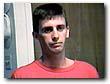
Thomas Hyde was a 30 year-old man who was diagnosed with ALS in August of 1992. In less than a year, it was nearly impossible for Hyde to move or speak as the disease destroyed the nerve cells in his brain and body controlling muscle movement. As the disease rapidly progressed, Thomas Hyde and his wife Heidi contacted Dr. Kevorkian and arranged a meeting with him.
On July 1, 1993, Thomas Hyde and his wife Heidi met with Dr. Kevorkian to discuss possibilities for ending Thomas Hyde's suffering. During this videotaped interview, Heidi explained that as her husband's condition worsened, they sought the help of doctors for possible treatment. Since Hyde was so young, he seemed to be a perfect candidate for special experimental treatment, but he was denied due to repiratory weakness. Because he refused to go into a hospice center, Hyde soon ran out of options to help him with his disease, and so he and Heidi turned to Dr. Kevorkian.
Kevorkian: Does Tom want to go into a hospice?
Heidi: He doesn't want to go into a hospice.
Kevorkian: Tom, do you want to go into a hospice?
Thomas: ... (inaudible)
Kevorkian: Why not? What is your main reason?
Thomas: ... (inaudible)
Heidi: Dignity.
Kevorkian: Dignity. Wants to maintain his dignity. 9
With no other options to alleviate his suffering and with a desire to maintain what little dignity he still had, Thomas Hyde decided that he wanted to die in a way which he had some control over. Because of their drastically decreased muscle control, patients who suffer from ALS struggle with the simplest of functions, such as breathing and swallowing, and live in fear of choking on their own saliva. Since Hyde wanted to avoid this terrible end and to retain some of his dignity, he sought out Kevorkian, and together they made plans for his suicide.
Kevorkian:Well, Tom, what is it you wish? Tell me your wish in plain English.
Thomas: I want to end this. I want to--
Kevorkian: Take your time. Take your time.
Thomas: I want--die. 10
Around a month after the interview, Kevorkian performed the "medicide." On August 4, 1993 Thomas Hyde died after inhaling a mixture of carbon monoxide and nitrogen gas. Despite the newly passed law in Michigan temporarily banning assisted suicide, the county commissioner, John D O'Hair, was reluctant to bring charges against Kevorkian. Kevorkian and his attorney Geoffrey Fieger, however, pressed the issue and challanged the courts to press charges against Kevorkian. On September 10, Kevorkian got his wish and was charged with the murder of Thomas Hyde, becoming the first person to be tried under Michigan's new assisted suicide law. The trial took place in May of 1994.
"Humanity and compassion are on trial. You [the jury] will be deciding one of the great issues in the struggle for human rights...His intent is never to kill someone, but only to reduce suffering. That is Dr. Jack Kevorkian. That is the man who stands charged before you. You will decide how much suffering all of us must endure before we go into that good night - some of us, not so gently." -Geoffrey Fieger in his opening statement 11
Although it would seem from Fieger's opening comments at the trial that the assisted suicide issue my finally be decided, Fieger presented several surprising twists to the trial proceedings. First, Fieger said that Thomas Hyde did not die in Belle Isle, a Detroit city park, but rather in Royal Oak, a Detroit suburb. While the location of the death may seem unimportant, it almost ended the trial. If it was proven that Hyde died in Royal Oak, the case would not fall under the jurisdiction of the court which was currently trying Kevorkian, and Kevorkian would be dismissed. He also could not legally be tried by another court for the same charge, and as a result, Kevorkian would be free of the charge of the murder of Thomas Hyde.
The location of the death of Thomas Hyde, however, did not bring the case to a close, and the trial continued. During the trial, Fieger showed the videotape of the interview between Hyde and Dr. Kevorkian, and this video brought many of the jurors to tears. Although a newly instated law banned assisted suicide, (this law was declared unconstitutional by several judges, but was still in effect) Mr. Fieger said that "it is not against the law in the state of Michigan to assist in a suicide if you intention is to relieve suffering."12 This became the foundation of Kevorkian's defense.
When Kevorkian himself was called to the stand, he was extremely careful in his word choice for how he explained his intentions. He clearly stated that he intended only to relieve Thomas Hyde's suffering, and did not intend for Thomas Hyde to die.
Prosecutor: Did you know that Thomas Hyde would die from this procedure?
Kevorkian: No, I did not. I surmised it, but I did not expect it.
Prosecutor: How could you give a man a deadly gas and not expect him to die from it?
Kevorkian: I only surmised that he would die. I guessed. I didn't expect it or intend it. 13
During the entire trial proceedings, Dr. Kevorkian remained uninterested and felt that the entire thing was unnecessary and unimportant, since to Jack Kevorkian, he did nothing remotely illegal. Jack Lessenberry later wrote the following in July of 1994 for Vanity Fair in regards to Kevorkian's disinterest toward the court.
Jack heard little of the oration. To him, it is all a farce and a game. "I am only going along with it to make Geoffrey feel good," he whispered...While Fieger thundered, trying to set the stage for a decision as momentous as Roe v. Wade, his client...intently studied vocabulary lists of Japanese verbs.14
On May 2, 1994, the jury found Dr. Kevorkian not guilty of all charges.
Thomas Youk

Tom Youk led an active life. He restored and raced vintage cars. But at the age 50, he was diagnosed with Lou Gehrig's disease, a devastating, incurable illness that destroyed his muscles. He lost the use of his legs and then his arms. His family says he was in terrible pain, had trouble breathing and swallowing, and was choking on his own saliva.
So they wrote Dr. Kevorkian.
-Mike Wallace15
And you could see him breathing, gasping, leaning back every time he tried to talk. He couldn't - he couldn't utter more than a few syllables at a time because of the weak muscles. And he was terrified of choking - terrified.
-Dr. Jack Kevorkian16
Dr. Kevorkian met with Tom Youk on September 16, 1998. During this meeting, Kevorkian and Youk decided that Kevorkian would give Youk a lethal injection, rather than have Youk pull the switch to start the flow of the lethal drugs as in other Kevorkian cases. Near the end of the meeting, Kevorkian read to Youk the document which would state that Youk agreed to the direct injection, and Youk signed the paper.
This reads this way. I, Thomas Youk, the undersigned, entirely voluntarily, without any reservation, external persuasion, pressure or duress, and after prolonged and thorough deliberation, hereby consent to the following medical procedure of my own choosing. And that you have chosen direct injection, or what they call active euthanasia, to be administered by a competent medical professional in order to end with certainty my intolerable and hopelessly incurable suffering. -Kevorkian to Tom Youk17
After Youk signed the paper, he expected the procedure to be peformed immediately. Dr. Kevorkian, however, wanted him to wait a month to give Youk some more time to think. Youk, however, wanted to end this sooner, and finally agreed to wait a week before the medicide. With the date set, the interview ended.
The next day, however, Kevorkian received a call from Toms Youk's brother saying that Tom wanted it now and didn't want to wait any longer. Kevorkian agreed. On September 17, 1998, Thomas Youk died from a lethal injection administered by Dr. Jack Kevorkian.
He just was terrified and - he wasn't - he was - felt very afraid of choking to death, and he must have felt that he was on the verge of it. And I couldn't have him suffer in that kind of frame of mind because if the man is terrified, it's up to me to dispel that terror. -Kevorkian in an interview with Mike Wallace18
Dr. Kevorkian wanted to make this case as public as possible. For some time, Kevorkian had been performing asssited suicides without being charged. By the time of Tom Youk's death, Kevorkian claimed to have assisted around 130 people die. Now, Kevorkian wanted to push the right to die issue even further by changing from assisted suicide to active euthanasia. To bring the issue to the public attention, Kevorkian videotaped the death of Tom Youk and sent the tape into CBS News where it aired on 60 Minutes on November 22, 1998. One week later, Dr. Kevorkian was charged with first degree murder, violating the assisted suicide law, and delivering a controlled substance in the death of Thomas Youk.
This particular case, however, proved to be a string of mistakes for Dr. Kevorkian.19 First, Kevorkian fired Geoffrey Fieger, his long-time attorney and friend, and decided to defend himself in court. Second, he paraded himself committing a probable crime on national television, causing the public to begin to turn against him and his cause. Finally, he was now fighting a battle of a different kind. Before, he was charged only with assisted suicide. Now, however, he was charged with directly killing a patient by lethal injection. Also, during this trial, Tom Youk's family was not allowed to testify, nor was evidence about Youk's condition allowed in the trial testimonies. As a result, Kevorkian was found guilty of a lesser charge of second degree murder on March 26, 1999 and was sentenced with 10 to 25 years in prison.
No one, sir, is above the law. No one...You were on bond to another judge when you committed this offense, you were not licensed to practice medicine when you committed this offense, and you hadn't been licensed for eight years. And you had the audacity to go on national television, show the world what you did and dare the legal system to stop you. Well, sir, consider yourself stopped. -Judge Jessica Cooper20
Citations
1. Kevorkian, Jack. Prescription: Medicide. New York: Prometheus Books, 1991. Pg 221.2. Kevorkian, Jack. Prescription: Medicide. Pg 222.
3. Kevorkian, Jack. Prescription: Medicide. Pg 230.
4. WGBH Educational Foundation. Frontline: The Kevorkian Verdict: Wantz/Miller Script. [http://www.pbs.org/wgbh/pages/frontline/kevorkian/interviews/wantzmillerscript.html]
5. WGBH Educational Foundation. Frontline: The Kevorkian Verdict: Wantz/Miller Script. [http://www.pbs.org/wgbh/pages/frontline/kevorkian/interviews/wantzmillerscript.html]
6. Nicol, Neal and Harry Wylie. Between the Dying and the Dead. Wisconsin: Terrace Books, 2006. Pg 192.
7. WGBH Educational Foundation. Frontline: The Kevorkian Verdict: Wantz/Miller Script. [http://www.pbs.org/wgbh/pages/frontline/kevorkian/interviews/wantzmillerscript.html]
8. WGBH Educational Foundation. Frontline: The Kevorkian Verdict: Interviews. [http://www.pbs.org/wgbh/pages/frontline/kevorkian/interviews/].
9. WGBH Educational Foundation. Frontline: The Kevorkian Verdict: Thomas Hyde Consult Script. [http://www.pbs.org/wgbh/pages/frontline/kevorkian/interviews/hydescript.html].
10. WGBH Educational Foundation. Frontline: The Kevorkian Verdict: Thomas Hyde Consult Script. [http://www.pbs.org/wgbh/pages/frontline/kevorkian/interviews/hydescript.html].
11. Nicol, Neal and Harry Wylie. Between the Dying and the Dead. Pg 189.
12. Using Surprise Strategy, Kevorkian's Lawyers Seek Acquittal. New York Times Company. Published APril 22, 1994. [http://query.nytimes.com/gst/fullpage.html?res=9C0CE0DA1331F931A15757C0A962958260].
13. Landmark Cases: The Trial of Dr. Death: Michigan vs. Kevorkian. Produced by Court TV on video. 1994.
14. Nicol, Neal and Harry Wylie. Between the Dying and the Dead. Pg 189.
15. �Dr. Jack Kevorkian Interview.� 60 Minutes (CBS News), (June 03, 2007) Taken From: http://web.ebscohost.com/ehost/detail?vid=7&hid=9&sid=c5ffa413-a906-4033-80ff-d8d1a7d40aee%40sessionmgr7
16. �Dr. Jack Kevorkian Interview.� 60 Minutes (CBS News), (June 03, 2007) Taken From: http://web.ebscohost.com/ehost/detail?vid=7&hid=9&sid=c5ffa413-a906-4033-80ff-d8d1a7d40aee%40sessionmgr7
17. �Dr. Jack Kevorkian Interview.� 60 Minutes (CBS News), (June 03, 2007) Taken From: http://web.ebscohost.com/ehost/detail?vid=7&hid=9&sid=c5ffa413-a906-4033-80ff-d8d1a7d40aee%40sessionmgr7
18. "Dr. Jack Kevorkian Interview.� 60 Minutes (CBS News), (June 03, 2007) Taken From: http://web.ebscohost.com/ehost/detail?vid=7&hid=9&sid=c5ffa413-a906-4033-80ff-d8d1a7d40aee%40sessionmgr7
19. Nicol, Neal and Harry Wylie. Between the Dying and the Dead. Pg 214.
20. Nicol, Neal and Harry Wylie. Between the Dying and the Dead. Pg 225.