
Kevorkian as a child
Jack Kevorkian was born on May 28, 1928 in Pontiac, Michigan to Levon and Satenig Kevorkian, immigrants from Armenia who fled to America to escape the cruelty of the declining Ottoman Empire. Despite the ongoing Depression in America, young Jack Kevorkian and his two sisters, Margaret and Flora, enjoyed a quiet and stable life in a small immigrant neighborhood in Pontiac.
Even as a child, however, Kevorkian had issues with authority figures in his life. He frequently got into arguments with his Sunday School teachers by asking them questions such as "If Jesus could walk on water, (which Jack knew to be scientifically impossible) why couldn't he stop the genocide in Armenia?" When none of his teachers could give a satisfactory answer, he stopped attending the school. In school, although he was a brilliant student, Kevorkian constantly challenged the rules forced on him. He would challenge his teachers about various regulations of the school and had little respect for rules he didn't understand, a trait which Kevorkian would continue to show throughout his life.
Young Jack Kevorkian continued his record of academic excellence throughout his schooling, graduating from high school within the top ten percent of the class. After graduation, Kevorkian moved on to to the University of Michigan College of Engineering, where he he first decided to become a doctor. Jack chose this profession because it offered him a suitable challenge as well as a chance to become something great, to earn the respect of his peers, and to enjoy a nice-sized paycheck. Jack enrolled in every biology and botany class offered at the University, and he was soon accepted in the University of Michigan's medical school.
Although medical school proved to be a much larger challenge than Jack expected, he continued to perform admirably in all of his classes. In his second year in medical school, Jack took an interest in pathology, the study of disease. Pathology intrigued Jack more than his other medical classes since pathology involves a lot of experimentation and theorizing which could satisfy Jack's thirst for knowledge, while other classes were merely memorization of various diagnoses and treatments. After his second year of medical school, Jack received an internship at the Henry Ford Hospital in Michigan.

During this internship, Kevorkian was put to work about the hospital with what seemed to him to be trivial tasks such as drawing blood, inserting IV's, and changing bedsheets. Despite the seemingly unimportance of his internship at the hospital, Kevorkian's internship would prove to be a very influential period of his life. During his free time, Jack would wander about the hospital and check in with various patients. While on these tours of the hospital, Jack became aware of the many terminally ill patients living on life support in the far corners of the building. To Jack, this use of hospital resources was a waste of time and effort as none of these patients would ever have another conscious thought nor be able to participate in life for the remainder of his existence. Kevorkian also experienced somewhat of an epiphany during his internship when he witnessed a woman be ravaged by an aggressive cancer. This cancer had completely immobilized the woman and robbed her of every one of her faculties. As Jack would later right in his book Prescription: Medicide, it seemed to him that she was "pleading for help and death at the same time." This brief revelation would later become an important part of Jack Kevorkian's stance on physician-assisted euthanasia.
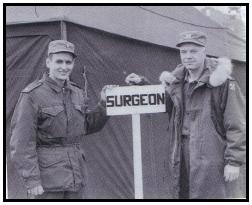
By the time his internship at Henry Ford Hospital had ended, America was deeply involved in the Korean War. Looking for an opportunity to finally work with patients instead of performing tedious nursing duties, Kevorkian volunteered to be a surgeon in the military. After a month of training, Kevorkian was sent to Seoul where he finally had an opportunity not only to show his medical prowess, but also to show off his fluency in the Japanese language he had acquired during his first years at college. Due to his incredible grasp on the Japanese language, Kevorkian rose to a prominent position among the military officers and was often called upon to be a translator during negotiations. During his stay in Korea, Kevorkian witnessed all cruelties of war. He saw countless numbers of young boys bleed to death when the army camp's blood supply ran out, and he watched even more young soldiers endure painful amputations and surgeries. After witnessing all of these things during the Korean War, Jack Kevorkian pledged that he would one day find a way to end such suffering.
When his term of active duty ended in 1955, Kevorkian began his residency in pathology at the University of Michigan Medical Center. During his residency, Jack began to take an interest in death and all of its mysteries. While working on his autopsies at Michigan Medical Center, he began to wonder why the time of death on all of the reports was always an approximation. Seeking to solve this particular mystery, Jack set out to find a way to discover the exact time of death. He began to carry a small camera and electrocardiogram around with him wherever his resident duties took him. After getting the consent of the patients' families, Jack would take a series of pictures of the patient's eyes as he died. After months of such research, Jack discovered subtle changes in the retina of a patient as they died, and as a result of this research, Jack could predict the time of death within 30-minutes 79% of the time. Although this discovery was groundbreaking work, it was widely ignored because of its morbid and bizarre nature. Jack's strange obsession with death earned him the nickname "Dr. Death," a name which would stick with him throughout his entire career. Kevorkian then travelled to Germany to visit his sister, Flora. While in Germany, Jack continued to pursue his research, and by the time he left Germany, he had become a published researcher even before his residency had ended. Despite his research and articles, Kevorkian was shunned upon his return to America and was urged to begin research in a more practical field. Kevorkian, however, refused to abandon his exploration of the mysteries of death.
At this point in his life, Kevorkian's controversial views began to form. While researching the history of autopsy procedures, Jack came across an article describing the medical practices of the Ancient Alexandrians. The Alexandrians conducted much of their research on living bodies, such as slaves or prisoners of war. After reading this article, Jack began to wonder why such research couldn't be conducted on the convicts waiting to receive the death penalty. Jack also believed that the organs of these convicts should be harvested and given to the many people suffering while on the organ donation waiting list. Kevorkian, however, was careful about how he talked about his idea for medical experiments on convicts. Although he was opposed to the death penalty, he thought that if the state was going to use capital punishment, it may as well benefit something. Kevorkian also stressed that all experimentation and research on these convicts would only be performed on volunteer prisoners. The entire process would be dignified, painless, and beneficial to the medical world. (it is important to note that at this time period, lethal injection was not commonly used to execute prisoners, rather devices such as the electric chair were more frequently used) To Jack, it seemed like the perfect plan. When he proposed his ideas to his superiors at the hospital, he was strongly cautioned to to pursue this any further for by doing so, he would likely end a promising career in medicine before it ever took off. Jack ignored this advice, for he truly believed his idea was a good one. He published an essay entitled "Capital Punishment or Capital Gain" in Washington and caused an immense stir there. Upon returning to Michigan, however, Jack was given an ultimatum: either stop pursuing the death penalty research or leave his residency at the hospital. Convinced his plan would succeed, Kevorkian left the hospital to continue his quest to make his ideas a reality.
After leaving the hospital, Jack found a job as a pathologist in his hometown at Pontiac General Hospital. Here he could continue his research without the scorn of his fellow doctors, many of whom supported Jack's beliefs. Despite this support, his quest would soon come to end. By now Jack was in his thirties, and the America of the 1960s was beginning to rethink the use of the death penalty. Since Jack was still an opponent to capital punishment, he decided to end his fight for experimentation on death row prisoners, fearing that his plans would be misunderstood as supporting the death penalty, which was the last thing Jack wanted.
Leaving this particular quest behind, Kevorkian began to move on to other projects. After the death of his father, Jack sought new ways to help advance medicine. For a time, he dabbled in creating a training video for students in medical school. He also began to pursue research of a Russian medical practice: blood transfusions from cadavers into live human bodies. Less controversial than his death row research, Jack was allowed to research cadaver blood transfusions. Although his research was almost a complete success, both the military (his primary interest for this research) and the general medical community passed on the use of cadaver blood for transfusions. Unable to find any more support for his research, Jack abandoned his plans for cadaver blood transfusions.
After his failed attempt to make cadaver blood transfusions a normal hospital practice, Jack began his most notable quest: the crusade to legalize physician-assisted suicide. This crusade began after Jack witnessed the slow and painful death of his mother, who had advanced abdominal cancer. Although he was unaware of it at the time, his sisters had actually begged the doctors to end their mother's life, so long as it stopped her excruciating pain and suffering. After his mother finally died after months of such suffering, Jack began to look for a way he could prevent this from happening again. Kevokian believed that no one deserved to suffer as much as his mother had suffered.
At this point, Jack Kevorkian's career as "Dr. Death" began to take off. In the late 1970s, Jack quit his career as a pathologist and moved to California, where he dedicated much of his time to developing his views on medical ethics and suicide. Kevorkian believed that choosing suicide and a dignified death was a right to all humans. Eager to make death as dignified and painless as possible, Jack began to develop plans on "The Thanatron," or "death machine" in Greek. Since many outrightly rejected Kevorkian's pleas for assisted suicide theories, Jack began to look for an opportunity to put his theories into action so that they could no longer me ignored. He would get that opportunity in 1990 when he met Janet Adkins in Portland, Oregon.
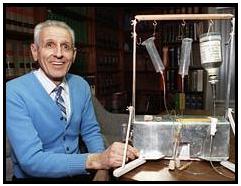
From this point on, Kevorkian's life would be a series of over 100 assisted suicides and many court cases trying to imprison him. After the death of Thomas Youk, one of Kevorkian's "patients," Kevorkian was convicted of 2nd degree murder and imprisoned in 1999. In 2007, Kevorkian was released due to his fading health.
Nicol, Neal and Harry Wylie.
Frontline: The Kevorkian Verdict: Chronology