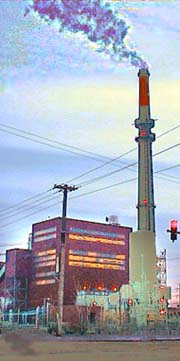
 1950's: International Harvester terminated its
South Branch operations. Pilsen becomes a predominantly Mexican-American
community.
1950's: International Harvester terminated its
South Branch operations. Pilsen becomes a predominantly Mexican-American
community.
1837: Chicago chartered as a city, and most of present day Pilsen included.
1873: McCormick Reaper Works moves from the North Side to Blue Island and Western Avenue, in Pilsen. This became one of the largest factories in the country.
1875: Pilsen a major center of industry for Chicago, including stone, iron, and carpentry works. Lumberyards along the South Branch of the Chicago River, with the Chicago, Burlington and Quincy Railroad, provided work for unskilled labor. By the late 1870's Pilsen is largely Czech-American in composition.
1877: Labor unrest centers in Pilsen, where the "Battle of the Viaduct" between police/soldiers and workers result in the deaths of nearly thirty workers. Battles between police and workers also occur outside of the McCormick Reaper Works.
Late 1930's: Community agitation centers on the health hazards of a large refuse dump adjacent to Harrison Park.
1950's: International Harvester terminated its
South Branch operations. Pilsen becomes a predominantly Mexican-American
community.
1964: Stevenson Expressway constructed on filled-in area of old Illinois & Michigan Canal, alleviating isolation of Lower West Side.
1973: First Annual Fiesta del Sol is held in Pilsen; parade routes along Blue Island Avenue, between 18th and 21st, every August.
1977: Opening of the Benito Juarez High School at 2150 S Laflin.
1981: Pilsen MVS unit began through the initiative of local Mennonites.
1985: Covenant created between Pilsen MVS and Lincoln United Methodist Church.
1986: Mexican Fine Arts Center Museum moves into facility in Harrison Park.
1998: Oak Park Mennonite Church becomes a supporting congregation in partnership with Lincoln Methodist Church.
Back to History in a Nutshell
Pilsen MVS Home