

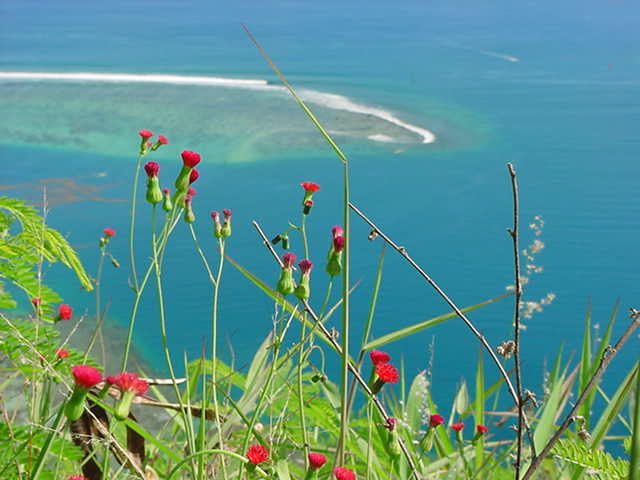
Picturing the lagoon around Moorea, think of shallow, warm and translucent water. Add sting rays slowly waltzing around you and hundreds of multicolored fish in elaborate coral gardens. Jonas' brother Larsson came along from New Zealand to take a scuba diving course. Black-tip, lemon and gray sharks circle the divers, reminding them of the potential dangers of The Deep Blue. When Jonas went diving he saw more than 30 sharks, the largest of which was almost four meters long. To visualize the indigenous people, recall Gaugin's paintings of the vahines. For the interior, think of green volcanic peaks and imagine a 100-meter waterfall in a forest of trees covered with orange flowers and hibiscus growing like weeds. It was the garden of Eden.
But this paradise also gave a bitter taste in our mouths. As in other isolated places of the world, life is extremely expensive in French Polynesia. After six months traveling around the world, visiting 14 countries, there is no doubt that in Tahiti and Moorea we got the lowest value for our escudos (that had now become euros). When you pay a fortune for a soda, you might expect to get a smile when asking for the menu. Our waitress slammed a glass of diet coke on the table when we had asked for a regular one. We sent it back but she soon returned with the same glass, pretending it was now regular coke and got very upset when we could taste the difference between diet and regular.
Sometimes we felt like Alice in Wonderland, as for example when we were rudely informed that the shop closed at 7:00 and asked to leave the premises. Our watches pointed to 6:30. A bus driver stared at us perplexedly and shouted that the 1:30 bus had obviously already left. This time our watches pointed to 12:45.
The worst confrontation took place one evening at our camping place when the three of us were sitting outside. A large man appeared from the shadows and demanded to know who we were. We pointed to our room but that was not enough. He proceeded with an intimidation operation reminiscent of an international drug apprehension and required our passports and the receipt for the room. Apparently he was the night guard, but he never identified himself as such. We felt unwanted and unwelcome. We questioned ourselves how arrogance could work hand in hand with the service industry. Why were people so angry and rude in such a beautiful surrounding? When we saw someone ordering a bottle of Chardonnay for breakfast we wondered if the population was suffering from the blues of the lagoon.
We fled the camping place and upgraded to Hotel Hibiscus where we found a shelter. The owners, Jean-Claude and Sylvette's friendliness and warm hearts were greatly appreciated. Next door was the abandoned Club Med and a little further down the beach was another huge resort that had closed down. Could the blues be attributed to the recession following the events of September 11th? In the void left behind from the two resorts were countless competing restaurants, supermarkets, black pearls and handicraft shops.
We are sad to say that we cannot recommend French Polynesia. Your dream of Paradise is located somewhere else, maybe in Thailand or the Philippines, where spontaneous human qualities nurture the tourism industry.

photos from
French Polynesia


