Granada /Scorpio: 1985 to 1998
Body
Styles: 5 door hatchback, 4 Door saloon,
5 door estate (station wagon)
Revised in 1990 & 92
|
1985 saw the release of the MK3 Granada. Keeping in step with the Sierra the Granada moved away from its traditional square body design in favour of a much sleeker aerodynamic shape. With the cool reception of the Sierra, Ford took great care not to alienate its traditional customer whilst trying to attract a new market. Many
of the engines were carried over and tooling from |
Fords
customer base was traditionally a very |
||
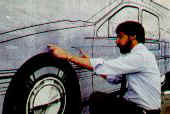
From
the ground up. The whole concept behind the Granada was revised.
By now, Vauxhall's Carlton had made inroads into Ford traditional
customer base. Aerodynamics were in the |
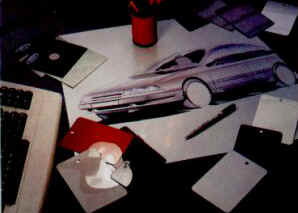
|
||
|
Ford
took the plunge and continued the trend set by the series 2 MK2.
ABS (Anti Lock Braking) system became standard across the full range. A first for any European manufacturer. |
|||
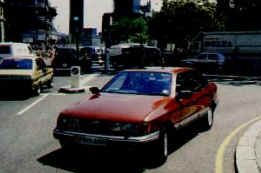 |
Although the shape of the MK3 was very different from it predecessor, it soon became a familiar shape on the streets. Equipment improvements for the Ghia and Scorpio models again pushed the luxury aspect of the range |
||
|
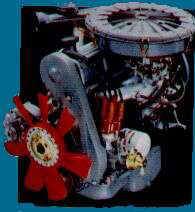
Ford went to great lengths to make the Granada appeal to more than just its executive consumer group. With the introduction of the economy 2.0 litre engine, they offered the traditional Sierra owner a potential upgrade to a larger model without the penalty of increased running costs normally associated with cars of this class. Although, Ford had a similar success with the 2.0 MK2, they found all but a few wanted the low powered carbed 2.0. Eventually, this was replaced by the 2.0 injection unit from the GL. Further up the range, the GL now had an optional 2.0 twin cam engine based on the 2.0 SOHC (Single Over Head Cam Pinto unit) |
|
||
|
Favoured
by many Taxi drivers for its economy |
By
the end of the 80's, and, for the first time in the Granada line
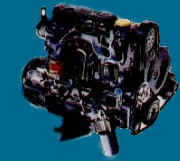
up, a 2.5 litre Turbo Diesel was introduced. Based on Fords
venerable old 2.5 engine offered in the previous taxi models
and found in to Transit van
By no-means a power house, the turbo diesel proved to be reliable and became a favourite with Taxi's and other high mileage users. However, by far the biggest sellesr were the V6 models |
||
|
Bosch's efficient LE-Jetronic Fuel injection system replaced the carbs & Bosch K-Jetronic fuel injection system on the V6 engines and soon found its way across the whole range. Mated to Fords American designed EEC IV (Electronic Engine Control) on the V6 engines, overall power was down compared to the MK2 however, low & midrange torque went up, which help produce a more refined engine. Bosch LE-Jetronic Fuel injection became available on the 2.0 litre model as a option, replacing the standard Electronically controlled Carburettor. All 4 cylinders OHC's utilised Ford ESC II |
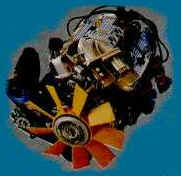
Power
dropped from the 160 BHP of the |
||
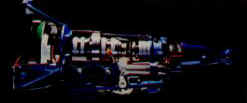
The A4LD automatic transmission first appeared in the USA on the Explorer and Ranger, Later Explorer versions would get a fifth gear. |
Standard on the 2.8 & 2.9 V6 engines, and an option on all others, was the newly introduced A4 LD, 4 speed automatic transmission. Based on the European C3, the A4LD added an overdrive feature that helped to improve the fuel economy, whilst coupled to a change in overall gear ratio improved drivability of the MK3. Later versions added electronic control which further improved response and drivability. |
||
|
1990 brought with it the first major revision and an introduction of the saloon range, Although retaining much of the aerodynamic shape, a change in trends hankered back to the original MK2 saloon body design, Other revisions included a new grills and bumpers and the introduction of 15 inch alloy wheels and Tyres on Scorpio models |
|
||
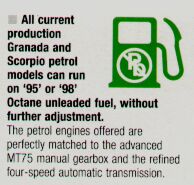 |
Other
refinements for 1990 included the
And the move to unleaded fuel across the range |
||
|
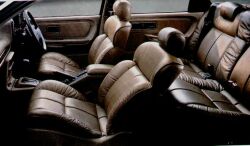
Significant improvements to the already opulent interior included, revised electrically adjustable & heated seats on Ghia and Scorpio models increased sound deadening material with the Scorpio, which also benefited from the optional Connolly leather interior. Prior to this revision, Scorpio models were at times slated for what some considered a downmarket approach to the interior. Later revisions would see a move back to fully covered dash pad and instrument binnacle with very little visible plastic. |
|
||
|
|
Along with the revised exterior trim, 92 saw the introduction of an estate (station wagon) model. With increasing pressure and a loss of customers, Ford relented and released an estate even though they had denied they would ever build such a model. The Scorpio was soon recognised as one of the best estate cars available in Europe. With superb equipment levels, nothing even close could be found at its price Once again, a revision of spring rates and geometry's made further improvement to the comfort and handling. However, by this time, traditional Police buyers no-longer considered the Scorpio as a viable Police vehicle. 4x4 models proved very sure footed, although the extra weight of the 4x4 system hampered fuel economy and performance. Although rare, Interestingly all 4x4's were manual. |
||
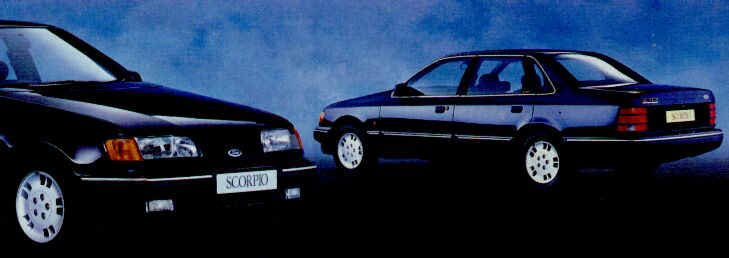
Fords Flagship range reached its height when Ford introduced the Scorpio badge across the entire range |
|||
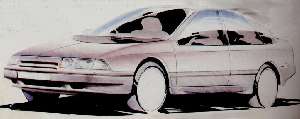
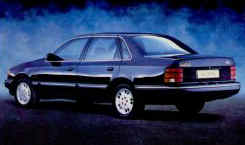

When introduced, the MK3 Granada (UK only) or Scorpio (elsewhere) it was a radical departure from the boxy shape traditional buyers were accustomed to, however, as with the MK2, the MK3 took styling cues from Fords midrange model, this time the Sierra.
Bitten by the cool response to the Sierra Ford lightly dipped their toes into the water by introducing a moderate range. Familiar badges were retained from the MK2 with a new model name (Scorpio) on flagship models.
By this time Police forces were not replacing their MK2's with Mk3's, as had happened with the MK1. The MK3 didn't live up to expectations, one primary reason given being the decline in high-speed handling.
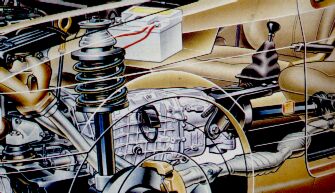
A switch to MacPherson strut front suspension and softer springing saw a decline in the cornering abilities that were so loved in the earlier cars. However, sale of the MK3 continued to climb. As with the MK2, Ford continued to improve the models which saw the introduction of twin cam engines and the discontinuance of the familiar 2.3 and 2.8 Cologne engines for the American developed 2.4 and 2.9 variants.
Although similar in design, the new engines shared few components with their predecessors. New head design improved exhaust breathing, a change to the Bosch LE-Jetronic fuel inject system on all V6 models and later modifications to the engine line up saw torque figure increase and again better emissions were achieved.
The Granada name was eventually dropped in the UK in favour of the Scorpio badge, which, by this time was prevalent throughout Europe and under the Murker name in Canada. Best of all models were the 24 valve Cosworths.
With the success of the Sierra Cosworth Ford took the decision to have the specialist company, (responsible for tuning both Mercedes and BMW models), to redesign the Cologne V6, not for maximum power as was the case with the Sierra, but refinement. This they did. The European Ford now had the power it should have had its entire life. The Granada range always cried out for more power. In South Africa this was achieved by using Fords 5.0 (302) V8, however, in Europe, we had to settle for something smaller.
Perhaps, if Ford had took the plunge, we would still have to opportunity to buy a full size, rear wheel drive Ford here in Europe.
Although successful in its own right, many feel the Scorpio was never a worthy successor to the Granada. Unfortunately, by the time the Scorpio was considered worthy, stiff completion from Vauxhall, which by this time were beating Ford at the game they invented, and the likes of budget German and Japanese vehicles spelt the beginning of the end.
The Scorpio was later superseded by the controversially shaped Ultima which in its Cosworth form was arguably the best model ever produced by Ford, however its styling was an issue, sales dropped and eventually it went out of production in the late 90's seeing the end to Fords traditions high spec, reasonably priced executive cars.
(Optional handling package (X Pack) included revised spring rates, Gas Shock-absorbers, Larger front and and rear Anti-role bar. 6 x15 alloy wheels with 195/65/15 Tyres, or 6 x 16 with 205/55/26 Tyres (This was a special order option that was only available through limited number of specialist dealers) Standard on Cosworth models.
 |
 |
 |
 |