PART 9
With the modern notions of the inferiority of the Black skin, it is no doubt unsettling to some of us to learn that philosophy, religion and science were nursed at the breast of Black women. Any creditable history book will show us that when the Africans along the Nile were creating high culture there was no Greece, and Europe was an insignificant dot on the map. Parenthetically, it is an interesting quirk of modern perception to view the current ruins of a fallen Greece as monuments of European greatness, while at the same time looking at the fallen African world as just an ancient ghetto. In this section, you will see among other things, further evidences of African influence upon Europe.
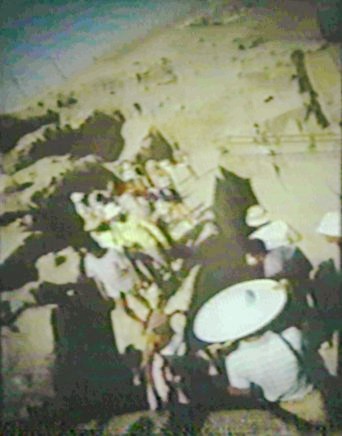 This was part of a tour group in Aswan, which is almost at the border of Egypt and Nubia.
They are walking on top of an obelisk, the Greek name, but it was known to the ancient Egyptians as Tekhenu, and this obelisk was going to be the largest monument of its kind ever built.
It was going to be erected at the request of Queen Hatshepsut who is the famous woman queen who built her temple in the Nile Valley.
She tried to dwarf everything that any king had ever done before, and she certainly did it in her temple and was getting ready to do it until this obelisk broke, so it was never completed because it had a crack or flaw in it.
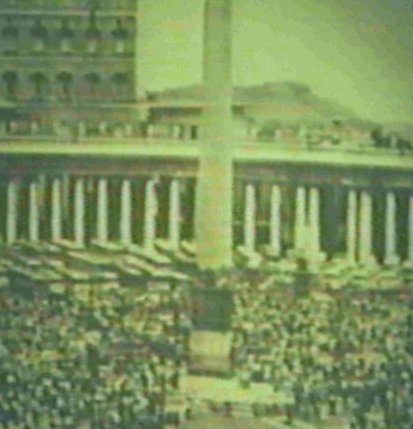 These monuments appear now in major population centres all over the world.
There is one in London on the banks of the Thames River, there is one in central park, New York, there is the pink granite Obelisk of Luxor which is located at the eastern end of the Champs Elysees called the Place de la Concorde (Square of Peace) in Paris.
This one is on St Peter's Square in the Vatican. In other words, there was a rush by heads of state and other officials all over the world to pick up these African monuments.
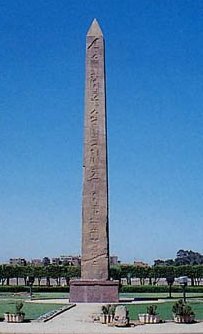
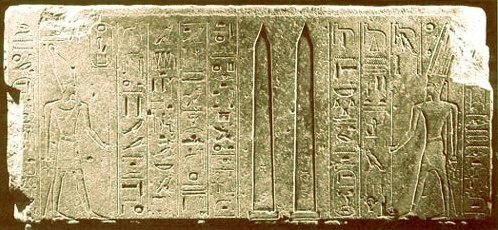
The first obelisk on the left below is located in Washington DC except that it was not an African one, but an imitation of the African Tekhenu (obelisk) which is your Washington Monument. Next to this is an obleisk in Cairo; the obelisk of Senwosret; and that of Rameses II. Further down is a depiction of obelisks in the temple of Hatshepsut.

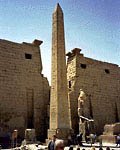
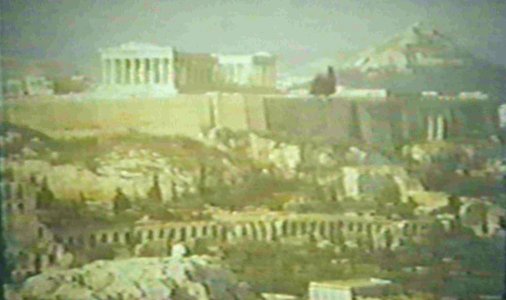
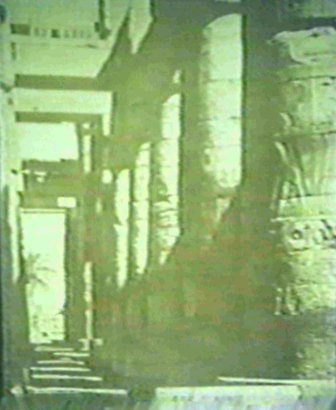 On the left is the Temple of Luxor as it was during the 18th dynastic period or around 1500-1300 BC with the columns that look like trees which sometimes have lotus or sometimes papyrus at the top.
You do not have any records in Greece of architecture that looks like this during that period of time; in fact, you do not even have a Greece at that time.
Furthermore, you do not have Homer to write about Greece until around the 9th century BC. But we find that Greeks were coming to Africa to visit and then later they would come to Africa to go to school then return to Greece to imitate what they had picked up on the African continent. One of the things they obviously picked up was African architecture, because the same form of architecture is what you find in Greece as seen in the picture on the right, and later in post offices and federal buildings in the United States.
Americans imitate Greek architecture, but the Greeks were imitating African architecture, so when you go to Washington DC and see all those Federal Buildings again, you can thank the African architects for the inspiration to the Greeks and then later to other Europeans.
What is the mythology behind the obelisk?
One explanation as you go back to the story of Isis and Osiris, is to remember that his evil brother Seth cut him into 14 pieces though some people say 28, then his wife Isis went around and searched for those pieces until she finally collected them together. She found every piece except one, which was the phallus or penis of Osiris. The Tekhenu (obelisk) then is said to represent the penis of Osiris. The other parts were buried in different places along the Nile, and wherever they were buried a temple would be erected, but in place of the penis, obelisks were erected to symbolize the creative principle of Osiris. So wherever that appears anywhere in the world, it clearly points back to the Africans reason for it.
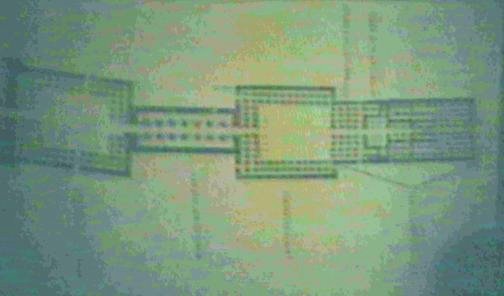 This is a diagram from the air of the Temple of Luxor.
Underneath is the Louvre Museum in Paris. Parisians became fascinated with Egypt starting with Napoleon in 1798, and you can see the imitation of African architecture in this French architecture.
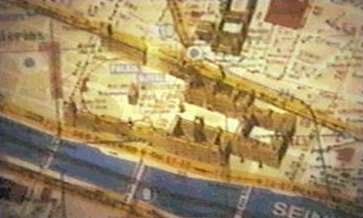 If you say this is pushing it a little too far, take the very name Paris and go back to its root and its original meaning. It was called The Place of Isis and named after this Egyptian Goddess - Pari Isidos. The most holy place in Paris is where the cathedral of Notre Dame is built. Notre Dame means Our Lady, but which Lady are they talking about? That of course was one of the titles of Isis, the African mother of Horus and wife of Osiris. This religion had spread from Africa all the way up into Persia and into Europe, and it was very popular in Greece and Rome, later becoming popular in other parts of Europe including Paris. So Pari Isidos was in recognition of the religious indebtedness of French people to African religion, and if that were true as far as the religion itself was concerned, then it is not too hard to imagine that the connection between French architecture in its historical form and African architecture could also be very close.
Is there any solid African background for the word Europe?
The name Europe comes from Princess Europa, and in the genealogy of the Greeks, Princess Europa was an African which is attested to in the genealogical search and charts that are referred to by Ed Jones who did his book "Profiles in African Heritage," so the continent itself is named for an African Princess.
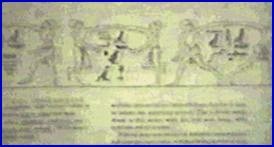
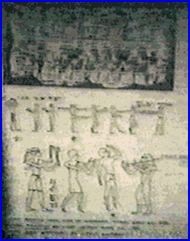 A dance major named Valerie Henry became interested in the connection between Ballet and Egyptian dance, because there are things that are similar to ballet that appear in the hieroglyphics in ancient Egypt. For example, if you look very carefully at the top you will see a diagram of how to accomplish the pirouette (pirouette), castanets, and so on.
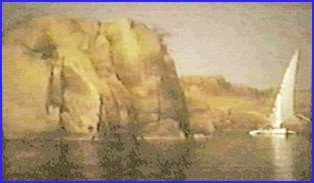 Up the Nile to Elephantine in Aswan, so named because of the shape of the rocks in the form of elephants was the last outpost for native rule in Egypt. In other words, the Egyptians started from the south and then they went all the way north to establish their capital and ruled from two places, the south and the north of the country. Then later they moved to the middle of the country during the 18th dynastic period which was the new kingdom, and finally, the last time that native Africans were in charge was in the 25th dynasty.
That would be the time of the Ethiopian dynasty which came from Kush (Cush). They came through that whole area of Elephantine, but when they were under attack from Persia and later Greece and so forth, it always seemed that they had a haven up near Aswan which would also be the last site of what would be the headquarters of the Egyptian church and university. The Egyptian university which was headquartered at Luxor, at one point had over 80,000 students that were in attendance. When that university declined, they retreated to the area around Aswan, and after the development of a strong Roman period and the development of a Christian church, the very last thing that was stamped out in the war on African culture was this little church at Philae Island located in the area of Aswan near Elephantine.
 At Aswan there is a dam where there is a lake that extends some 450 miles from Egypt into Nubia, and part of that lake is in Egypt and the other part is in Nubia. The importance of this particular lake is the water that has now covered 450 miles of Nile Valley, along which were situated important Nubian towns.
Remember the incense burner shown earlier? The site where that incense burner had shown the location of the nation of Ta Seti is now under this water. In other words, many of the places where you could dig up mummies and carvings are now under the waters of Lake Nubia or Lake Nasser as some people call it. As a result, the whole Nubian population, the original Egypt population, the people who looked most like these pictures that you have been seeing, was moved and most of those Nubians were then brought into Egypt where they are now located in the town of Kom umbo (Kom Ombo), Edfu (Idfu) and Aswan.
What was the connection between ancient Egyptians and other Africans, especially in the interior?
What the ancient Egyptians said was that they came from the interior of Africa, in other words, they came from the south. They said that they came from the south at the sources of the Nile at the foothills of the Mountains of the Moon where the God Hapy (one of the four sons of Horus) dwells. There are two Mountains of the Moon, Ruwenzori and Kilimanjaro. They saw themselves as a native African people. They never talked about the Tigris and Euphrates Rivers saying that they came from there or that they had anything to do with who they called the sand dwellers. They always saw those people as the enemy, and they always saw their source at the centre.
For example, Hatshepsut sent an expedition to Punt which is present day Somali land known at that time by the Egyptians as the Holy Land. What she built when she built the temple that you saw in the Valley of the Kings, was an attempt to build in the valley a Punt in Egypt for God. She thought that God would be most pleased if she could reproduce the homeland or the Holy Land in Egypt.
So everything that we find about Egypt culturally, historically, linguistically or any set of data that you choose connects them firmly with the interior of Africa.
We didn't come from out of space? Who was it that tried to speculate that the Egyptians may have come from space on ships?
It was Erich Von Daniken in his book "Chariot of the Gods" who tells this story and even suggests that at least the Olmec civilization and certain things about the pyramids were so high tech that it would be better off to look towards an outer space connection, because these Black Africans had no business in this technology.
Not only Africans, because if you come to Mexico you had the Mexican civilization, if you go to China you had the Chinese civilization, if you go to India you had the Indian civilization, and all of these were older than European civilization in terms of their finest achievements and antiquity, but since these are all also people of colour, then it is not surprising that their accomplishments tended to be minimized or at least taken from them.
 We have now left the 18th dynastic period and this is a mummy of Seti I which now moves us into the 19th dynastic period but this was not primarily a native African dynasty though some people accept it as such.
For example, Rameses II was one the most famous Pharaohnic names. Everybody knows about King Tut because his tomb had a lot of jewellery, they know Nefertiti because of the one carving that's in the Berlin museum, they know about Cleopatra, and the other name that everybody knows about is Rameses II who is in the 19th dynasty.
The important claim on antiquity that is being made here for native Africans in the Nile Valley are dynasties 1-12, dynasty 18 and dynasty 25. Those are the major dynasty periods. All the other dynasties were heavily mixed with foreign populations including this dynasty that will be touched on.
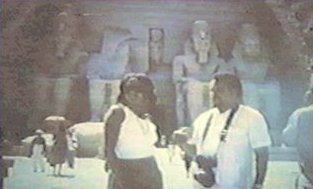
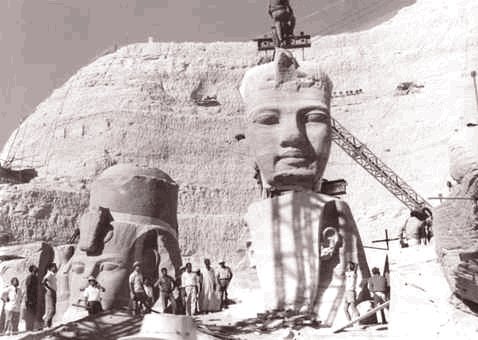 This is Rameses II who built a temple in a place called Abu Simbel that was also being covered over by the same lake Nubia.
There was a rescue operation by the United Nations along with several European nations and the United States, who helped to put money to rescue these monuments by cutting them into pieces as shown here, and then reproducing them on a higher site, that is, a little further up a hill.
These pictures are outside the temple of Abu Simbel which was supposedly constructed by Rameses II.
Rameses II also had a habit of claiming things that were built by other people. He would actually carve out the names of previous pharaohs and carve his name on things that had already been done, or put a fence around something and then claim that he did the whole thing.
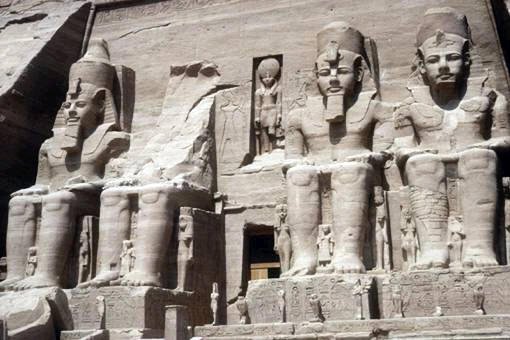
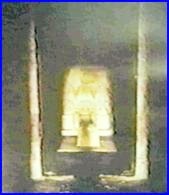
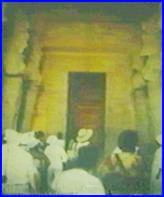 But you can still see the beautiful things that he actually did here in Abu Simbel on this temple. This is going down in the interior of that temple (on the left) which has statues of Rameses II on either side. Notice he has 4 statues of himself on the outside.
Looking deep down into this, you see the Holy of the Holies at the back (on the right) where once a day the sun would shine into this temple. In other words, the sun is called Ra, so Ra comes into his holy temple.
So the symbolism is that God visits the temple through that sphere of sunlight that goes in and bathes the statue of the King way at the back, sitting by the statue of the God Amon (which means the hidden God).
This used to happen on his birthday, the point where there would be a precise piercing of the inner temple, but when they moved the temple, it is now one day off even though they had all the computers and everything else to work with. They just could not recreate it exactly as it had been.
Next, you will see one of the statues of Rameses II that had some damage done to it and is now being face lifted. The damaged parts have been filled in, but as it had its face filled in it has lost some of its Africoid features.
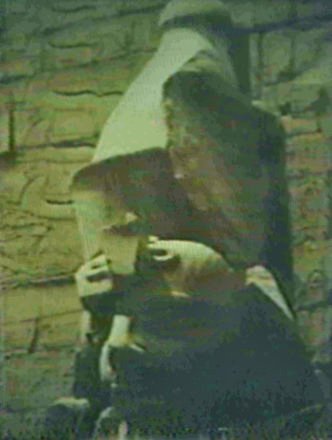
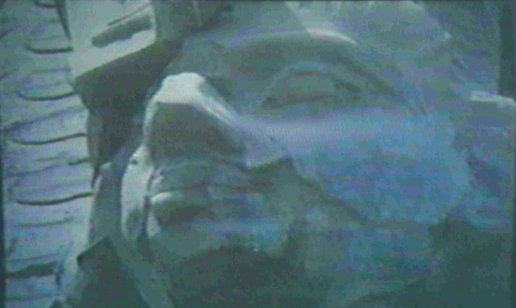
As you can clearly see here on the old statue, Rameses II looks to be native African, and you can also see the damage to the statue, but if you go there now you won't see that damage because it has been filled it in with a material to smooth out those damaged parts, but in the process, the facial features have changed so that it looks less African than it does right now.
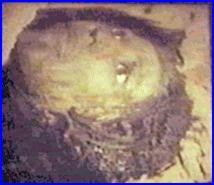
 The first image shows a high priestess of Amon.
The second image shows a mummy which still has corn rows in her hair, a very typical African style.
You will find many mummies like this except that if you now go to Cairo you won't see them in the museum at all because they have all been taken out.
In the temple of Rameses III is where the Egyptians were portraying the races of mankind. You will see an Asiatic type, but there are also two Black types, one is Egyptian and the other is Nubian. You will notice that the Egyptians made no distinction between themselves physically and the Nubians either in this temple or in the tomb of Rameses III. The one on the left is supposed to be Nubian, the one in the middle between the Semite and the Asian is supposed to be Egyptian. You can therefore see that the Nubian and the Egyptian are very close to each other.
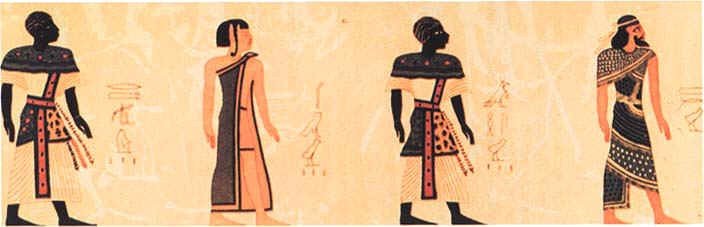
We will move to the 19th dynasty because there are foreign dynasties that come in with people who do not look like the native population in the ruling class, so though the 19th dynasty was being highlighted, we will skip to the point of about 700 BC when you have what some Egyptologists call the Ethiopian dynasty.
At that point you had Kashta and now Piankhi (Pi'ankhy), Pharaoh Shabaka who is called So in the Bible, with a type of leather head dress, and Pharaoh Taharqa. The first two are of Shabaka, and last two are of Taharqa.
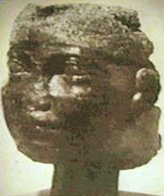
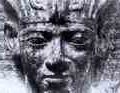
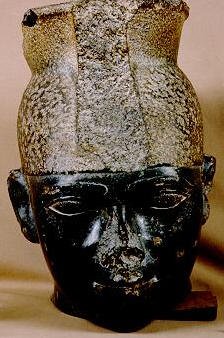
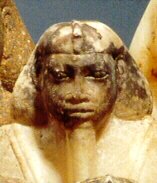
This was an important dynasty, it was a restoration dynasty, but when you look at the facial features, there is ample evidence that they clearly were Black people.
Van Sertima who wrote the book, "They came Before Columbus" points out that in the 25th dynasty, about 700 years BC and before the Greeks and Romans, these people (Shabaka etc) hired Phoenicians as their mercenaries and truck drivers to transport and ship their cargo, but one of the things that they transported was themselves. Therefore Van Sertima points out that they ended up in Mexico thus making a strong case that the 25th dynasty contributed people who had left Egypt and other places, and went to different places in the world and Mexico was one of those places.
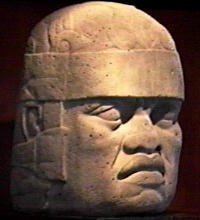
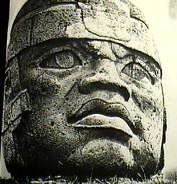
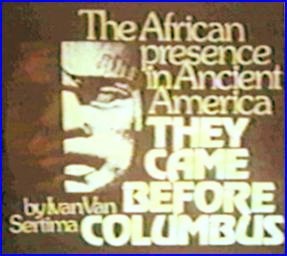 On the cover of the book he uses the Olmec head that appeared in Mexico at about the same time when the 25th dynasty was in place.
That face has half a face with the Olmec carving which is on the right side, and on the left side, there is half a face of a Nubian. In other words, he puts them side by side to show that the Nubians back there were dressed up just like the Olmec.
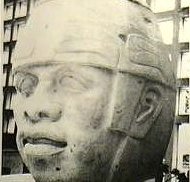
They had the same kind of hat which was a leather helmet, and the design on the leather helmet is the same as the design on the Olmec head.
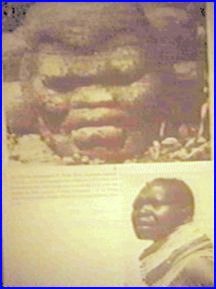 Here is a picture of an Olmec head at the top with a present day Nubian at the bottom so you can see the same facial type. But if you only had a physical resemblance you would stop there, but you have more than a physical resemblance as pointed by Ivan Van Sertima. You have a convergence of many lines of data such as linguistic, archeological, and other kinds that show the connection between ancient Egypt and Mexico.
Notice that this Olmec head as it is called, not only has an Africoid appearance but also what looks like an afro hairdo on it. "Recent discoveries in the field of linguistics and other methods have shown without a doubt that the Ancient Olmecs of Mexico, known as the Xi People, came originally from West Africa and were of the Mende African ethnic stock. The Mende script was discovered on some of the ancient Olmec monuments of Mexico, and was found to be identical to the very same script used by the Mende people of West Africa. Journeys to Mexico and the Southern United States may have come from West Africa much earlier, particularly around five thousand years before Christ. That conclusion is based on the finding of an African native cotton that was discovered in North America.
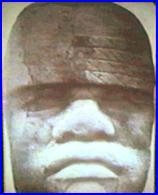
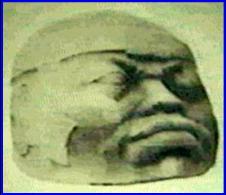 Joe Louis was the nickname given to the Olmec head on the right.
This one on the left is also a head that has one of those leather helmets on it, and notice they also have pierced ears if you look closely, just like the Nubians who had pierced ears. Ivan Van Sertima however does not claim that the Olmecs were Egyptians; he claims that the Olmec heads were Egyptian heads and that a small number of these Egyptians in all probability mixed in with the Olmec population and brought the technical ideas of Egypt into that population.
It's after that time that you begin to get mummies in Mexico as well as pyramids which performed the same functions as the pyramids in Egypt. Note also that this is the time just before and after the time of Christ that the Greeks and Romans who were now dominate and in charge, start to mummify their bodies.
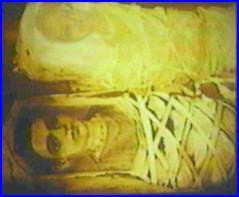 Here is an example of Greco-Roman mummies. These are the mummies that you will see in the Cairo museum, so a visitor coming into the Cairo museum would say, "Oh that's what the Egyptians looked like".
Well it is what the later Egyptians liked like, those immigrant Egyptians, but that is not what the native Egyptians looked like.
Native Egyptians looked like the present Nubian population that are in Egypt today.
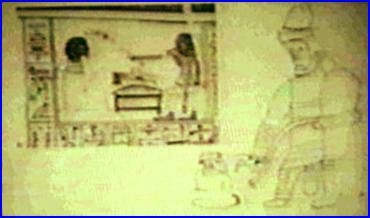 This is an example in the pyramids and temples in Egypt where you have in the upper right hand corner an image of King Tut as a mummy sitting on the left, and you see his uncle who has a stick over his head. His uncle is wearing a leather skinned coat with the tail hanging between his legs.
Now the uncle is living whereas King Tut is dead, so this is a ceremony after the death of the king, where the new king, his uncle, opens the mouth of the mummy which is what you are seeing taking place there in the corner.
Now on the right you see the Olmec king who is dressed exactly the same way in a leopard skinned coat with the leopard skinned tail hanging down between his legs just like Pharaoh Ay. Notice that he also has a little stick and a little mummy to his left who is the dead king, and he is opening the mouth of the mummy. So you have the exact same ceremonial detail in the Mexican pyramid as you have in the Egyptian one.
This is just one of the kinds of examples that Dr. Van Sertima pulls together to indicate the identity between those two cultural forms.
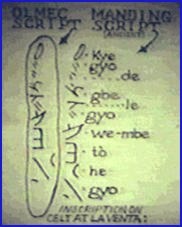
Clyde Winters in one of the articles that he wrote in the Journal of African civilization says that he has translated the Olmec script which he said is in fact a Manding script.
So here is a script that was written and carved into some of the material associated with the stone head.
That script is an Africoid script or a Manding script which derives out of Egyptian language.
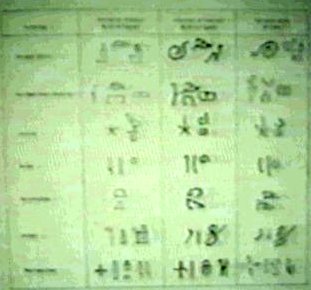
There were hieroglyphic writings in America in such places as Davenport Iowa which were there before the explorers or settlers got there, again indicating the probable contact between the Egyptians and the Americas or Mexico.

 |
 |
 |
 |
 |


