PART 10
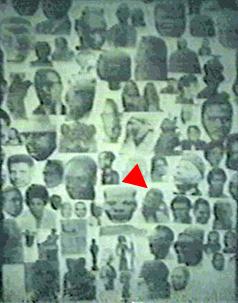 Here is a shot of African populations, ancient African populations, contemporary African populations and African-Americans all mixed together as a way of emphasizing the point being made that they all look alike, In other words, if you were to look at the map you will see a picture of Dr. Joseph Ben Jochannan right next to pharaoh Menes.
 This is something that schools could do; they could collect images of pharaohs and of contemporary Africans to make similar collages.
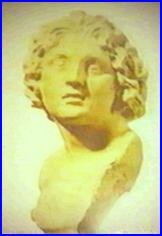 If this picture were to be placed on that same collage you would notice that it could not fit in with the others.
That is a picture of Alexander the Great who was a foreigner that invaded Egypt around 332-333 BC but only established Greek political control over Egypt. Cultural control was never established, in fact, Alexander the Great who didn't live long after he conquered Egypt, turned it over to some of his generals, the Ptolemies, and from that point on they began to imitate the culture of the Nile Valley.
This is an example first of how Greeks would see Alexander, and clearly they didn't see him looking like the Nubians, like Pharaoh Menes, Hatshepsut, Nefertari or Nefertiti even.
Did he also bring Aristotle with him?
Aristotle was the teacher of Alexander the Great who went to Egypt and established a school. It's interesting that he should leave Greece to go all the way into Egypt and establish a school, but even before Aristotle, Plato, who was Aristotle's teacher, had been in Egypt for 12 years studying under Egyptian teachers. Even before that, Thales, Pythagoras and virtually anyone who intended to distinguish themselves in higher education had to go to Egypt to get their higher education because there was no higher education system in Greece at the time.
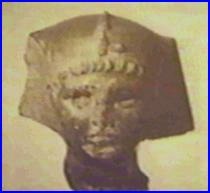 The next picture is one of the Ptolemy, but look at what he has done. Instead of wearing Greek clothes, he is wearing African clothes.
He is wearing the pharaohnic hood, but look at what happened to the Ptolemies after they have been around for some time. This one almost has an Africoid appearance.
There was a whole line of Greek kings who came after Alexander the Great but before the Romans and before the time of Christ, who ruled over Egypt.
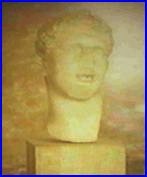 One of the things they did was to intermarry with the population that was there, and from the looks of it, this particular Ptolemy, by the time they got to him, his family was very much intermarried as you can see from the nose and the lips and so forth on the statue.
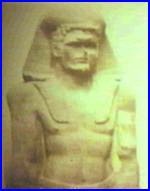 This is Caracalla, a Roman Emperor. Now what you can see are the conquerors imitating the conquered people.
They are doing it in clothes and later they will embalm their bodies like the mummies and also adopt the religion, so that even though Africa was conquered, it still had a tremendous influence on its conquerors in Africa.
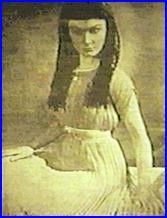 Now when Hollywood gets hold of all the information that has been shown so far as you have seen in the pictures, now take a look at Cleopatra who is played Vivian Lee.
So you begin to mis-communicate what was actually taking place in the Nile Valley by your choice of actors and actresses who in no way resemble the people found there.
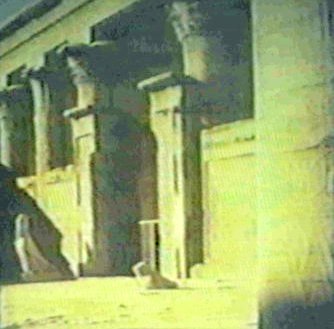 This is a temple of Horus at Edfu and Kom umbo (Kom Ombo), at Edna. The Greeks and later the Romans went into an urban renewal programme all the way up and down the Nile, beginning at the request of the present day priest to restore African temples. So many of the temples that visitors will see when they go to Egypt now, are temples that look like this.
These are really temples that were built not at the time of the ancient Egyptians though they were built by Egyptians, but under the direction of Greco-Roman rulers at the request of the priesthood.
The priests would trick the Pharaohs. For example, they told Alexander, God loves you and God wants you to do something nice in return, and what we would like to have you do is to build me a church. The Pharaoh was persuaded by that because then when the Greco-Roman Pharaoh built this church, look at what would happen, the Pharaoh gets to put his picture on the temple.
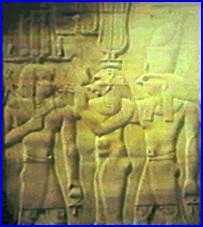 This is one of the Ptolemies.
Here is Setnet, an Egyptian goddess and Horus an Egyptian God, and they are giving life to Pharaoh Ptolemy who now looks like a Greek.
So, many visitors are mislead when they go to these temples, because they don't know the year that the temple was built, neither do they know that many of those temples were built after the time of the ancient Egyptians by the ancient Egyptians under the direction of foreign rulers for the reason that they wanted to placate the priesthood.
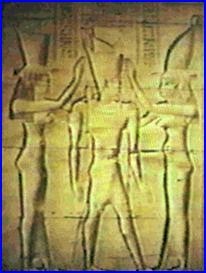 This is another example of the same thing which is being shown, because someone might get on a plane and travel to Egypt and start looking at these images on the side of the building and say "I thought he said these were Black people."
Remember that at this time right before and after the time of Christ that the Greeks and Romans started to mummify their bodies.
Those are the mummies that a visitor entering into the Cairo museum sees and will point out and say, "So that's what the Egyptians looked like". It's what the later Egyptians looked like, that is, those migrants or settlers, but it's not what the ancient Egyptians looked like who were Black and still resemble the present day Nubian population of Egypt today.
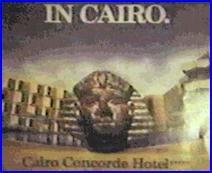 Their travel brochures then begin to reflect the images of Greco-Roman people rather than the images of the original Egyptians.
Why is that, do you think that the world would not go to see ancient Black people?
Most of your travellers are Europeans and they want to see themselves as any group of people would.
How about us?
Sometimes we don't seem to want to see ourselves. Black People have a problem.
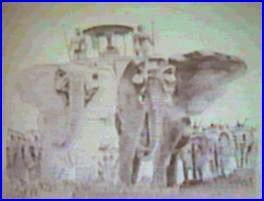 At the same time that the Greeks and Romans were ruling in Egypt to the south of Egypt in Cush, you had the Cushidite people leading in most of those years from about 300 years BC to about 300 years after Christ, who were the Kandake Queens.
Unfortunately this picture is an illustration because there is no Polaroid of the Kandake Queens, although there some carvings that their artists drew of these Kandake Queens. In the Cushidite language it would be KTKE or as some people say, Candice. But the Kandake Queens were called Amazon Queens, and here is an example of one who met Alexander the Great at the first Cataract. So Alexander the Great did not conquer everything in the world, for example he never conquered Cush, which was lead at that time by women queens.
These queens were still there when the Caesars came in and even went to war with two of the Caesars one of which was Caesar Augustus. They had a standoff, but the Romans did not conquer Cush either. So what we have is a period of time that we need to recognize in our own recounting of history during which Africans who had been defeated in Egypt are now centred south of Egypt in what is now Nubia, and that they gave a good account of themselves even during the Greco-Roman period.
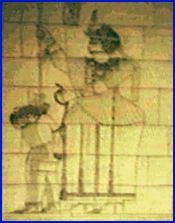 This is an example of their artist's conception of the Kandake Queen from their time as to what the Kandake Queens looked like.
Notice that she is in a pharaohnic pose; she has her enemies with their hands tied behind their backs, which is typically what would happen during Egyptian time. They would show their enemies that way. She also has a spear sticking them in the neck. That is the pose of the ruler, and that pose was there if you recall from the very beginning of the presentation where there was a picture of King Narmer beating his enemies over the head with his mace. So now we have the Kandake Queens who are doing the same thing.
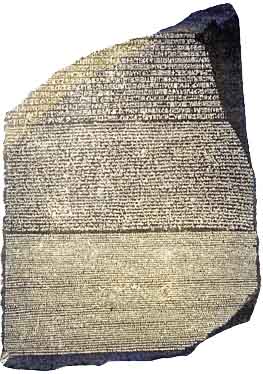 What you see at this point is very important. It is a copy of the Rosetta Stone. Remember that when Napoleon went to Egypt he was very much impressed. He not only wanted to conquer Egypt, he also wanted to know about Egypt so he brought a lot of his top professors with him from France. That was the beginning of the study of Egypt which we call Egyptology.
This is a stone that had something written on it in three different forms of writing. It was found at the mouth of the Nile, the Rosetta branch. At the top of this stone, you have the hieroglyphic or Medu Neder, in the centre you have the Demotic writing which is kind of a cursive hieroglyphic writing (another form of Egyptian writing), and at the bottom you have the Greek. Because it contains the same message in all three types of writing, it was possible then, after Napoleon found this stone in the late 1700's, for another Frenchman named Champollion to spend about 22 years trying to figure out what this stone said.
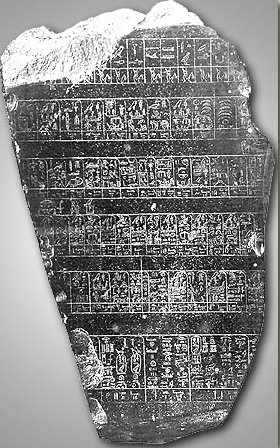 This is probably one of the most important finds in history, because there was almost a one thousand year period during which the writings that were on the tombs, in the temples, the papyri could not be read. So we couldn't be talking about many of these things now because we wouldn't know what they meant except for the finding of this stone and also this stone known as the Palermo stone.
You might have seen this before Jean Champollion figured out how to read again the writing of Egypt. You might ask, "Why is it that you couldn't read it". "They were reading it at one time at the time of Christ". Remember they had closed the last African school and stopped the priesthood from practising around 591 AD at Philae Island near Aswan. So when the church went to war against the Egyptian church and the Egyptian schools, in other words, when the European church went to war against its parent, that meant that they could no longer read this writing for almost 1,000 years. That same 1,000 years, by the way is when Europe went into the Dark Ages, when it cut itself off from its parent - Africa.
Now you will see some of the things that could not have been read earlier. What you are seeing is on a papyrus called the papyrus of Ani. Ani is in the white and is dead, a dead prince of Egypt. This papyrus is made up for him.
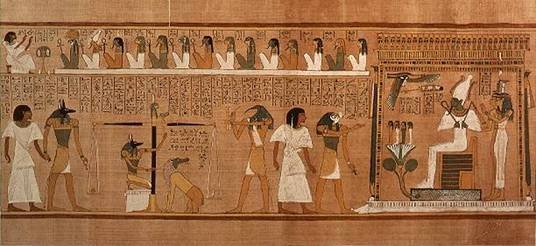
He is being led by a man who has a dog's head on him. That man is called Anpu or Anubis, or Sekhem Em Pet who is the God that judges the dead or who assists in the judgement on judgement day. Anubis is being led to a scale that has a feather on the right hand side in the pan. In a Canopic jar on the left hand side, there is the heart of the man who is dead, so the image you get is that this heavy heart and this feather have to balance each other, which rationally does not make any sense, but symbolically it may make more sense when you learn what this person has to do in order to get his heart and the feather to balance, and what that feather is.
The feather in Egypt is known as the feather of truth. Notice that sitting on the top of the scale is MAAT. It is a woman who is a god, and has a feather at the top which represents Truth, Justice and Righteousness. You will also see that feather on the right hand side of the scale. On the left hand side of the scale you see the heart inside a jar. Now what is it in your imagination that will make it possible for a feather that weighs less that an ounce and a heart that weighs about a pound to balance each other out? Well you have to realise that the heart is the centre of consciousness or of the conscience and the centre of honesty and so on. What would make this happen is that the dead person can say at the time they have died, things like this which will sound familiar to you:
I have not killed
I have not stolen
I have not borne false witness
I have not coveted
If these things sound familiar, which they should because they begin to sound like the 10 commandments, in other words, this person who died had to say 42 things which are called confessions or negative confessions, in order for the heart to become light. Your heart would be weighed down with guilt, so if you could say you haven't killed anyone, your heart gets lighter, you haven't stolen, your heart gets lighter and so eventually if you can say what you should to all 42 of those confessions, you heart would then weigh the same thing as the feather of truth, justice and righteousness.
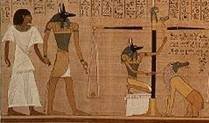 This is the judgement scene after death when a person who has died is being judged by God and will then get into heaven if they can say those things. Notice the scale in the middle scene is being worked by the same man Anpu who is leading the dead person, and on the other side you will see that Anpu has moved to working the scale. He is a judge.
You will also see that there is a crocodile's head, a lion's mane, a lion's front part and a hippopotamus body, which forms the monster who is going to get the opportunity to eat this heart. In other words, that's the symbol of Hell. If the dead man cannot answer right or doesn't answer truthfully, then he goes to Hell. This scene is present long before Judaism, long before Christianity and long before Islam.
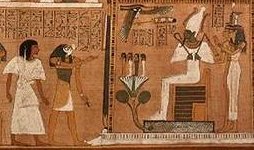 This is in the 18th dynasty when we see this. Notice also that you see, keeping a record at the top, is a man with a bird's head which is the symbol of wisdom, Thoth (Thout) or Tahuti (Djehuti). He is keeping a record of what's taking place at the weighing, and at the top you see 42 judges that are sitting up there witnessing this weighing of the heart. If the person gets past that, then they can come to the Throne of God. You can see God sitting on the throne there as Osiris, and you see this Anian, in the white being led to the throne of God by Horus the Son of God. "No man comes to the Father except by the Son". Here this idea is already present in African religion in the 18th dynasty.
Notice also that there are two women behind Osiris. Remember when Jesus died for example, there were two women who came to the tomb. In the Egyptian religion there were always these two women with Osiris, Isis and her sister Nephthys, who were the ones that preside at many of the functions where you will see Osiris, as shown here standing behind the throne of Osiris.
Notice Osiris has the shepherd's crook, he is the good shepherd and he also has the flail in the other hand. He has the Ateph Crown which is the crown Osiris and death. Then you see the four sons of Horus standing on the Lotus flower in front of the throne of Osiris.
 None of this would have been understood by us had not the Rosetta stone been found, so having found the Rosetta stone we now get scholars who can take the information that they read, and as Sigmund Freud did - who was one of the world's great psychiatrists and sort of a historian - spending almost 20 years researching the question of who was Moses and where did he come from.
In this book which Sigmund Freud wrote called "Moses and monotheism," he concluded that Moses was an Egyptian and that the religion that he gave to the Hebrew people was one of the Egyptian religions. In other words, that religion was already present and he was merely converted and committed to it before passing it on to the Hebrew population.
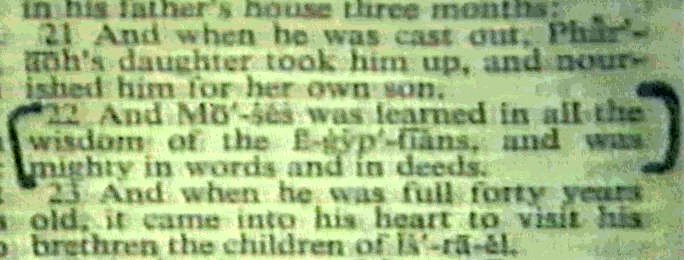 The Bible agrees with Freud as can be seen in Acts 7:22 which says that Moses was learned in all the wisdom of the Egyptians and was mighty in word and deed. Notice that if this is true let's go back to some of the wisdom of the Egyptians as shown earlier such as the weighing of the heart. I have not killed, I have not stolen, I have not borne false witness; in other words, those things that we know to be the 10 commandments already appeared in ancient Egypt as the 42 negative confessions. So instead of 10 things there were 42, so apparently Moses was only impressed by 10 of the 42 confessions which appear to be quite identical to these negative confessions. The Bible says he was learned in all the wisdom of Egypt; The Book of the Dead was part of the wisdom of Egypt, and the negative confessions appeared in the Book of the Dead.
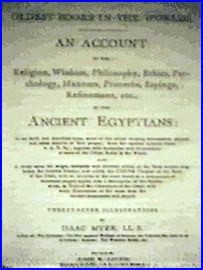 Notice that you were given a date of 1822 when the rock was decoded. When Champollion translates the Rosetta stone, you can now go back to Egypt and read what is on the walls of the tombs. You can go back and read what is on the papyri and the monuments, and collect together that literature so that you now have a whole new source of information, in fact, millions of lines that can now be read.
As the reading of the information proceeded, we then come to insight in Europe among many scholars who began to write books around the late 1800's and early 1900's. This is one of the title pages from one of those books called the "Oldest Books in the World, An Account of Religion, Wisdom, Philosophy, Ethics, Psychology, Manners, Proverbs, Sayings and Refinements of the Ancient Egyptians," to show you that many of these things, although they had come into print and we had an understanding, they later disappeared from circulation. The date that this book was written, based on the ancient texts was 1900.
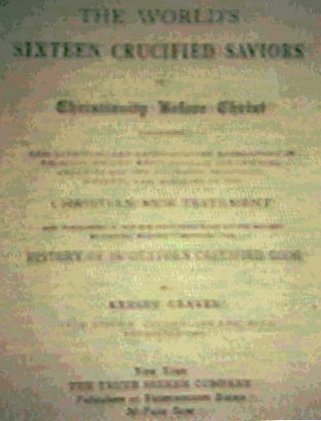 This is another one, "The World's 16 Crucified Saviours or Christianity Before Christ." In other words, people read the record and said the ideas that appear in Christianity had already appeared before Christ was born, and that was one of the reasons why it was so easy for Africans to accept Christianity, because they were really accepting the beliefs they already had. This book was written in 1875 but if you try to find a copy of this book, it would be almost impossible to locate.
What they are calling attention to is that there were at least 16 different times in history where the story of a crucified saviour who was dead, buried, resurrected, ascended into heaven and so forth appeared, and Christianity is just one of the religions where this is a part of their own theology.
Again this comes about because you can now read the old records where you find for example that Asar (Osiris) was crucified and was resurrected, so the first resurrection in history involved Asar (Osiris). If you didn't have the hieroglyphic knowledge it would be almost impossible to go back and find out what those records had to say.

 |
 |
 |
 |
 |


