PART 6
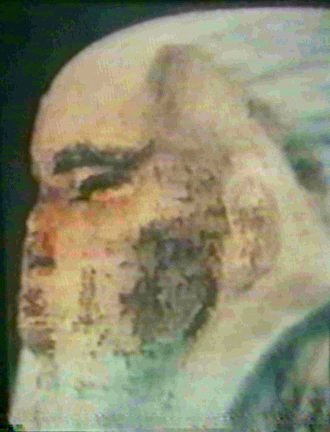
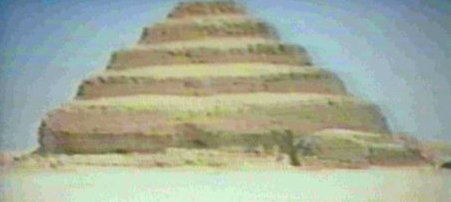
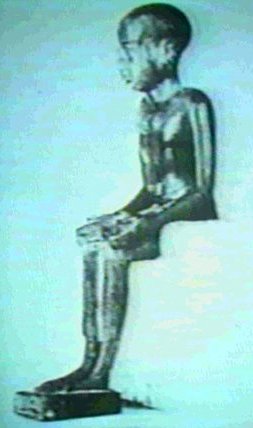 Here is the artist or architect who designed that pyramid, his name is Imhotep. He is the world's first multi-genius. He is also the Father of Medicine. The Greeks loved his work so much, that they imitated him and called their own god Æsculapius in imitation of him.
For example, every doctor takes the Hippocratic Oath whether white or Black. When he takes that oath, here is how he begins, "I swear by Æsculapius....."
The word Æsculapius is the name that Greek people gave to the Black African genius, Imhotep.
If you want the kind of proof that some of you may desire, you can pick up book 2 of the History of Herodotus, in which he talks about the fact that he realized that the Greeks had collected the names of all their gods and goddesses from Africa and Asia, but that almost all of them came from Africa.
Herodotus was very specific about which ones came from Africa, and he never claimed antiquity for Greek civilization. Herodotus lived around the 5th century BC and was an eye witness in Africa, but not only that, he also gave a physical description of the Egyptians as he saw them saying that they were Black skinned, that they had woolly hair, that they had broad noses and big lips. This was Herodotus' physical eye witness description of the Egyptians as late as the 5th century BC which is the period that we are most interested in.
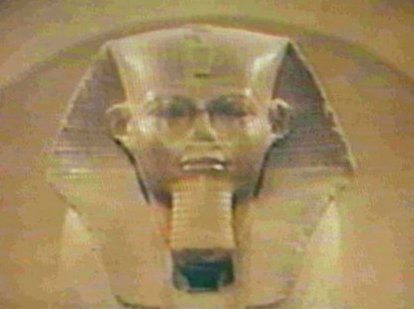 This is Pharaoh Snofru (Snefru) from the 4th dynasty, and this is his sphinx that is found in basement of the Paris museum.
(You keep thinking why doesn't someone put out a book with all these pharaohnic images in it so that you could just leaf through it magazine style and get a better impression.)
Notice that he also has had some damage done to his nose as do many of the statues. The more African they look, the more damage there appears to be done to the noses and lips to destroy the African-ness.
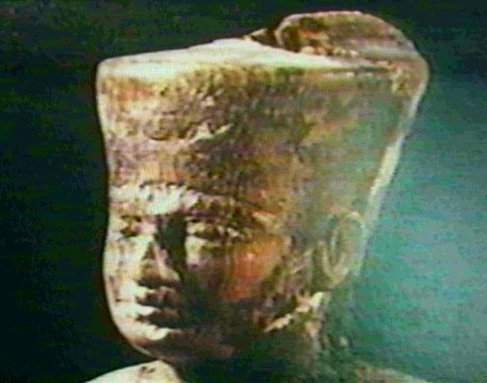 This is Pharaoh Khufu, who is supposed to have built the pyramid. The Greeks changed his name to Cheops.
This statue was actually found in what used to be a toilet as someone had actually thrown it away, and they actually had to scrape it clean.
Here is what is believed to be the image of Pharaoh Khufu who built one of the three pyramids. The one on the far side which has the top cut off is the Greek pyramid.
The middle pyramid is Khafre's pyramid, soul of Re, soul of God. The Greeks changed his name to Chephren.
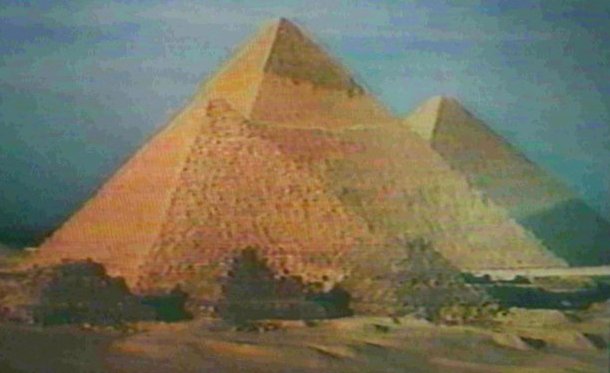 The first pyramid belongs to Menkaure soul of Re(Ra). The Greeks changed his name to Mykerinus (Mycerinus).
In other words, they not only changed the names as they always do, but in doing so they also steal meaning from the names.
Each one of these 3 pyramids had a boat pit right by it. This boat is very important. Note the date, 2,700 years BC and the dimensions, 140 feet long. That boat was found by the farthest pyramid way in the back. Each pyramid had a major boat pit which was only discovered recently. Now this boat is housed outside the pyramid and was useful for sailing up and down the Nile, still looking in really pristine condition. So your first fleets of ships come from the Kemetic source.
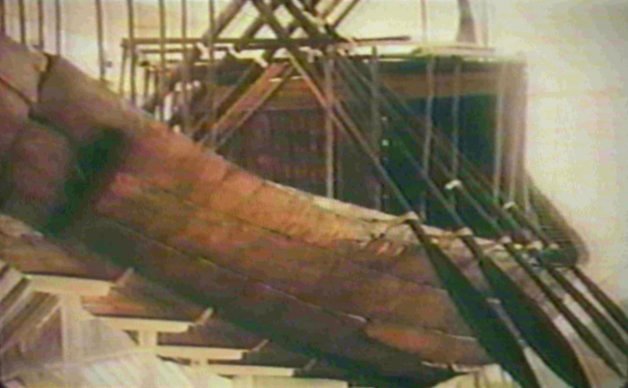
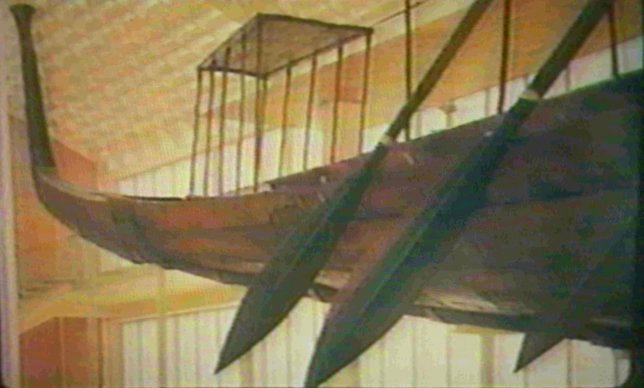
The importance of the boat though is that if you had this kind of naval technology around 2,700 BC, it means that the Egyptians could go any where they wanted to go, and if they didn't travel it was because they had no reason to travel and not because they didn't have the technology to do so.
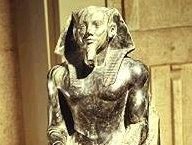
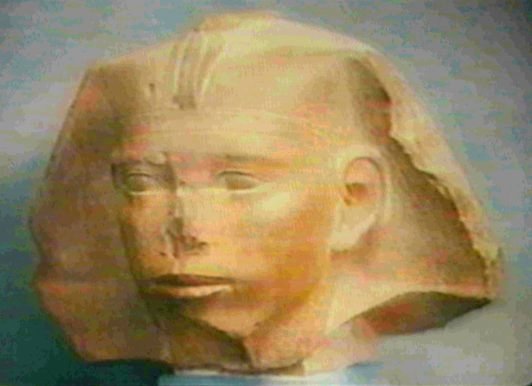 These are two images of Khafre (Chephren).
Take a good look at his physical features and decide for yourself if you think it's a Black person or a white person.
A lot of people think that all Black people have big lips. When I was in Nubian, these people are very dark with a blue tint and very straight, curly, woolly hair.
They fit the description of Herodotus but if you go further south, you will find even lighter skinned Africans with thinner lips that look more Asiatic, more like the so called Bushmen of South Africa.
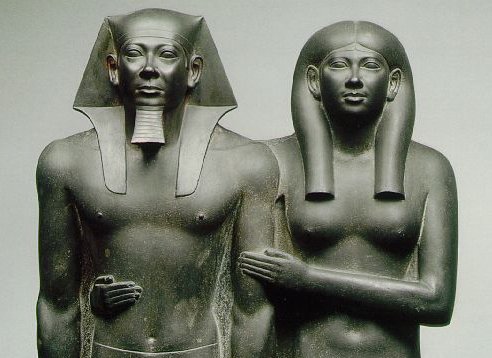
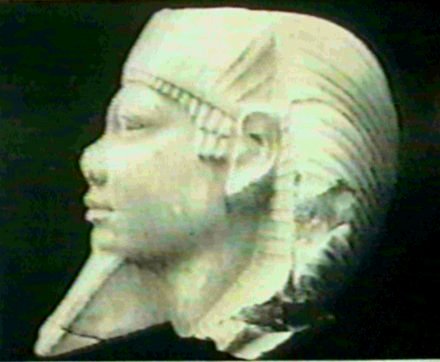
Here are pictures of Menkaure (on the left in the first image) whom the Greeks call Mykerinus. We are still in the old kingdom. Here is another shot of Menkaure. If you line all of these in order you will get a different impression of what the physical appearances of those Africans were.
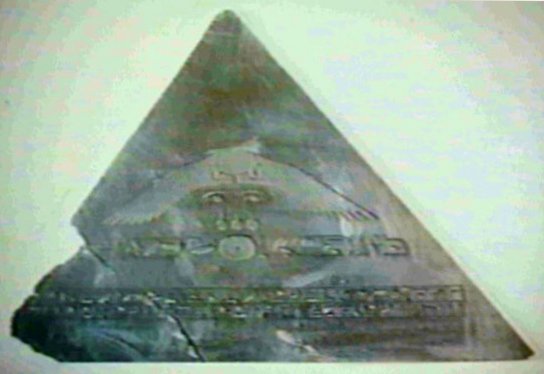
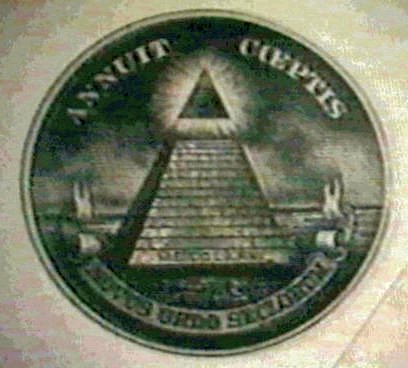
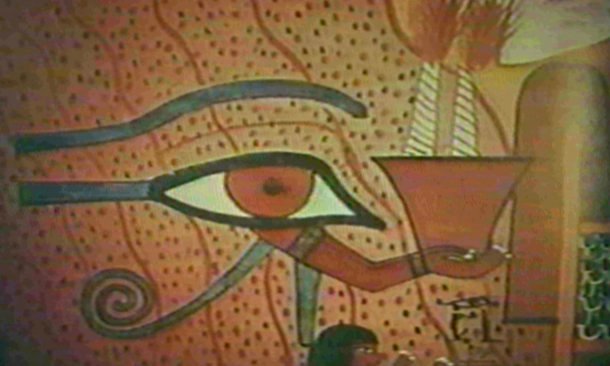
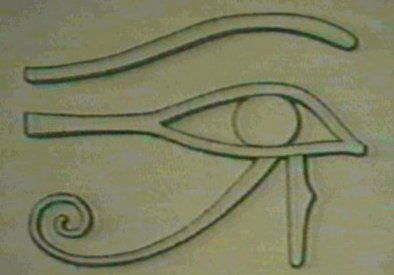
The left image below shows the peak of a pyramid which gives the opportunity to point out that the founding fathers of America, who were almost all Masons, chose Egyptian images to be used for their symbols, like the symbol printed on the U.S. dollar bill for example. Take out an American dollar and you will see the all seeing eye of God or Heru (Horus) at the top of the dollar bill. This of course is the thing that the founding fathers loved more than anything else in the world, money, and they used African symbols on their money.
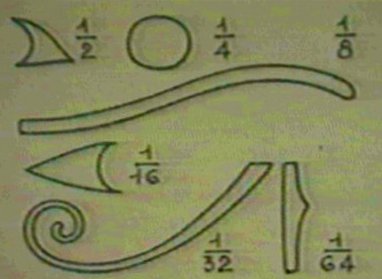
Africans wrote on the first paper which was called the papyrus, though many people say or believe that they did not have a literate tradition, but this is absolutely false. The word paper even comes out of Africa from the Egyptian papyrus, so we were the first people to write on paper, in addition to using other methods for conveying messages or information. For example weaving is writing, braiding is writing, building houses is writing, in other words, you can convey symbols and information through many different forms, of which writing like this is only one.
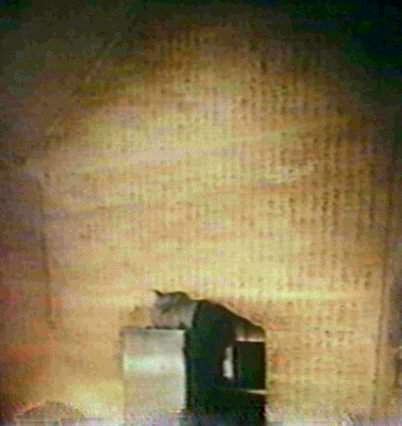 This is inside the tomb of Unas from the 4th dynasty BC, around 2,700 years before Christ. Inside this tomb you will see the hieroglyphic writings, but what is important about it is that these are Bible verses. This is the oldest Bible in the world called "The Book of the Dead" according to the German person who named, but the Kemetic people did not call it that, they called it "The Book of Coming Forth from Darkness into Light." Again you see what happens when people change the meanings of African works. The things that are on the walls of this temple in the Tomb of Unas have now been collected, and along with verses from other tombs, form this book and other books. Now we can read what has been written which becomes vitally important, because there are things in the Book of the Dead or the Totem Book, that help explain religions that occur later on such as the Hebrew religion, the Islamic religion, the Christian religion.
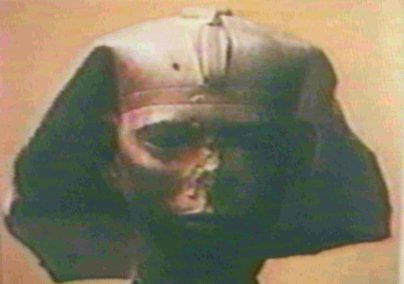 This is Djedefre. You are being shown as many images of the Pharaohs as possible, because, many times if they show you any Black people when they show something about Egypt, they will show slaves from Nubia as if the only slaves in Egypt were Nubians, when in fact most of the slaves in Egypt if they were slaves were Asians.
They are always shown on the monuments never as kings except in the invading period, but always as slaves.
You will see in books on Egypt one of the most famous images that you will find of a scribe whose name is Kai. One reason that this picture is famous is because this one has light eyes, so this one seems to resemble the hypothesis of European like people who settled Egypt. They go to great lengths to display it in the museum in Paris right in the middle of the room with lots of attention. Even when you go on tours in the Cairo museum the guides will usually take a flash light and shine it into the eyes and say "notice the eyes".
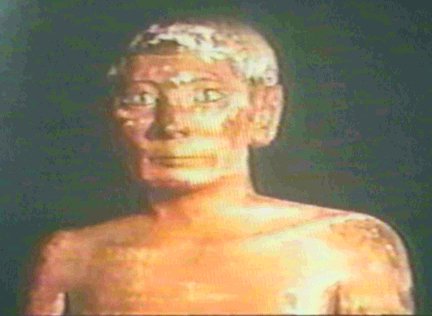
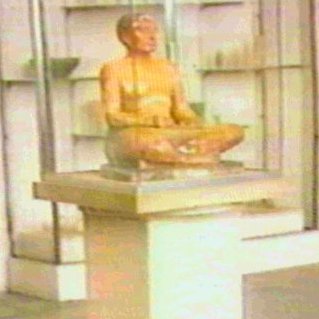
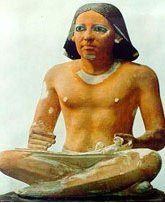 The same thing happens here with another very famous image that is found in books about Egypt. if you simply stack the books with these kinds of images you could get a distorted perception of the true situation in ancient Africa.
In any case, Egyptians did make room for foreigners because there was not that kind of prejudice, so people could come in from Europe or Asia and rise up through the Egyptian schools and become knowledgeable and even become leaders in the Egyptian government. That was not atypical, but their physical features were atypical if you take the predominate population.
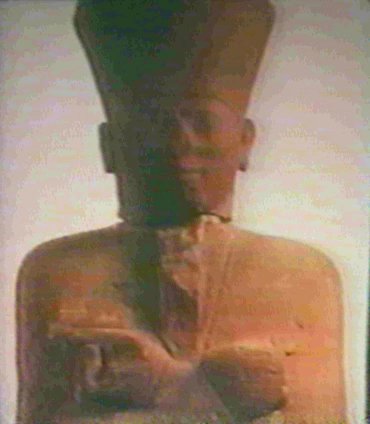
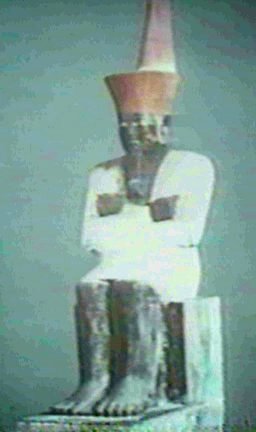 This is Mentuhotep, the man who founded the 11th dynasty. He is usually shown in coal Black; in other words, they would get the Blackest Black that they could possibly find to paint Mentuhotep.
You get all these nonsensical explanations as to why they make him so Black other than the fact that he looks like the other Nubians around.
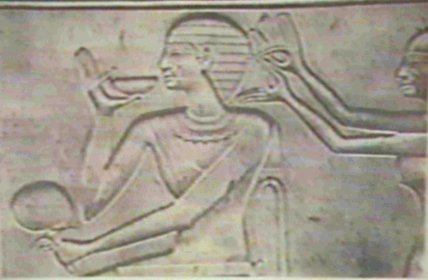
Here is a woman in the 11th dynasty getting her hair corn rowed.
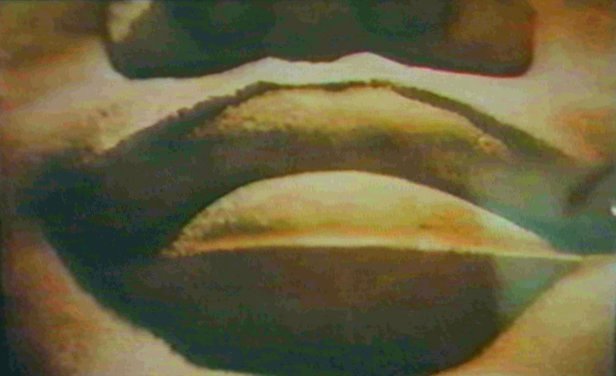
This is Senwosret II who is one of the kings of the 11th dynasty. Very seldom do you see this picture which is not a famous one. You will see those scribes and the secretaries, but not the pharaohs. Here is a close up showing his lips and mouth, those parts that are generally destroyed, in case there is any doubt as to his native features. In other words, check out The Soup Coolers.
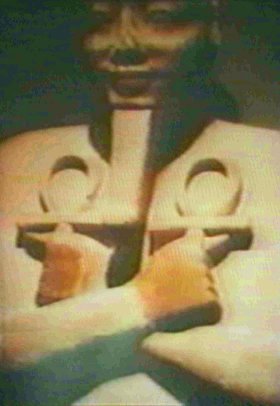
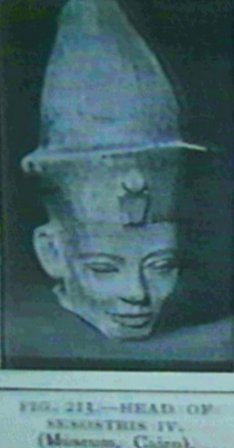
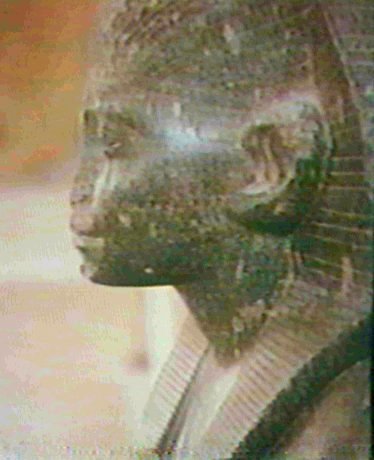 This is Senwosret III on the left as well as Sesostris IV on the right. The Greeks called him Senwosret.
All of them still fit the features of the typical Africoid that is presently found in the Nile Valley.
Below are pictures of the king mentioned earlier without a name. Remember the scribe or the secretary of the high official who is always shown in the literature, well here is the King Amememhet III who is probably the most important king of the 12th dynasty. Amememhet means God goes forth or he goes forth in the name of God. This is the picture of him standing in a corner in the Cairo museum with no name on him at all, so you could not even know that it was a king, but quite obviously he is a Black king. In the middle picture you will notice that Amememhet III almost looks as if he is wearing dread locks.
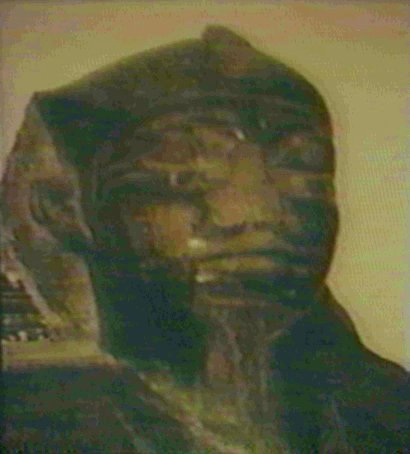
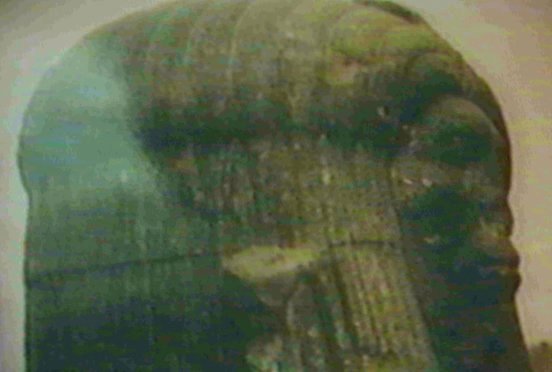
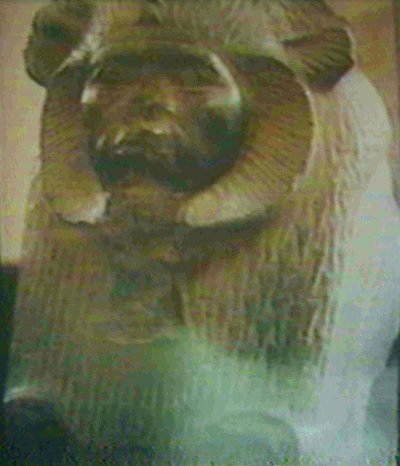 Quite clearly if you show these pictures instead of showing sketches of the pictures, then children and others will raise questions, since they do indeed look like the people who still occupy the southern part of Kemet today, the Nubian population.
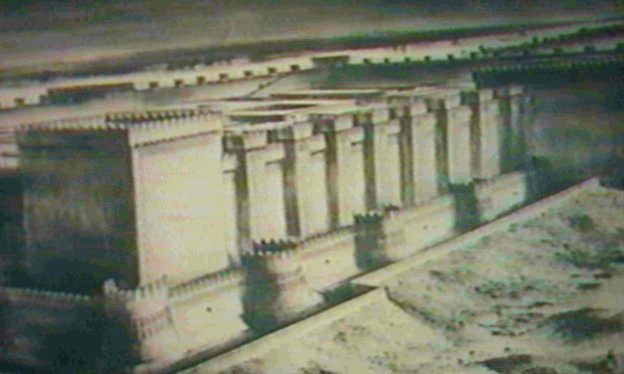
In that 12th dynastic period, the Nubians or the Egyptians built fortresses that were south of Egypt in Nubia. This is a sketch of the fortress that was built at Beaulan in the 12th dynasty which was around 2,000 BC. But notice here that we have European castles before Europe even existed in 2,000 BC. It has a draw bridge and a motte with water running around it, in other words, that type of architecture was already present on the African continent.
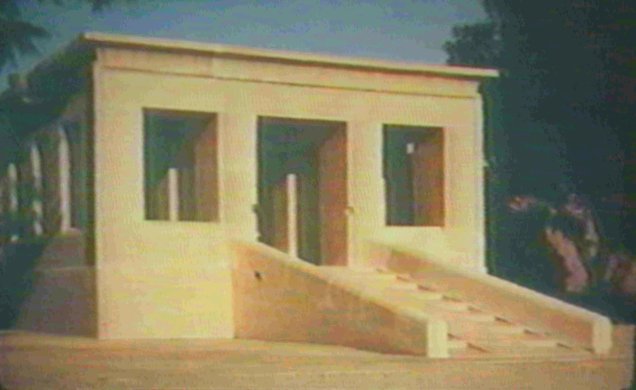
 This is also a section of the type of architecture that is now the centre of one part of the early building at Karnak temple. This is the White Chapel in the Karnak temple which was the only part that was built during the 12th dynastic period.
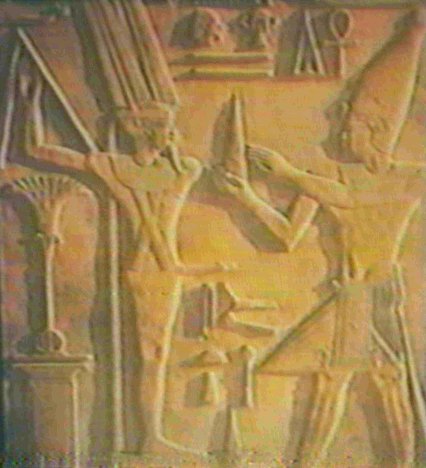
Notice here also that the God Ptah whom you can see in the picture on the right is Africoid.
This is the dynastic period after which you have the invasions, in other words, everything that was shown up to now is produced by the native efforts of Black African Egyptian people. That does not mean that the Asians who came in did not include Blacks among them because most probably they were a mixed population of Asian and African. Remember that Africans have been going into Asia for thousands of years, so to say that the others who came into Africa after those people whose physical features show them to be Black people were not Black, is not necessarily correct. In some cases they might be, but in others they might not be.
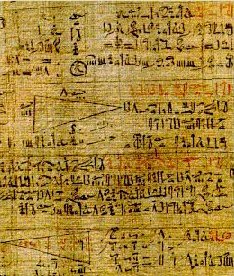 If you take the Rhind and the Moscow mathematical papyri (obviously not African names but renamed after those who found the material), you get material in them that dates back to this dynastic period. Here you have an example that shows the Pythagorean Theorem, but you have a lot more than that. In this papyrus you get Trigonometry, Geometry, sines, cosines, tangents, cotangents, secants, cosecants. The whole body of elementary and high school mathematics that is presently taught in this day and age were already being learnt and taught in the Nile Valley by at least the 12th dynastic period or even earlier. It means that we had a high tech civilization existing on the banks of the Nile Valley with Africans as its teachers.
That is why all of the Greek scholars came to Africa to learn. Plato went there and spent 12 years and Pythagoras also went and spent 22 years according to the testimony of the Greeks themselves. It was the most typical thing for Greek people to do during that period.
Remember Homer was the first who was supposed to have come in and taken a look, but they got serious in the 5th dynasty when Thales, and then later Pythagoras, Archimedes and Anaximander came to Africa for their higher learning. All these Greeks went in droves to Africa to be taught by Africans who first gave them all their knowledge which they later claimed to be their own.
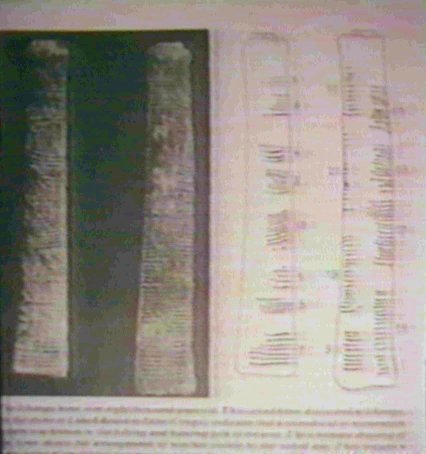 But Africans, it must be emphasized have been in the mathematical game long before even Kemet (Egypt), because if you look at the Ishango bones, you will see a picture on the left with a sketch on the right that shows what is inscribed on those bones.
Here is your first abacus not in China but in Africa, found in central Africa in the Congo region, and this goes back 8,000 years ago. Egypt (Kemet) only goes back about 5,000 years ago. Some people suggest that the Ishango calculating devices go back even further than 8,000 years ago.
So this is one of your earliest mathematical machines that you will find in human history.
So who is this American "Negro?"
Well the American Negro is a European invention therefore he must be a European. In other words, when people ask "where did Negroes come from", the response can only be that they came from Europe. Africans come from Africa, but Negroes come from Europe. Any visitor going to Africa will not see any Negroes there, they will see the Vai people, Kru people, Krim, Mendi, Gola, Yoruba, Hausa, all kinds of people in Africa, but you will never see any Negroes. So the Negro itself is a concept that was invented in Europe, therefore you have to call Negroes Europeans.
Now we are skipping past the invading dynasty and leaving the 12th dynastic period, to the end of the 17th dynastic period where you can see the mummies. Notice this time you are not seeing the carvings but the actual corpus delecti, the body of some of the royal mummies. You will see a few since it is very difficult to get pictures. You would think that as long as Egypt and Egyptologists have been around that they would be just great picture books full of mummies but there are not as most of them have been destroyed.
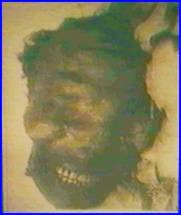 This is the mummy of Sekenenre/Seqenenra-Tao II who came from the south. Remember that in the 1st dynasty it was Mina who came from the south and unified the two lands that started Kemet (Egypt).
Sekenenre /Seqenenra (Tao II) starts the war of liberation from the south. Look at his mummy, he is dark. All the royal mummies are Black, not only dark but dark Black. When Egyptologists and others first saw mummies like these they dismissed them saying that because they were Black it didn't mean they were Black people. They speculated that maybe the process of embalming, using bitumen, might have responsible for turning the skin Black. This is what caused Dr. Cheikh Anta Diop in just almost utter exasperation to get up to and conduct chemical tests on the skins of the mummies to determine whether they were really Black people or white people.
To conduct the tests all you need is one chemical, a 100 watt bulb and a microscope. The chemical is eso-benzoid which you put on a little swatch of skin that you take from the mummy, the derm or epiderm it doesn't matter. Shine the light on it and look at it under the microscope, and if it is a Black person the melanin granules in the skin will become fluorescent and allow you to count them and they will be clustered tightly together. If it's not a Black person it won't be, because melanin does not deteriorate over time. It remains present in the fossils of animals, and because it does not deteriorate it's a reliable indicator of the physical type of the person.
Dr. Cheikh Anta Diop was actually allowed to test some of the mummies from the Marietta excavation in Egypt, and indeed found that they were all Black people after using this melanin dosage test that was outlined in his scientific paper and presented at the Cairo symposium.
Immediately he was denied permission to do any further investigations on the mummies, and shortly after he had announced this method of telling whether the mummies were Black or white, the mummies mysteriously disappeared from the Cairo museum and are now located in the basement.
So when you go to the Cairo museum you won't see any old kingdom mummies or new kingdom mummies, but if you saw any at all they were the Greco-Roman mummies because those fit the type that coincides with the story that has been spread about who the ancient Egyptians are.
Around this period is when the Asians came in and destroyed it. They made no contributions because there is nothing left of the Asian invasion to let you know they were there other than a few monuments and some coin.
So that was Sekenenre /Seqenenra (Tao II), which gives your first view of a royal mummy, and you clearly see a Black person who came from the south in the 17th dynasty, which lead into the dynasty with King Tut and Akhenaten and so forth.
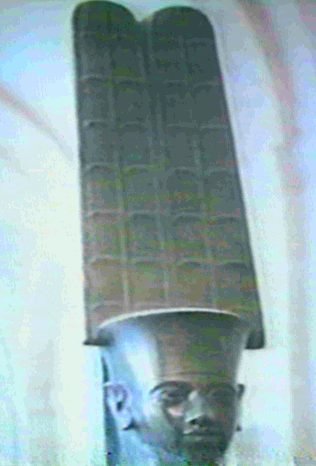
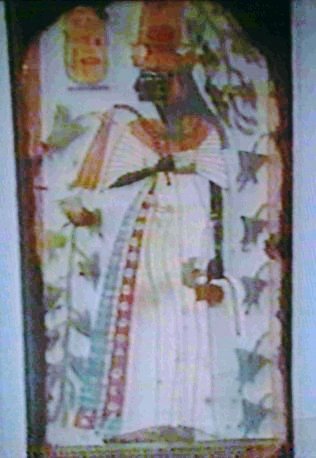 On the left is the God Amon (Amen/Amun) from the 18th dynasty who came from the south, and on the right is one of the first queens of the 18th dynasty, not the Nefertiti but Ahmose Nefretiry the wife of Ahmose.
Most people are inclined to have her leaning toward Nefertiti because they like those necklaces and jewellery. She is important because she is always portrayed as a Black Woman; but beyond that, she is also one of the Great Royal Queens of ancient Egypt.
Who was Cleopatra?
There were at least 7 Cleopatras but the one who most people talk about when they mention Cleopatra is Cleopatra VII. Of course she is in the 30th or last dynastic period, a queen who lived as an Egyptian, spoke Egyptian, worshipped Egyptian, so for that reason it is believed that she might have been Egyptian which meant that she might be Black, but this is not definitely known.
There are some coins that purport to have her image on them but it is not known when they were minted or by whom, so the question has to remain an open one, but at any rate, she was not one of the important queens.
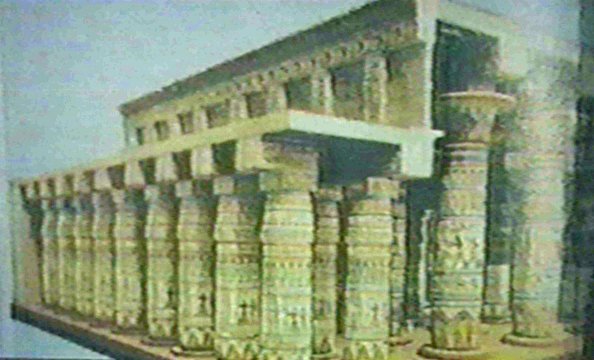 This is Karnak Temple (Arab name) or the temple of Ipet-Isut as the ancient Egyptians called it.
You are now looking at the World's First Great University.
At one point the documents said that they were approximately 80,000 students that matriculated at this university which was the centre of the Egyptian mystery system. It is located at Luxor or Waset as the ancient Africans called it.
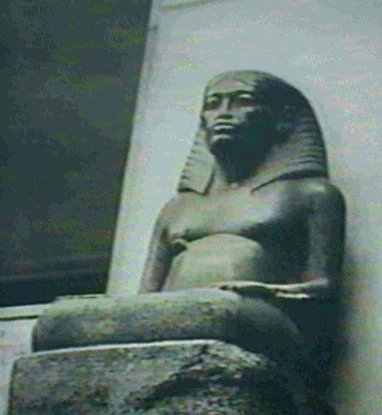
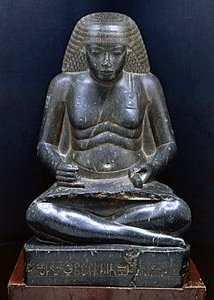 Here is the designer of Karnak temple. Now you see Black people as architects, but also in this case, a Black person as the architect of one of the most famous buildings in the Nile Valley.
This is Amenhotep son of Hapu. He rose from a lowly beginning, a low socio-economic status and became the chief priest of the temple and therefore the chief designer of the canon or the rule by which the temple would be built and expanded.

 |
 |
 |
 |
 |


