 |
|
|
|
|
|
|
|
|
|
|
|
|
|
|
|
|
|
|
|
|
|
|
|
|
|
|
|
|
|
|
|
|
|
|
|
|
|
When Light Hits the Cell |
|
|
|
Photons from the light are like the gasoline of solar energy and the PV cell is the engine. |
|
|
|
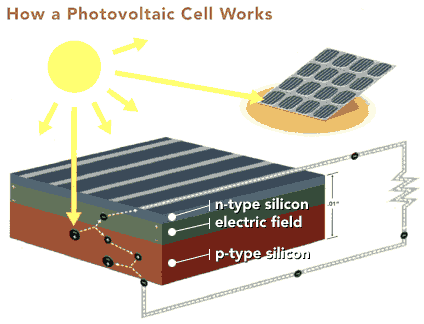
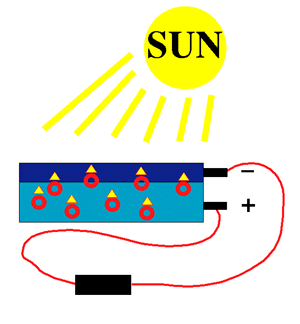
At this point we have two sides of silicon, one positive and one negative, with a current which only allows electrons to flow from the p-side to the n-side. The photons from the light knock loose electrons from both sides of the cell and the electrons follow this current. |
|
|
|
 |
|
|
When an electron on the N-Side is knocked loose... |
|
|
|
|
|
When an electron on the P-side in knocked loose... |
|
|
|
|
|
When an electron on the N-side is knocked loose, it is sent through the current to the metal reciever at the edge of the cell. |
|
|
|
|
|
|
|
|
|
When an electron from the P-side is knocked loose, it follows the current over to and through the N-side into the metal receiver. |
|
|
|
|
|
|
|
|
http://www.ece.umr.edu/links/power/photovo12.htm |
|
|
|
 |
|
|
 |
|
|
|
|
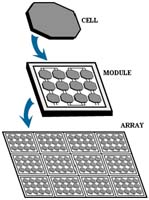
There are billions and billions of these little PV cells on a solar energy panel to produce as much electricity as possible. |
|
|
|
|
|
|
|
|
|
http://www.energyquest.ca/gov/story/chapter15.html |
|
|
|
|
|
The metal receiver attached to the edge of the N-side of the PV cell conducts this current of electrons to because of the metallic bonding. This receiver then has the two ingredients to electrical power: charged electrons (voltage), and an electron current. This power is then sent to an external source which uses the electricity, then the electric current is sent back to and attached to the p-side of the pv cell to reload it with electrons and allow the cell to recycle the electrons. |
|
|
|
|
http://www.energyquest.ca/gov/story/chapter15.html |
|
|
|
|
|
You can watch this entire process occur in this flash video by clicking on this link and following its instructions. http://projectsol.aps.com/inside/inside_pv.asp#flash |
|
|
|
|
|
|
Previous Page |
|
|
|
|
Next Page |
|
|
|
|
|
|