
|
| Sports |
|
|
| Photo Gallery |
|
|
| Funny Pics |
|
|
| Links |
|
|
| Guest Book |
|
|
|
|
At Christmas holiday in year 2k we went to Roma, a city which full of wonder.
We stayed one week in Roma. The other days we traveled to Pompeii, Pisa
and Florence. It was a great trip.
Roma
To many too see everything. Here is a collection of the sights you can't miss.
 |
 |
|
|
|
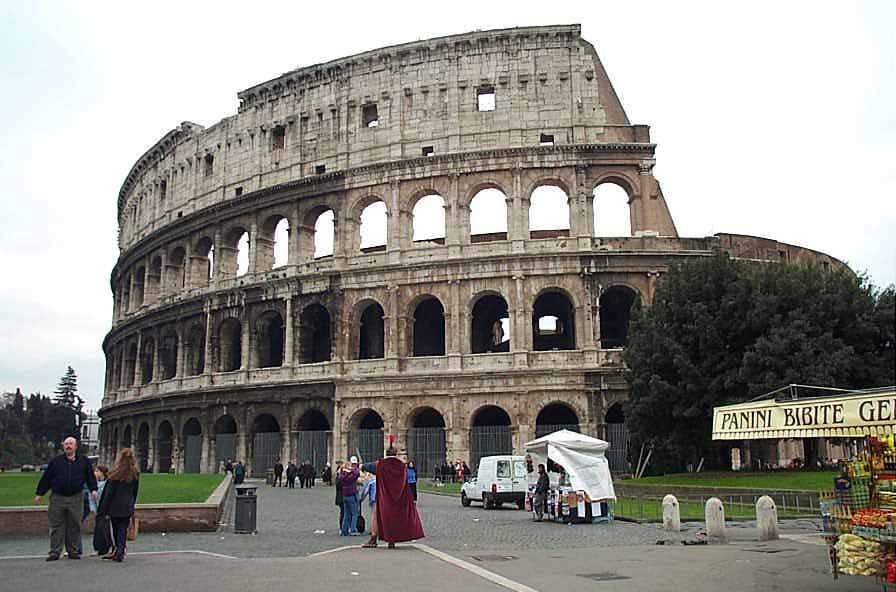
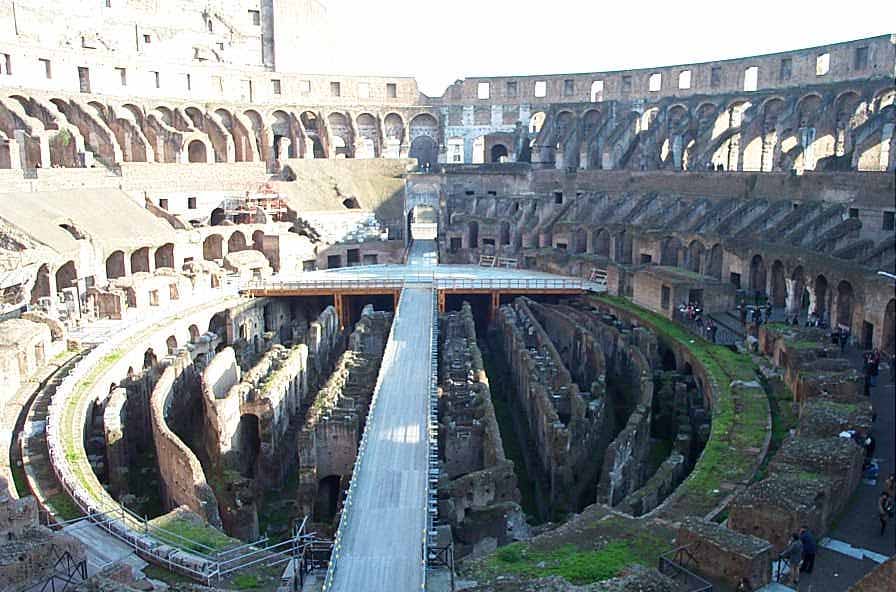
Colosseum
"In the ancient world, the elliptical-shaped Colosseum, taking ten years to build, was the largest structure of its type. It stood 160 feet high with four stories of windows, arches, and columns. Each of the three exterior floors consisted of 80 arches. As many as 50,000 spectators with numbered tickets entered through 76 of the entrances on the ground level. Two of the remaining entrances were used by Emperor Titus and two for the gladiators. Professional gladiators, primarily condemned criminals, prisoners or war, and slaves, fought either animals or each other, generally until death. Their weapons might include nets, swords, tridents, spears, or firebrands. Basically these bloody forms of entertainment served political purposes. They were to teach the local Romans how to fight in preparation for visits outside their empire and to display the strength and courage of the Roman citizen to unemployed visitors to the city of Rome. During the Colosseum's opening ceremonies in A.D. 80, spectacles were held for 100 days in which hundreds of animals and 2,000 gladiators were killed. Eventually, gladiator fights were outlawed by Emperor Honorius in A.D. 404; however, animal combats continued for another century."
 |
 |
|
|
|
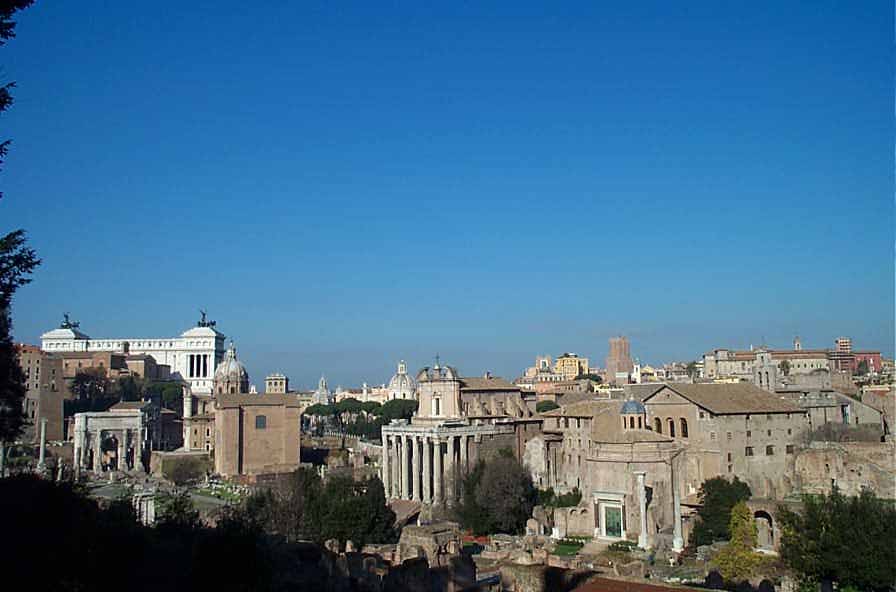
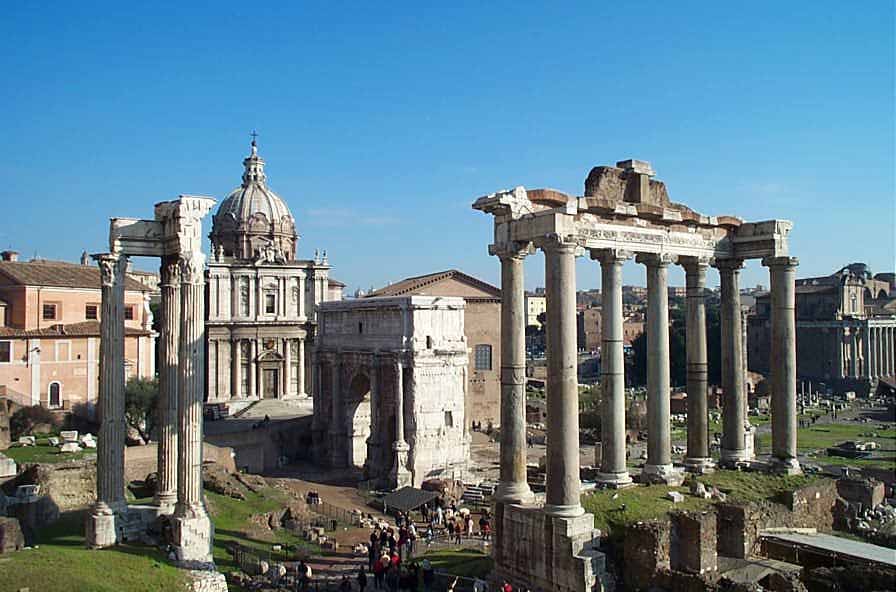
Forum Romanum
"It is 1944. After fierce battles the allied armies on their march through Italy reach Rome. One of the generals, seeing the ruins of the Roman Forum, exclaims: "Did we do this?"
However, it was not the allied forces that had destroyed what once was the centre of the Roman Empire. Centuries of lack of interest, devastation and need for cheap building materials had caused the decay and disintegration of what used to be one of the most beautiful squares of the world.
The Forum Romanum, the Roman name for what we usually call the Roman Forum, was the place where the victorious legions held their triumphal marches, where the deaths of famous persons were made public, where the corpses of emperors were burned, where the heads of emperors rolled, in short the centre of power of the Roman empire."
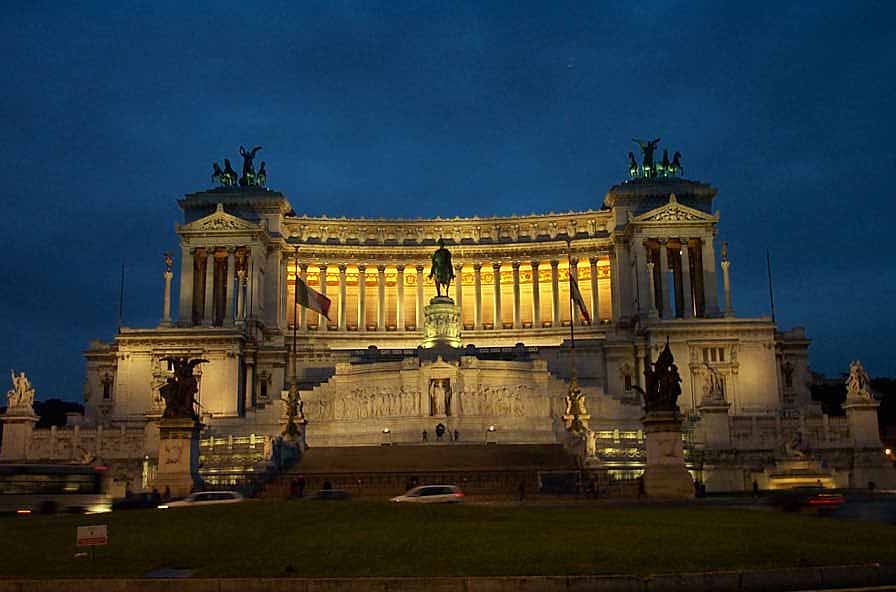 Altar of the Fatherland |
Altar of the Fatherland
"it was constructed between 1885 and 1905 and changed the whole appearance of the area with its bulk. The whole area and its surroundings had to be cleared, including many ancient and medaieval structures. For all its mass the monument is looked on with ambivalence by many Romans: for some it looks like a wedding cake; for others a typewriter. One doesn't come away from it without an opinion. The Tomb of the Unknown Soldier is also now housed in this structure, incorporated in 1921."
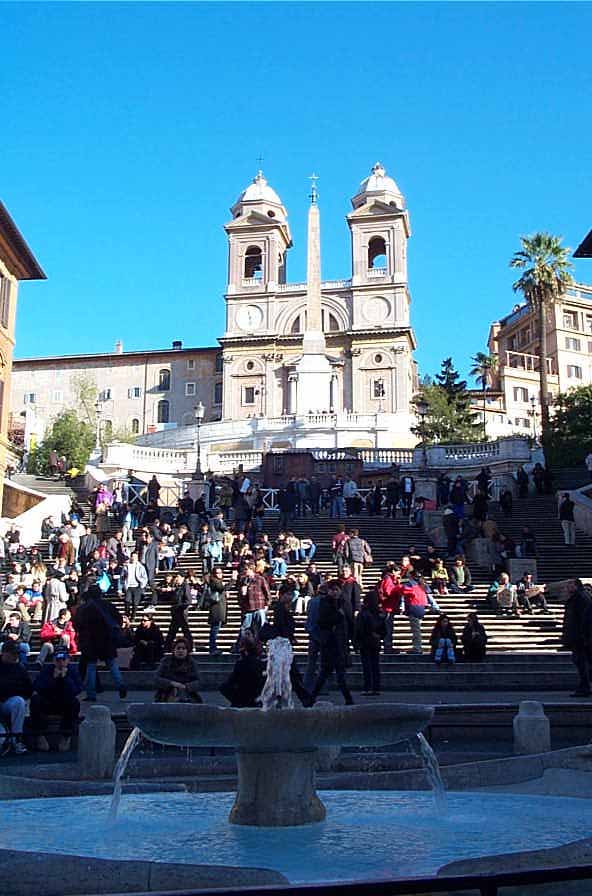 Piazza di Spagna |
Piazza di Spagna
"The piazza, church and famous Scalinata Spagna (Spanish Steps) have long provided a gathering place for foreigners. Built with a legacy from the French in 1725, but named after the Spanish Embassy to the Holy See (which is still located in the piazza), the steps lead to the French church, Trinità dei Monti. In the 18th century the most beautiful women and men of Italy gathered here, waiting to be chosen as an artist's model."
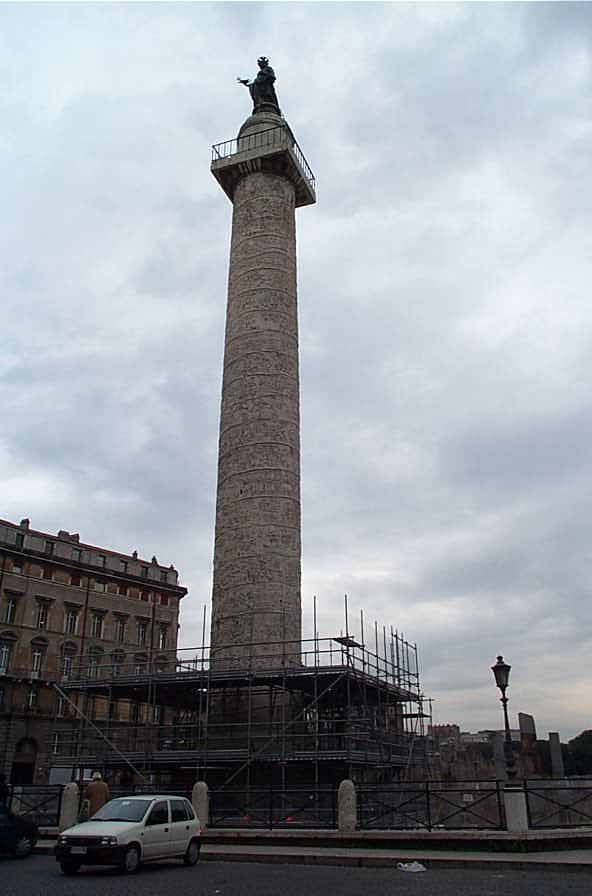 Trajan's Column |
Trajan's Column
"Nerva (died 98 CE) was the last emperor to be laid in the Mausoleum of Augustus, leaving his successor, Trajan, to seek another resting place. Trajan's solution was this column, in whose base he and his wife were buried. The column has stood the test of time, remaining intact from when it was completed in 113 CE, whereas most other monuments of ancient Rome have suffered. The column reaches a height of 30 meters (98 ft) and 40 meters including the base and surmounting statue and is comprised of 18 cylindrical blocks of marble each 1.50 meters high and 3.50 meters in diameter. The whole surface of the column is covered by carved reliefs of the highest artistic value that tell the story of Trajans two wars against the Dacians (who lived in what is today Romania). The column is hollow and contains a staircase of 183 stairs."
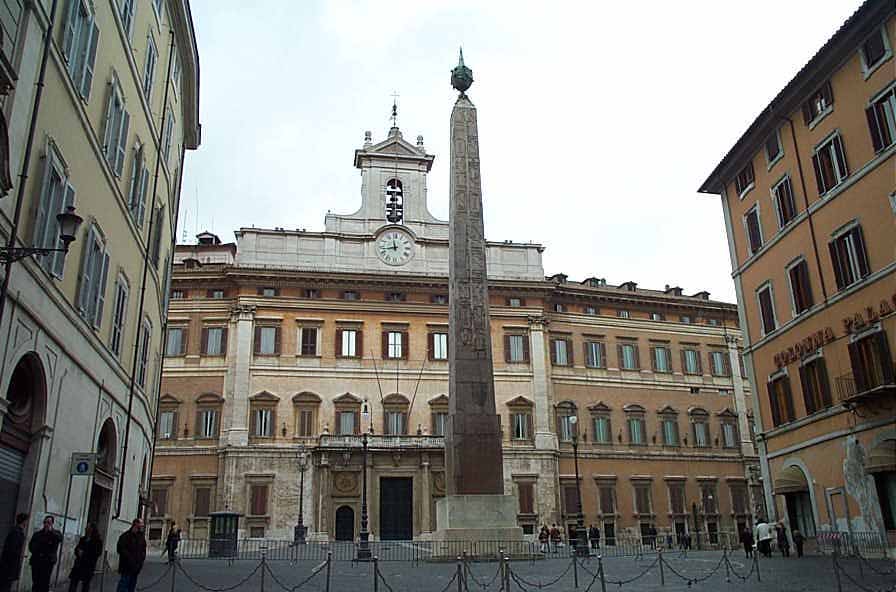 Piazza Montecitorio |
Piazza Montecitorio
"The imposing palazzo was designed by Bernini at the request of Nicolo' Ludovisi (1655) who wanted to build the grand edifice for his family and work started but was halted due to uncertainties regarding future finance. In 1664 when Nicolo' died the building was still unfinished. Carlo Fontana, finished the palazzo in 1697. The only part he altered considerably was the central section of the facade. The building, used for papal matters, was known as the Curia Innocentiana until 1870, when it became home for the new Italian parliament."
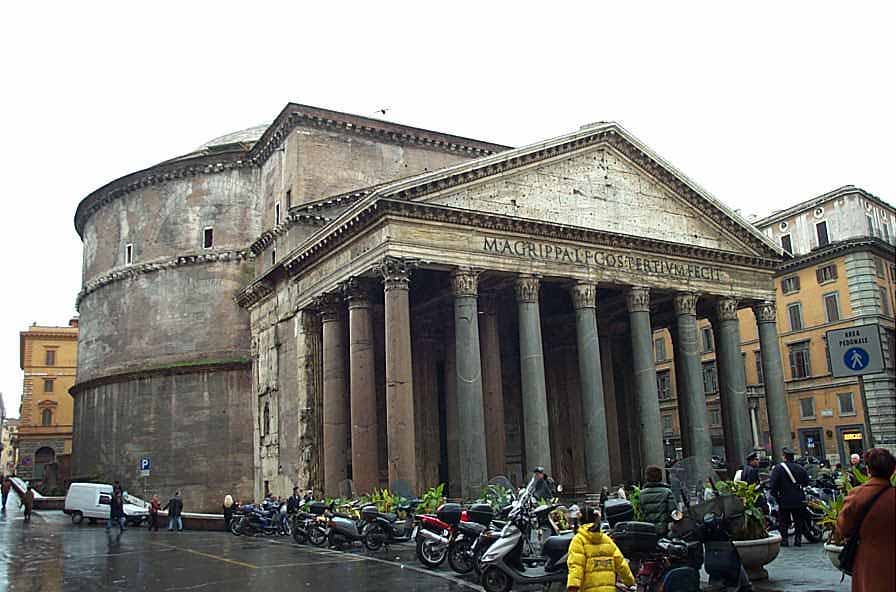 Pantheon |
Pantheon
"Imagine a circular building 43.3 metres (142 ft) in diameter and 43.3 metres in height, able to contain a perfect sphere, the roof of which follows that perfect sphere up to a circular opening. This grand conception for a temple was built in 27 BCE by Agrippa and dedicated to the patron gods of the Julio-Claudian family, Venus, Mars and the Divine Julius."
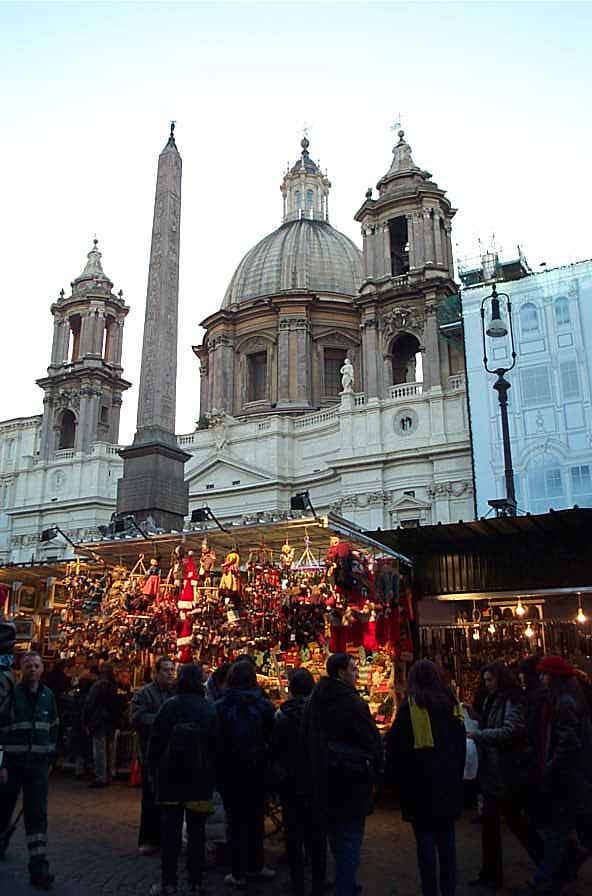 Piazza Navona |
Piazza Navona
"This piazza is a marvel of light and sculpture. It is exceptionally long and owes its shape to the ruins that formed it, for under the buildings that surround Piazza Navona are the remains of the Circus Domitianus, Domitian's stadium -- a part of which can be seen if you leave the piazza by the north exit and turn left. The piazza marks the area for the races in the stadium. It features many fine old buildings, a beautiful church and three stunning fountains. (Normally one would be happy if a piazza even had just one.)"
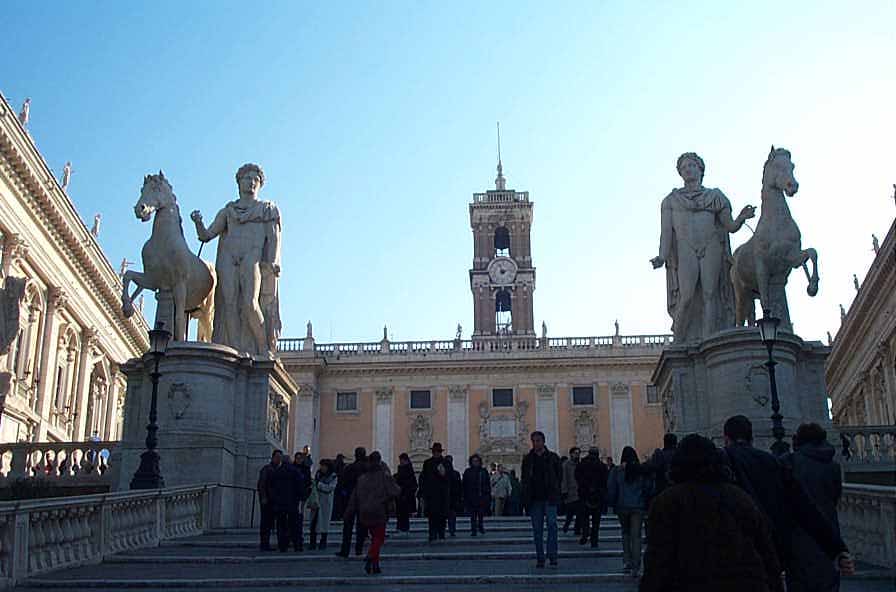 Campidoglio |
Campidoglio
"This Italian name, Campidoglio ("cuhm-pee-DOHL-yoh"), comes from "Capitolium", the best known of the seven hills of ancient Rome, whose original name was probably Mons Tarpeius. In early Roman times important temples were built here: the Temple of Jupiter Capitolinus on the south west end and the Temple of Juno Monetae on the height known as Arx. The lower area between these two heights was known as Asylum, where, we are told, the founder of Rome, Romulus, gave safe haven to refugees from nearby towns."
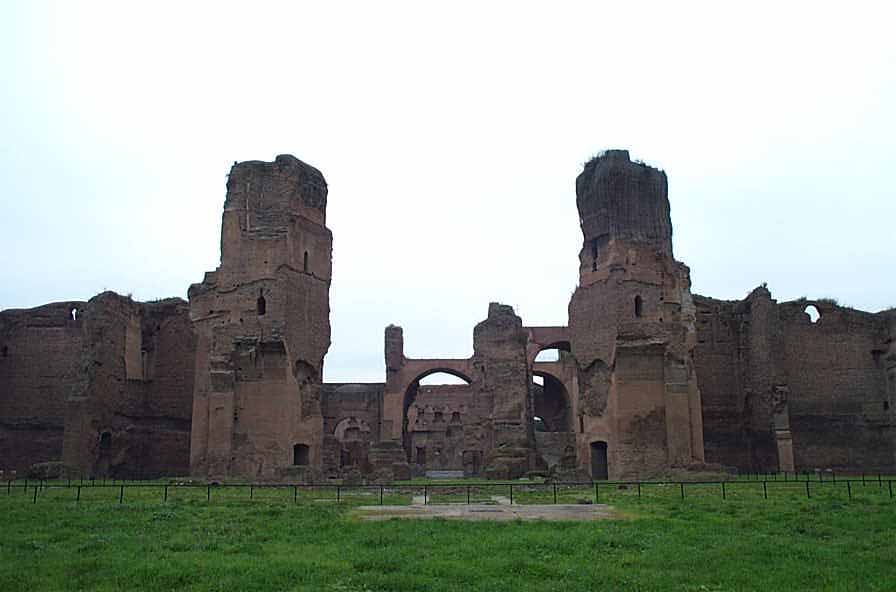 Baths of Caracalla |
Baths of Caracalla
"The best preserved of the imperial bath complexes. Follow the path of the ancient bathers from the changing rooms to the caldarium, tepidarium, and frigidarium, then out to the exercise areas and libraries. The massive brick walls and mosaics still in existence help you imagine what a grand experience bathing in Rome would have been, even though the water hasn't been running here for about 1500 years."
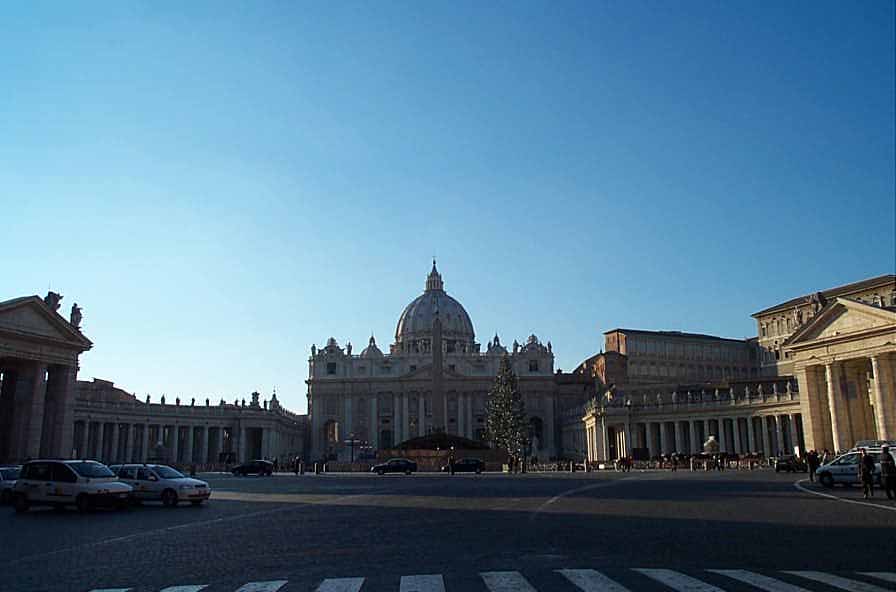 Vatican City |
Vatican City
"The Vatican City lies close to the Tiber in central Rome and is a fully independent state. It also includes ten other buildings in Rome and the pope's residence at Castel Gandolfo. As the Holy See, it is the seat of the Catholic Church, deriving its income from investments and voluntary contributions known as Peter's Pence."
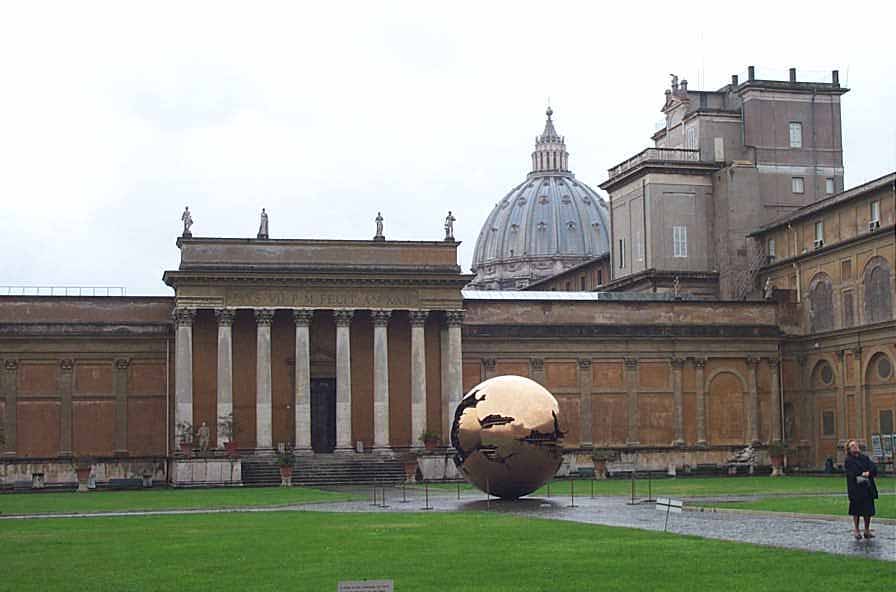 Vatican Museum |
Vatican Museum
"The museums, housed primarily in the former papal apartments of the medieval Apostolic Palace, cover the Renaissance from its late 14th-century origins to its full flower in the 16th century. Among the artists whose works visitors can find there are Botticelli, Fra Angelico, Signorelli, Michelangelo and Raphael. Of course the capstone of the Renaissance collection is the Sistine Chapel."
Near Vatican city you can easily find Castel S. Angelo whose photo shown on the front page.
Out the city center you can find the remains of catacombs. A subterranean
cemetery, consisting of a network of galleries, sometimes on several levels,
leading to tomb chambers, but also with shelves and niches in the gallery
sides for other sarcophagi and cinerary urns. The term 'catacomb' was
first employed in the 5th century ad to describe the underground
burial place beneath the church of San Sebastiano on the Via Appia, Rome
(in use from the middle of the 3rd century ad) and it later came
to be used for similar places in Rome and other Early Christian centres
in Italy and north Africa. Catacombs were placed underground not for secrecy,
but because of the expense of available land. There is no evidence to
suggest that Christians met in these places to avoid persecution; rather
they gathered here to commemorate their dead, perhaps for a funeral meal
on the anniversary of the death. Specific terms are used to refer to the
various types of burial, including arcosolium (arched tomb niche), cubiculum
(tomb chamber) and loculus (shelf tomb).
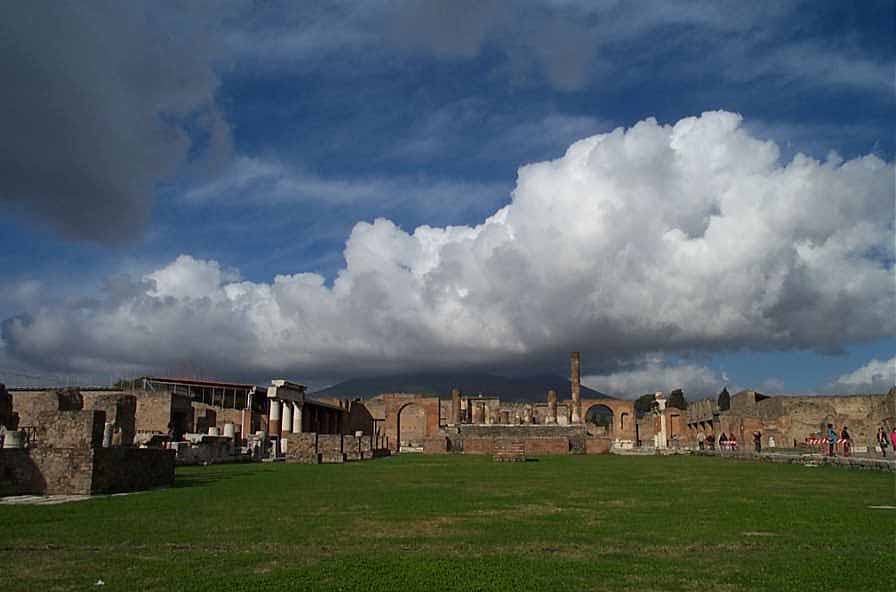
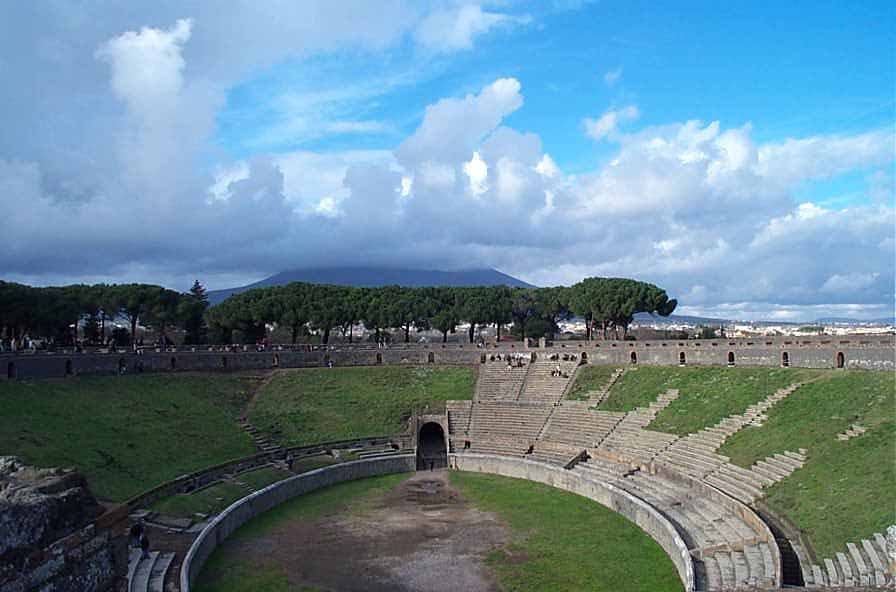
Pompeii
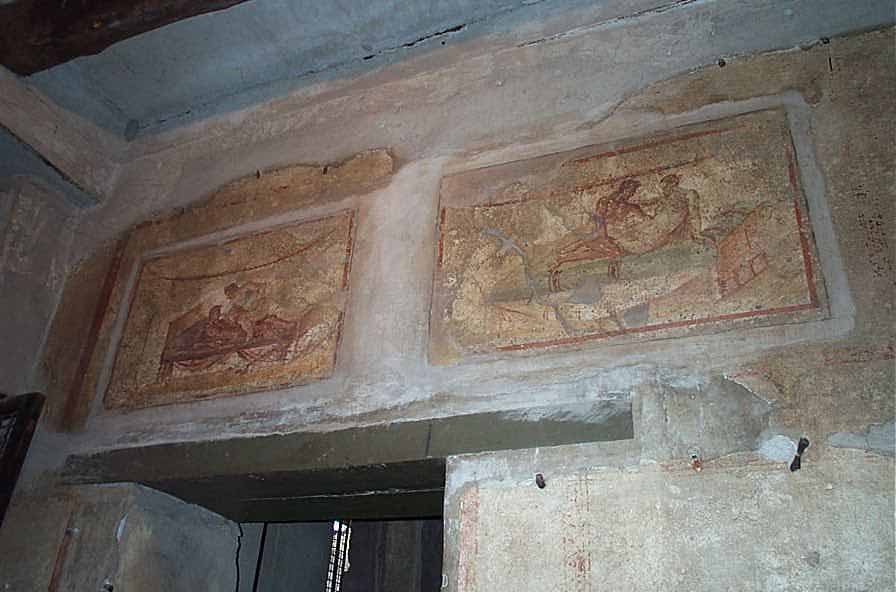
Buried with so little warning in 79 A.D. that Pompeii was literally frozen in time. When you walk in the streets of Pompeii, you've been brought back to 2,000 years ago.
|
|
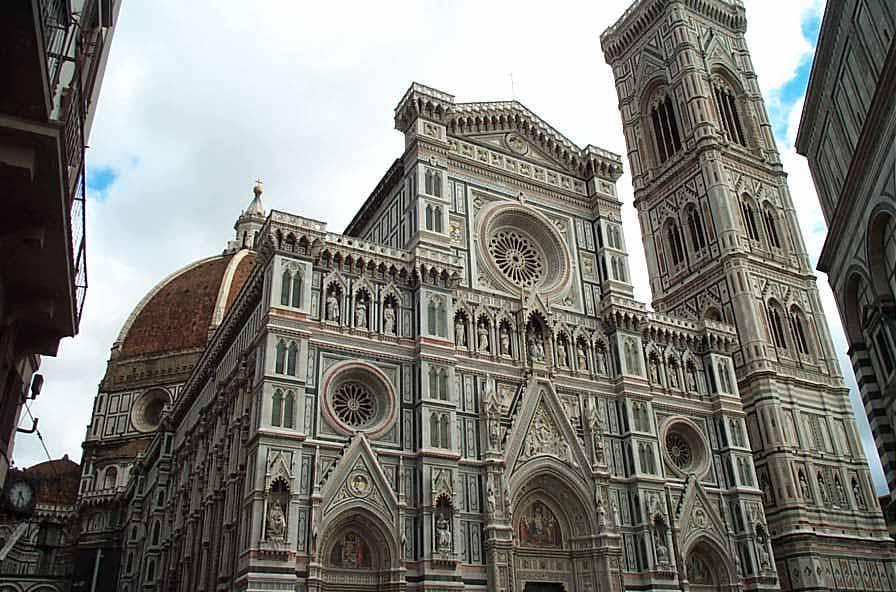
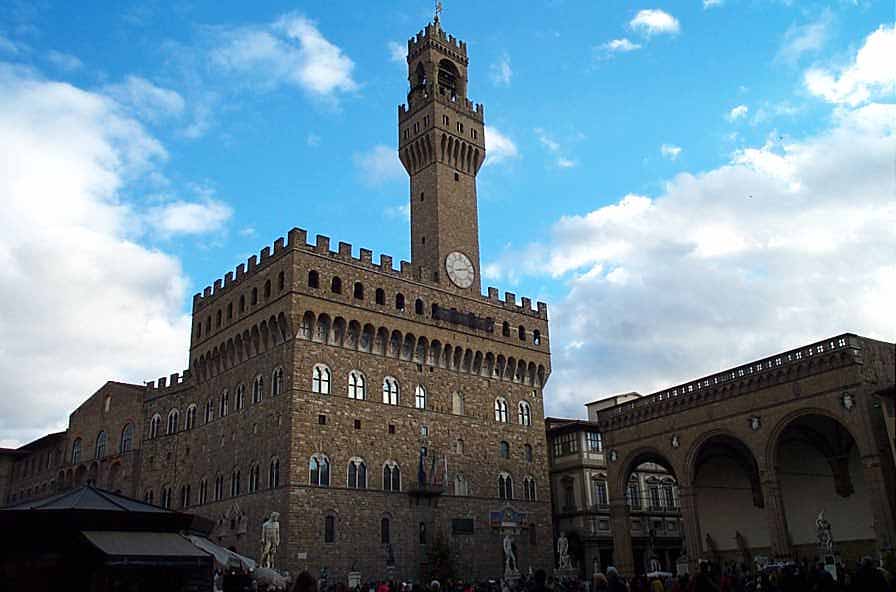
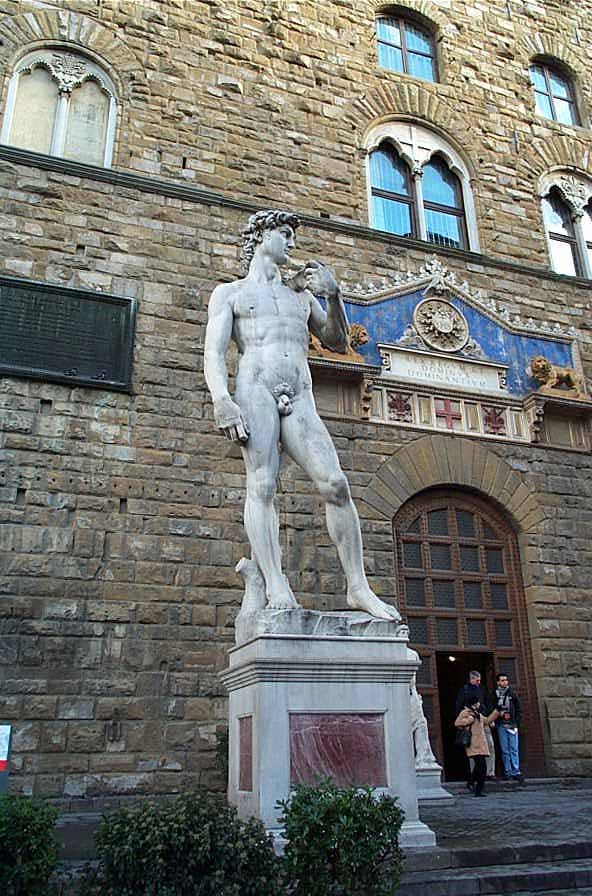
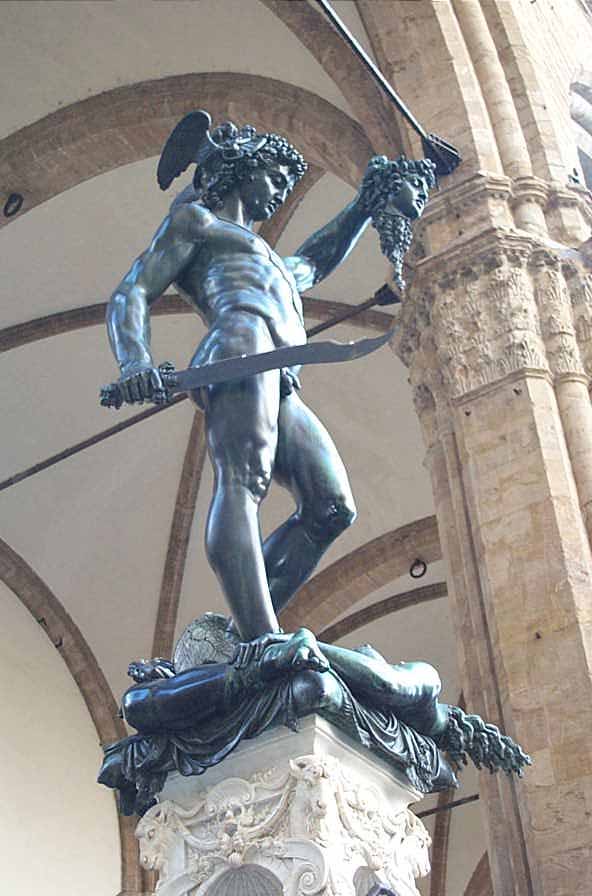
Pisa & Florence
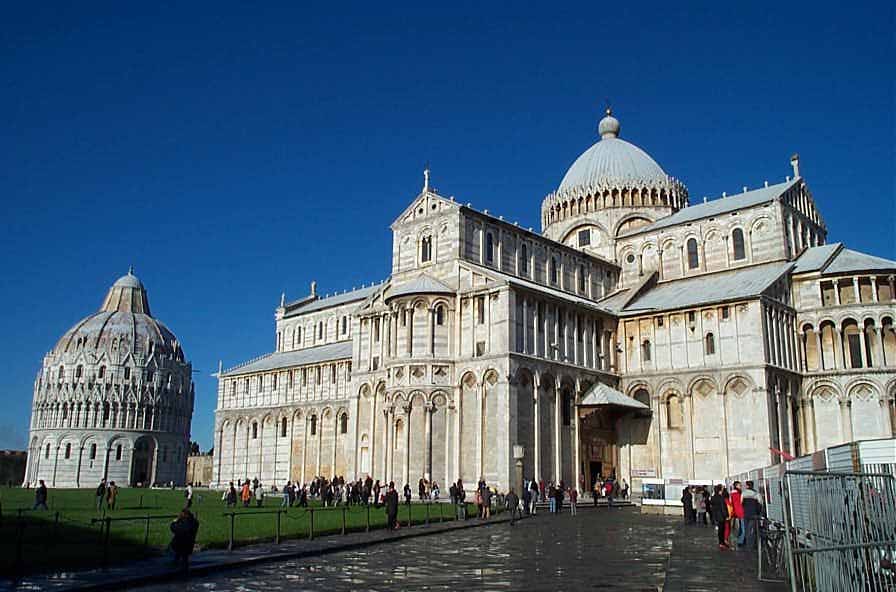
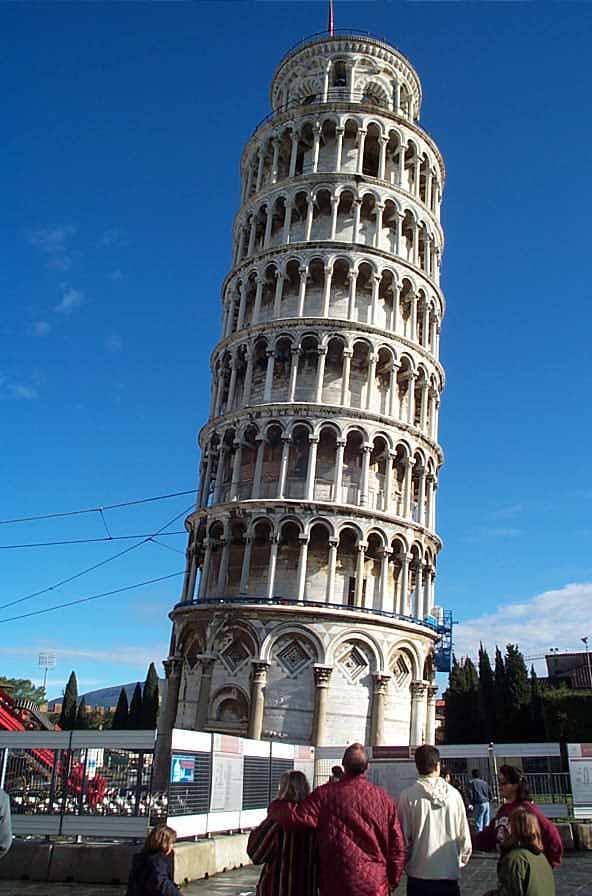
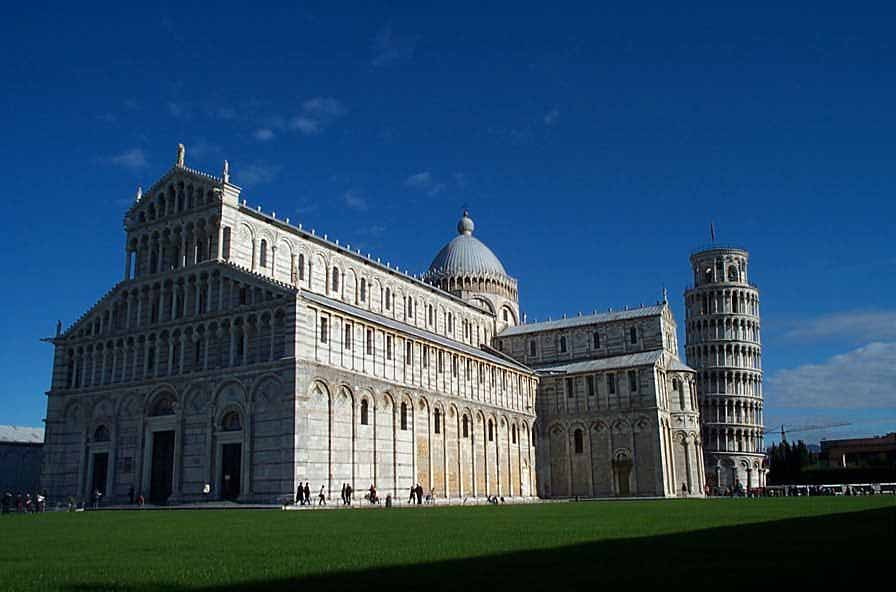
I just spent one day in Pisa and Florence due to time limit. However, the most famous sights I have seen.
|
 |
 |
|
 |
|
 |