
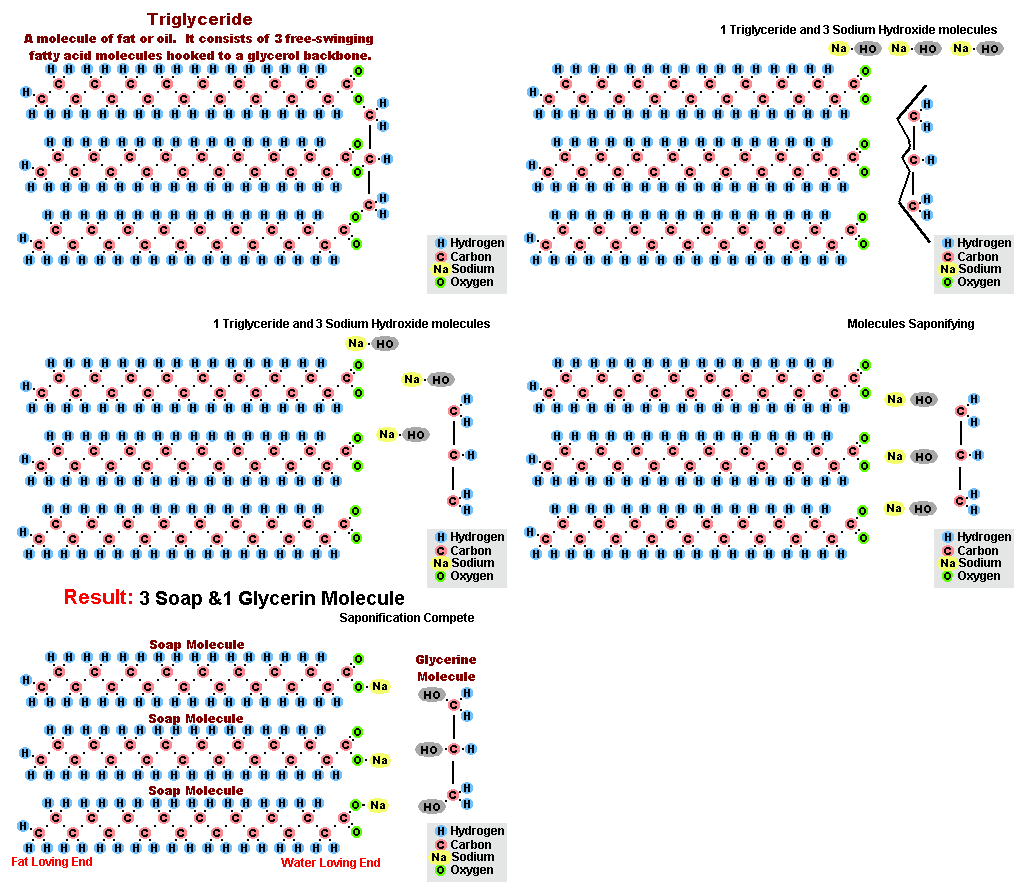
Knowing the components of a soap molecule, it is now possible to both explain and understand how soap is produced and why it works. When the ends of three fatty acids (the carboxyl groups) come into contact with one molecule of glycerol, a triglyceride is produced. This triglyceride is what we commonly think of as fat or oil. From here a base is introduced. Three lye molecules (sodium hydroxide) combined to form three soap molecules and one glycerin molecule. This process is called saponification.
Soap making can be very simple. It can be as easy as dissolving sodium hydroxide in water, melting fats together and stirring. As easy as this may be, soap making can be just as complicated.
There are many methods to make soap, each of which, are regularly exercised around the country and world. One method entails an external heat to melt the fat. Another, however, uses solely the heat of the reaction. This is called the cold-process. Believe it or not, on myth about the discovery of soap incorporates this cold-process method. Supposedly, in 1,000 B.C. Rome, soap was discovered. The story takes place on Sapo Hill. Women would rinses their clothes in the river at the base of the hill. Animal sacrifices would take place at a higher elevation. The women came to realize that the clothes were remarkably clean when they came into contact with the foamy clay running down the hill and into the water. It was later decided that this substance was created from the rendered animal fat (tallow) that soaked down through the wood ashes (lye).