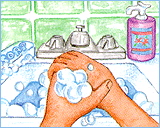
Some may take this incredible unit of magical proportions for granted. Some may not notice its splender and relish in it's ability to clean. So much went into creating that bar of soap, or that jug of detergent or that liquid solution on your kitchen sink. There is a lot of chemistry wrapped inside each bubble, so much so, that it has taken centuries to perfect it and to understand it. Soap is not just made from a recipe of ingredients but a formula of scientifically found materials. It's about time that soap received the attention it deserves.
Soap is an essential item to all human life forms, both personally and publicly. Its ability to remove soil from a surface has made it a necessity for good hygiene by reducing the presence of germ causing diseases. Without soap, what kind of world would this be?