The Middle Ages
The Early Middle Ages
There is no exclusive beginning of the Early Middle Ages, but it is usually said to begin with the end of the severe economic depression and the invasion and settlement of Germanic peoples within the borders of the Western Empire. The map of Western Europe was changed drastically.
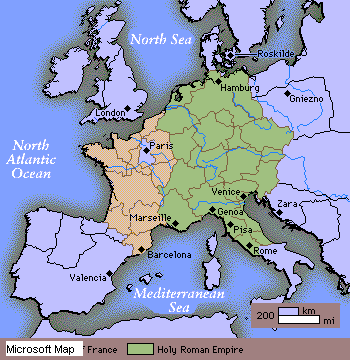
The yellow indicates French territory in the Middle Ages, and the green is the Holy Roman Empire. During this period tribes began to coalesce into kingdoms, but there was no real government. In addition, the political structures that were had were at best local.
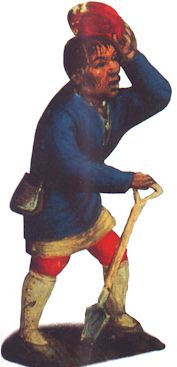
Economic development also slowed so greatly after the depression that regular commerce had almost ceased entirely. As a result of the drop off in economy, the poor had to find other ways to make a living. Peasants began to be bound to the land and dependent on landlords for protection and the administration of justice, a relationship that became known as seignorialism. Among the warrior aristocracy feudal connections along with kinship ties were the most important relationships. Feudal ties traded land for military and other services.
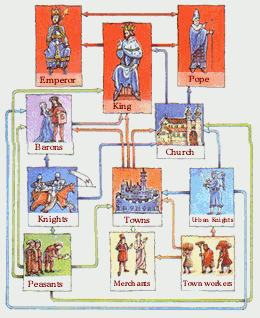
At this period of governmental breakdown, the only European universal was the church. Even so, the church still had its hierarchical problems. All power in the church was at the hands of the local bishops, in the same sense that any government power was also limited to locality. The Pope, of bishop of Rome did have a certain preeminence, but his true power did not fully develop for another 500 years. Despite the fragmentation, the church did make moves towards standardization. The church solidified the calendar and monastic rule more prevalent in the lives of the faithful. At the center of any learned activity stood the Bible, a testament to the faith of the people.
The High Middle Ages
This period demonstrated a revival of large-scale trade and commerce. One reason for the economic revival was the end of the era of migrations. European commerce experienced the continuity and growth of a settled population.
During the High Middle Ages the church refocused its power, and the pope became its unequivocal head. It was, at this time, the most sophisticated governing institution in Western Europe. In Italy, the papacy exercised direct political control over the domain lands of central and northern Italy, but through the diplomacy and the administration of justice in the extensive system of church courts it held power throughout Europe. In addition, the monastic orders that were standardized during the Early Middle Ages were becoming fully involved in the secular world. The church found itself at the center of European existence.
A result of the growing church influences were manifestations of themselves in other areas. New educational institutions, such as cathedral and monastic schools and the first universities were established. Advanced degrees in medicine, law and theology were offered. Scholasticism became popular and the writings of the church were studied again, theological doctrines and practices were explored, and problematic areas of Christian tradition were discussed.
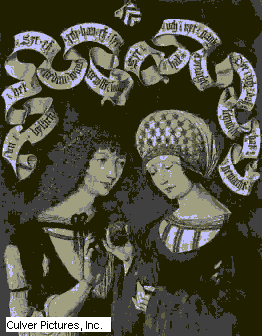
Artistic innovation was also prevalent during the High Middle Ages. In painting, a new attention was paid to the depiction of emotional extremes and the natural and workday world. The Romanesque style of architecture was also being perfected through the erection of numerous churches. This eventually gave way to the Gothic building style that would become the prevailing mode of building in the upcoming centuries. Literature was becoming popular, as the public had the education and the leisure to read. New types of literature like the love lyric and courtly romance expressed the new complexity of life and engagement in the secular world.
The Crusades also occurred during the High Middle Ages. These wars, begun in the late 11th century, were called by the popes to free Christian holy places in the Middle East from the control of the Muslims. These international religious expeditions were just one more example of the European unity that was centered around the church.
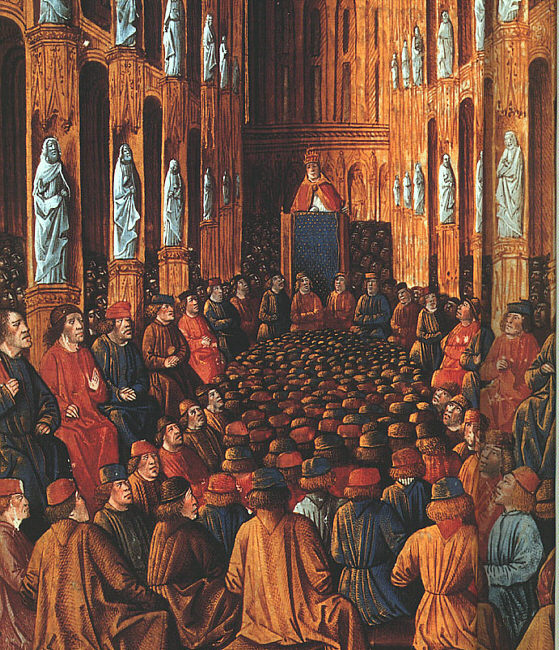
The High Middle Ages culminated in the great cultural achievements of Gothic architecture, the philosophic works of St. Thomas Aquinas, and the imaginative vision of the totality of human life in the Divine Comedy by Dante Alighieri.
Late Middle Ages
The late Middle Ages were characterized by a period of conflict and dissolution. At this time the secular state began to emerge, and was most commonly seen in a nationalistic feeling. The struggle in Europe between church and state became a fixture in European history for the next several centuries. Towns and cities began to struggle for political self-control. Various classes and interest vied for political control.
One result of this struggle was the intensification of political and social thinking. The thought focused on the secular state in its own right, independent of the church or the community of believers. People were beginning to realize that the synthesis of all knowledge and experience, both human and divine was becoming impossible.
Late Middle Age spirituality was characterized by an intense search for the direct experience of god, whether through the private, interior ecstasy of mystical illumination, or through the personal scrutiny of God’s word in the Bible. This process of spiritual unrest and innovation would end in the Protestant Reformation. New national identities that were emerging would lead to the triumph of the modern nation state. The expansion of trade and finance would lay the groundwork for the revolutionary transformation of the European economy.
Useful Middle Ages Links
Really good site: http://www.learner.org/exhibits/middleages
Good site: http://www.medievalonline.com
Crusades: http://www.newadvent.org/cathen/04543c.htm