| |
|
*Culture
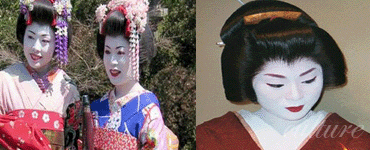
Geisha ("person of the arts") are traditional Japanese artist-entertainers. The word Geiko is also used to describe such persons. Geisha were very common in the 18th and 19th centuries, and are still in existence today, although their numbers are dwindling. "Geisha," pronounced ("gay-sha") is the most familiar term to English speakers, and the most commonly used within Japan as well, but in the kansai region the terms geigi and, for apprentice geisha, "Maiko" have also been used since the Meiji Restoration. The term maiko is only used in Kyoto districts. The English pronunciation ("gee-sha") or the phrase "geisha girl," common during the American occupation of Japan , carry connotations of prostitution, as some young women, desperate for money and calling themselves "geisha," sold themselves to American troops.
*Tea Ceremony
The Japanese tea ceremony (cha-no-yu, chado, or sado) is a traditional ritual influenced by Zen Buddhism in which powdered green tea, or matcha , is ceremonially prepared by a skilled practitioner and served to a small group of guests in a tranquil setting. Cha-no-yu (literally "hot water for tea"), usually refers to a single ceremony or ritual, while sado or chado (, or "the way of tea") refer to the study or doctrine of tea ceremony. Since a tea practitioner must be familiar with the production and types of tea, with Kimono, calligraphy, flower arranging, ceramics, incense and a wide range of other disciplines and traditional arts in addition to his or her school's tea practices, the study of tea ceremony takes many years and often lasts a lifetime. Even to participate as a guest in a formal tea ceremony requires knowledge of sado, including the prescribed gestures and phrases expected of guests, and the proper way to take tea and sweets, and general deportment in the tea room.
.
|
|