|
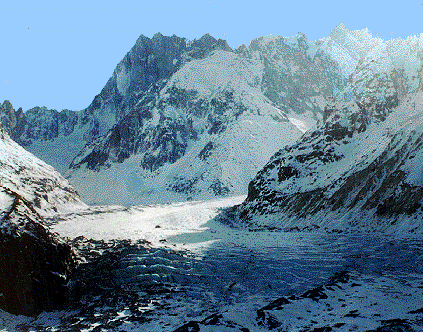
Glaciers begin to form when snow remains in the same area year-round, where enough snow accumulates (exceeds the amount of snow and ice that melts in a given summer) to transform into ice. Then new layers of snow bury and compress the previous layers, after this process the pressure forces the snow to re-crystallize, which forms grains similar in size and shape to grains of sugar. Then gradually the grains grow larger and the air pockets between them get smaller, causing the snow to slowly compact and increase in density. Then after about two winters, the snow turns into firn (a German word meaning �of last year�) or grainy ice, a state between snow and glacier ice. At this point it is about half as dense as water, then larger ice crystals become so compressed that any air pockets between them are very tiny. In old glaciers up to 18,00 years old, the ice crystals can reach several inches in length and for most glaciers this process can take hundreds of years. |
|