 |
|
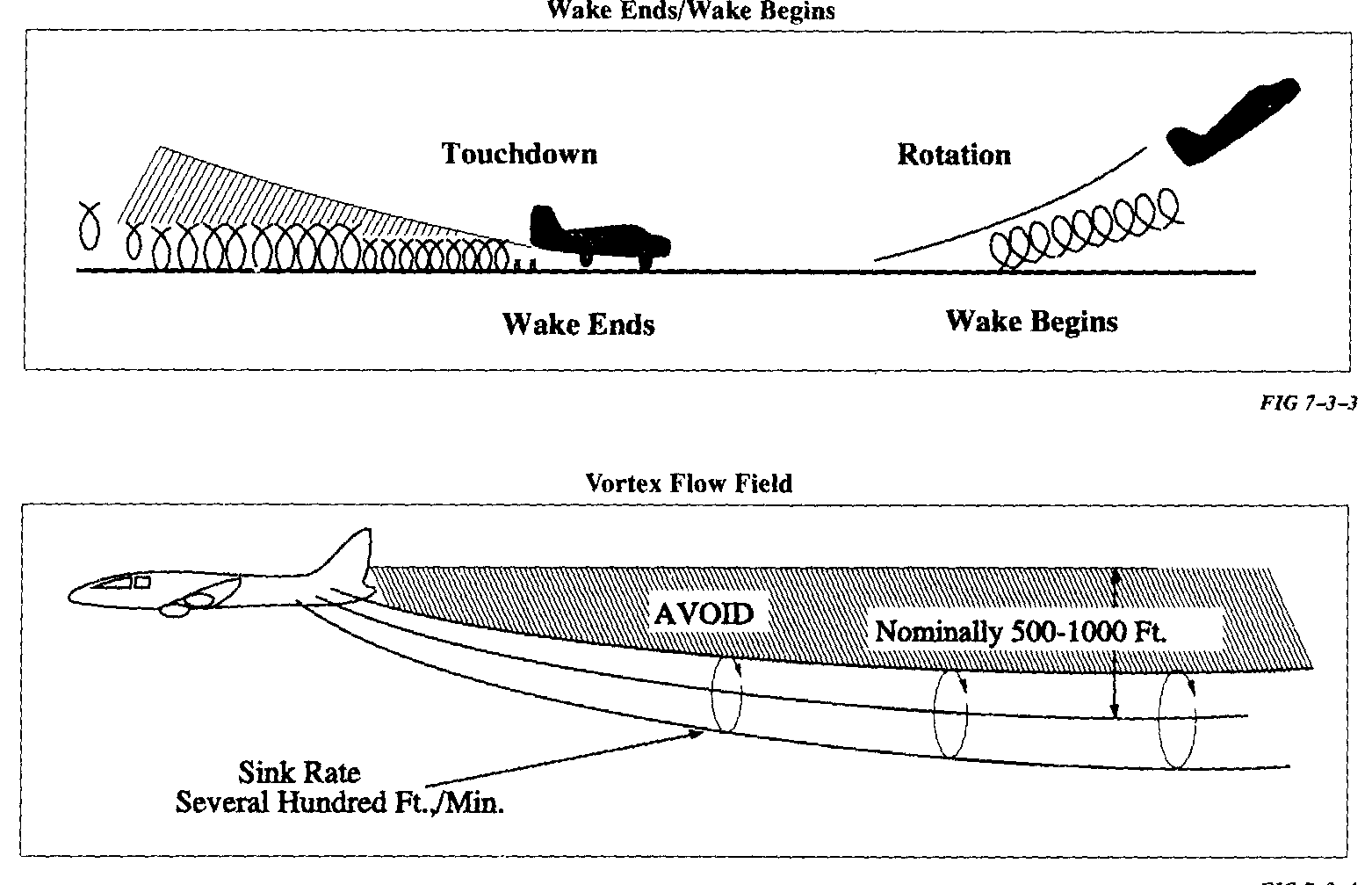
| Wake turbulence is one of the greatest hazards to small aircraft around. It should be given plenty of respect, but, with a little knowledge of how it is formed and how to avoid it pilots need not worry too much. Most things in nature strive for equilibrium and air is no different. Wake turbulence is formed by the high pressure air on the bottom of the wing trying to make its way to the low pressure area above the wing and thus achieve equilbrium. This causes the air to flow up and around the wing tips forming the vortex or a column of rotating air, I like to think of it as a miniture horizontal tornado. All airplanes form some kind of wake turbulance it is a byproduct of lift; that little joslte you feel after a perfect steep turn is your airplane flying through its wake. It follows then that the bigger the airplane the bigger the vortex. Typically your experience with wake turbulence will come when you are following a large transport category aircraft on final. These airplanes are large and heavy and require a lot of lift to fly which means they also make a lot of wake turbulence. An important thing to remember is that airplanes generate the greatest vortex strength when they are HEAVY CLEAN and SLOW. This is because wake turbulence is directly related to angle of attack and an airplane that is heavy clean and slow requires a very large angle of attack to fly. Below you will see a diagram of where wake begins and ends. |
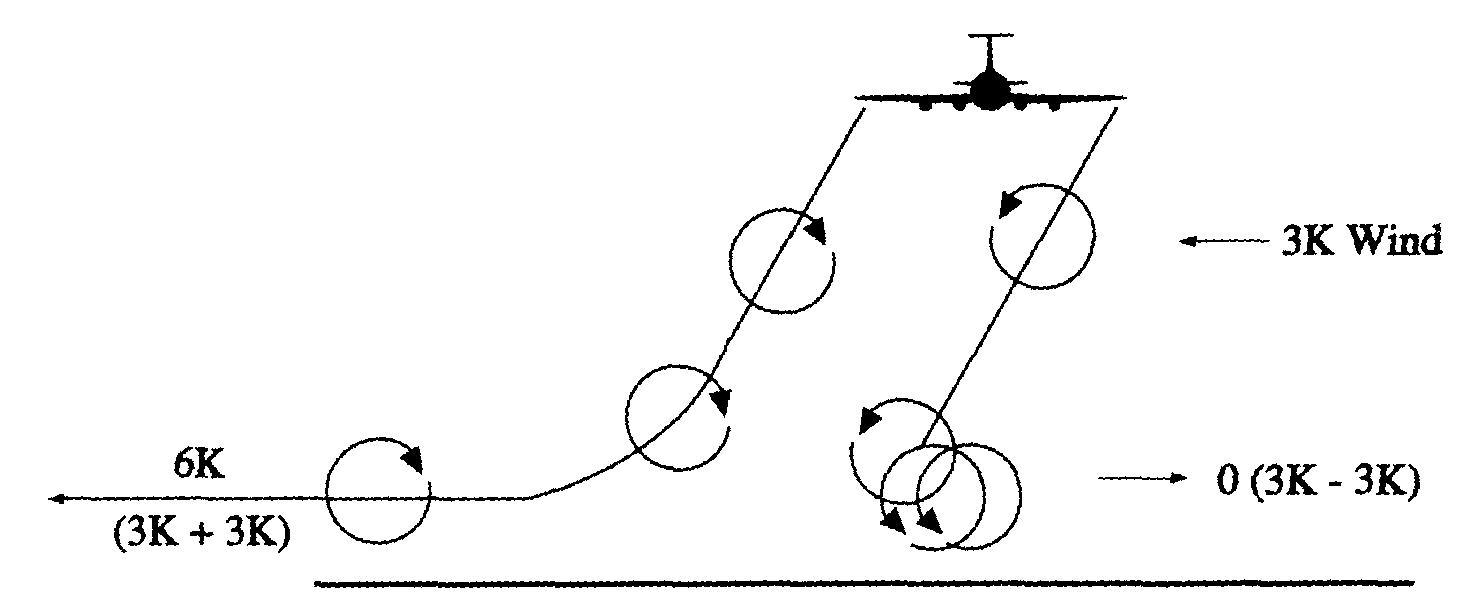
| Remember that wake turbulance is a byproduct of lift so whenever an airplane is making lift it is making wake. The above diagram illustrates that as an airplane lands its wake turbulance stops but as it takes off again wake turbulance is again being produced. You will also note that the above diagram indicates that wake turbulance sinks at a rate of about 500 feet per minute. Knowing this is the key to staying out of the stuff. When following a large airplane make sure your flight path is above his and you should stay out of trouble. That is fine when we are landing but do you honestly think a Cessna 152 will out climb a Boeing 757? Of course it won't, the key when taking off after a large aircraft is to either ask for an early turn before intercepting its flight path or wait for the wake to dissipate. Typically ATC will require you to wait for at least 3 minutes after a large jet departs to allow just that. This requirement can be waived but that may not be the best of ideas. It is also important to know how a vortex will behave when it is windy. It is possible for a vortex to be blown around. At an airport with only one runway this is not a real big deal, however at an airport with paralell runways it is a major concern. For example if you have a crosswind and a jet just departed the parallel runway it is possible for that vortex to end up on your runway. Again this is a situation where it may be best to wait for a few minutes to depart. The diagram below depicts how as little as 3 knots of wind can push a vortex around. |
 |
|
 |
|
 |
 |
| Wake Turbulence |