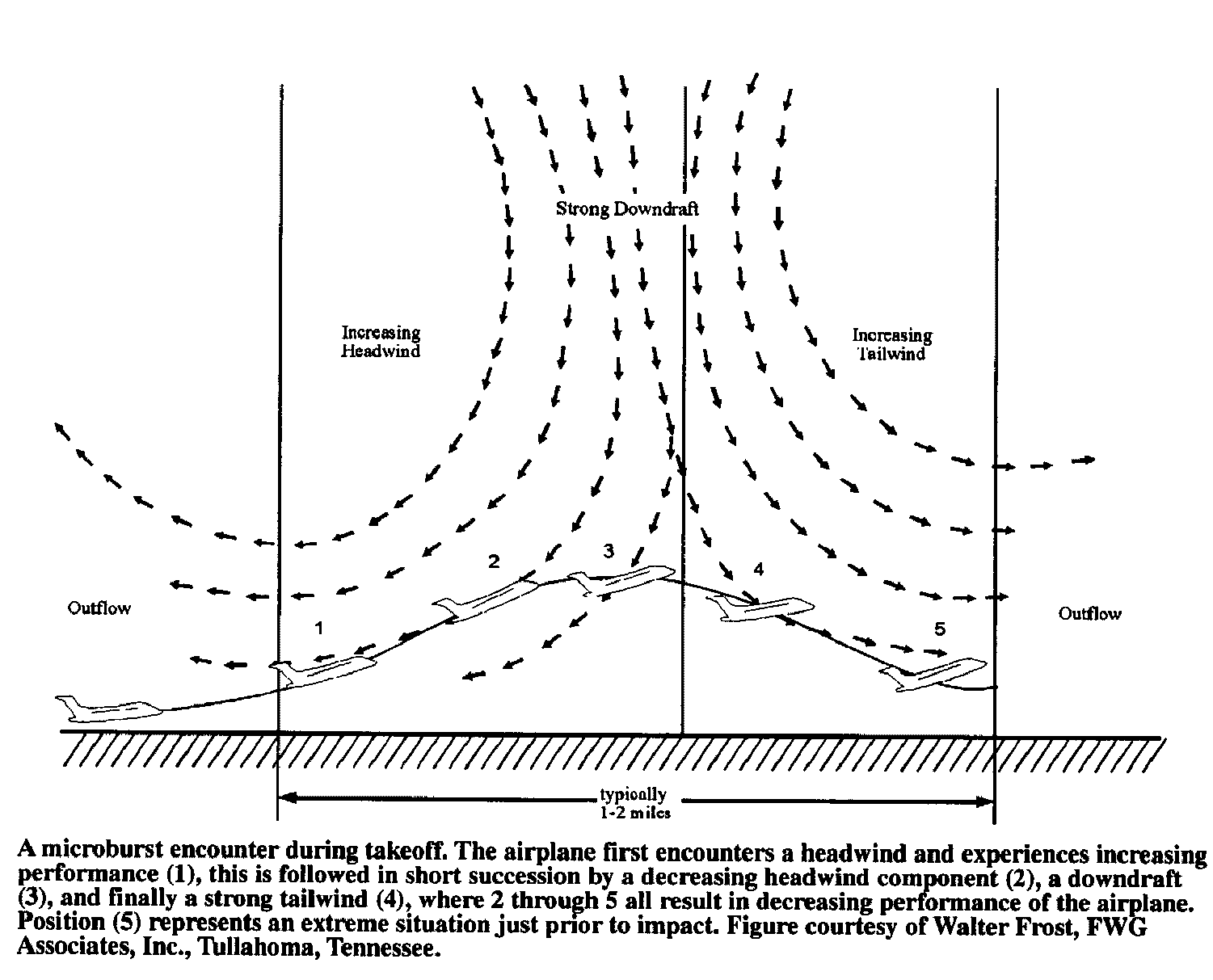
The above diagram demonstrates how serious being in a microburst is. In position 1 the airplane experiences an increase in performance due to increased headwind. As the aircraft reaches position 2 all is not well, the increased headwind is rapidly becoming a downdraft and as the aircraft reaches position 3 nearly all of the microburst's downward force is pushing the airplane earthward. The severity of the situation only grows worse as the aircraft tries to climb in positions 4 and 5; not only is it trying to climb with reduced relative wind, it is also being pushed down. As if all this wasn't bad enough, the vertical and horizontal shear throughout the micro burst are causing dramatic airspeed fluctuations and severe stress on the airplane structure.
Microbursts typically do not last more than 15 minutes from start to finish. However, once microburst activity starts multiple microbursts should be expected, so just because one microburst just ended does not mean you are out of the woods. The first 5 minutes of the microburst are when the intensity of the winds increase and pilots should expect to see maximum wind about 5 minutes into the microburst with maximum winds blowing from 2-4 minutes.
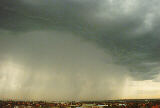
Anytime you encounter convective activity you should expect microbursts. Visual signs include heavy rain coming out the bottom of a thunderstorm, virga (it looks harmless and pretty but it will kill you), and in cases where there is no precipitation a ring of blowing dust below clouds. Again, the best way to avoid microbursts is to stay on the ground when there are thunderstorms in the area. If that is not possible at least stay out of the precipitation. |