| Technical Information |
|---|
| Class: GS-4 |
| Engine: 2 single-expansion cylinders |
| Cylinder Diameter: 25.5 in. x 32 in. |
| Driver Diameter: 80 in. |
| Grate Area: 90.4 sq. feet |
| Fuel Tender Capacity: 5,900 Gal. |
| Water Tender Capacity: 23,500 Gal. |
| Total Weight: 441 tons |
| Maximum Speed: 87 MPH |
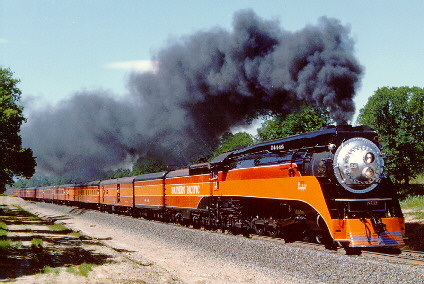
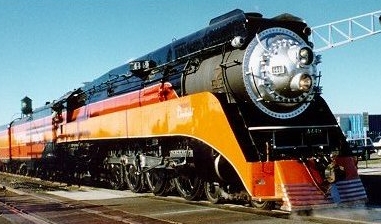
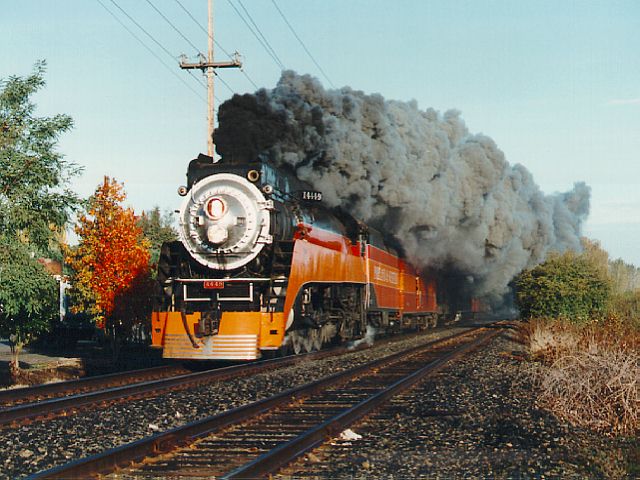
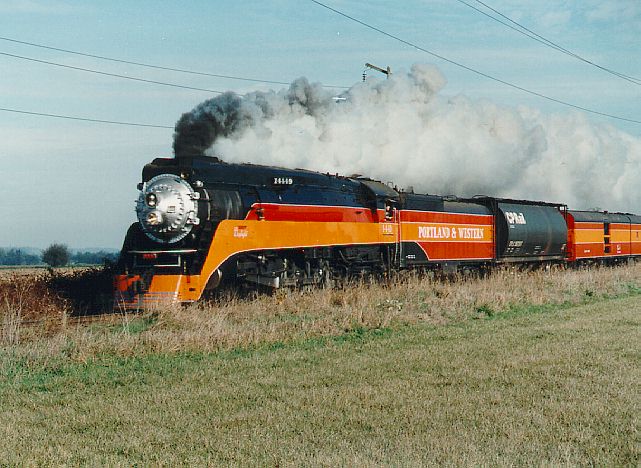
Toward the end of the 1920's, the Southern Pacific Railroad sought to improve the performance of its passenger trains. The company decided to upgrade its trains with a 4-8-4 type of locomotive, whose generous size, and four driving axles would provide the power necessary to reduce the length of the trip. Baldwin Locomotive Works delivered the GS-2 through the GS-5 series of locomotives, which were streamlined and painted in classis red, orange, and black livery to match the cars they pulled. One final series, the GS-6 (a wartime edition, which was black and semi-streamlined) wrapped up the Southern Pacific Railroad's passenger locomotive fleet.
The GS-4 Daylight was one of the most technologically advanced locomotives ever produced. Built in the early 1940's, the GS-4 employed an advanced train braking system that made high speed rail travel safer by utilizing the use of water spray onto the locomotive drivers to cool them on long downgrades. These braking improvements also allowed the trains to gain time. However, the increase in the weight of the trains due to increased traffic quickly reduced performance to its previous level. The trains could pull up to 18 cars, but rolled at a maximum speed of only 60 to 65 MPH.
 The Southern Pacific Railroad Company was a pioneer in using fuel oil to fire its steam locomotives. The western United States did not produce much locomotive coal, and the cost of hauling millions of tons of coal over the many miles separating California and the coal mines of Colorado, the Midwest, and the East was very expensive. Therefore, the Daylight GS locomotives used fuel oil to generate steam.
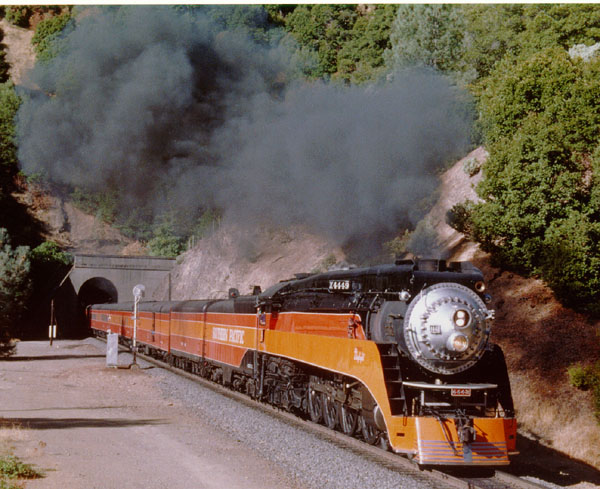
Technological advancement alone was not enough to capture the hearts of rail fans though. What most people found appealing about the Daylights were the vivid black, silver, and orange paint scheme found on its graceful streamlined skin. The sleek Daylight was often referred to as the "most beautiful train in the world". The articulated cars looked immense inside because the space was uninterrupted by vestibules. Articulated chair-car units, a parlor car, a dining car, and a bar-coffee shop car followed one after the other, and sets of mirrors placed in the cars increased the feeling of spaciousness. The interior decor was very elegant, inspired by the era's greatest interior decorating creations.
| Daylight Photos |
|---|
 Nice Long Shot Nice Long Shot |
| Up Close & Personal |
| Smoking Away |
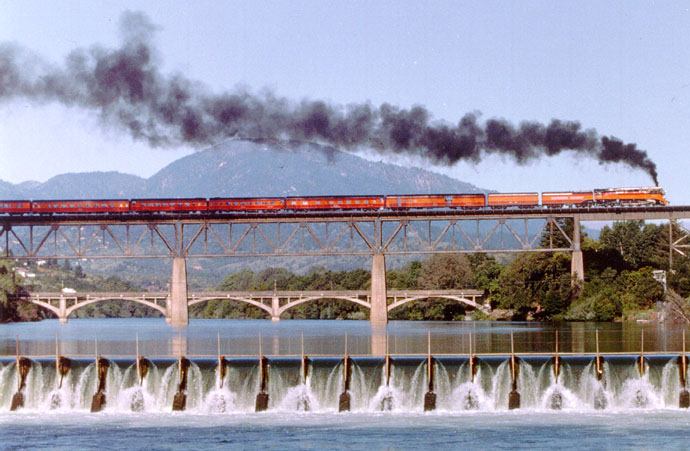
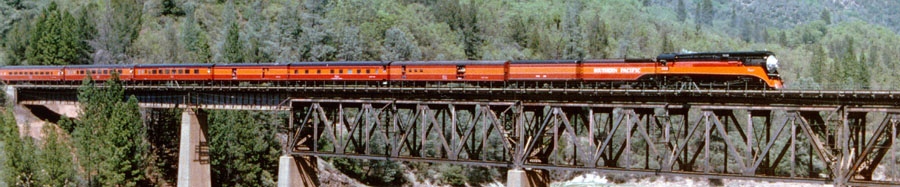
| Crossing a Bridge |
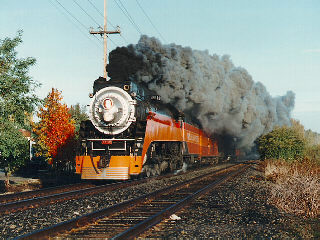
| Puffing Along |
| Riding the Rail |
| The Middle of Nowhere |
| Emerging From a Tunnel |
| This Pacific Coast Route wasn't easy. It swept around numerous curves, and climbed up rugged grades of 2.2% north of San Luis Obispo in order to cross the coast range. The lightest Daylight consist, with 12 cars, weighed 626 tons. The heavy weight of the equipment was a consequence of the high level of comfort desired by passengers traveling between Los Angeles and san Francisco. As a result, the daylight trains weren't very fast. Speeds averaged 50 MPH, and the trip of 470 miles took nearly ten hours. |
 NEXT
NEXT