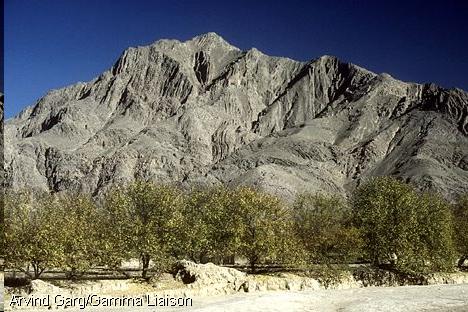
Much of western Pakistan is a dry, mountainous plateau, in which bare ridges separate desert valleys. Where water is available, farmers grow wheat, cotton, rice, sugar cane, vegetables, and oilseeds. Western Pakistan borders Iran to the west and Afghanistan to the north. Two-thirds of the people are rural farmers and herders who live in villages.Originally from Iran, the Baluchi (Balochi) inhabit the region of southeastern Iran and western Pakistan known as Baluchistan. Baluchi music exhibits traits of both Indian music and music from the Middle East, yet features unique characteristics, especially in its rhythm. The example features an excerpt from a zahirig (zahiruk), a form distinguished by its modal improvisations in free rhythm. The zahirig is played on the sorud, a violin with four playing strings and six to eight sympathetic strings that provide a drone. The bowing style used for the sorud contrasts sharply articulated phrases with the generally free-rhythm quality of the zahirig form.
[Index] [History]
[Quaid-i-Azam] [Chronology]
[Speeches] [Provinces]
[Sight & sound]
[Capital] [Personality]
[Economy] [Sports]
[Geography] [Weather]

