|
JAMES K. BAXTER'S OTAGO WORLDS Lawrence Jones
|
Page 25
|

|
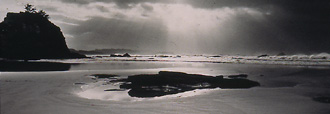
It was the hour of the hawk, not the hour of the dove. While the waves chiselled at the rocks below, the mythical identification with all things living was achieved. 'The goddess sex' had 'led him through a low doorway to the only earthly paradise'. At Tunnel Beach the 'hour of the dove' is experienced, but the revelation is more ambiguous. The sexual act seems to 'shut out sea thunder', to bring doves that still 'the lonely air'. But then the poet hears 'the voices of the sea's women riding / All storm to come', and he is not left with the doves of love but rather 'combers grinding / Break sullen on the last inviolate shore'. A passage in the later 'Letter to Robert Burns' provides a gloss on that experience, as the poet praises it for putting him in touch with the 'biology' and 'mythology' that our culture represses and that are essential to the poet: And I must thank the lass who taught me My catechism at Tunnel Beach For when the hogmagandie ended And I lay thunder-struck and winded, The snake-haired Muse came out of the sky And showed her double axe to me. |
 |
 |